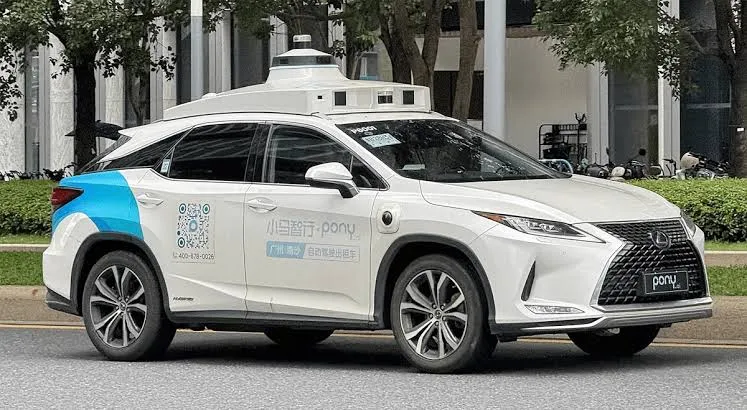
Pony.ai, a Chinese autonomous-driving technology company, is significantly scaling its international robotaxi pipeline, lining up thousands of self-driving vehicles for deployment in overseas markets. The expansion signals a broader shift in the autonomous-vehicle industry, moving from limited domestic pilot programmes toward a genuinely global contest for commercial robotaxi fleets — one that increasingly places Chinese autonomous-driving technology at the centre of geopolitical debate around connected vehicles and data security.
The expansion also comes as global logistics and mobility investors watch closely to see which autonomous-driving companies can convert domestic technical maturity into credible cross-border commercial deployment.
If Pony.ai can execute on even a substantial portion of its announced international pipeline, the competitive landscape for self-driving transportation could shift meaningfully, with established players such as Waymo increasingly finding themselves competing against Chinese robotaxi platforms in third-country markets rather than solely within their respective domestic markets. This dynamic marks a departure from earlier phases of the autonomous-vehicle race, which were largely defined by competition within the United States and, separately, within China, with limited direct overlap between the two ecosystems.
Pony.ai's approach to international expansion has also been shaped by lessons drawn from earlier, more cautious phases of the global autonomous-vehicle industry, during which several well-funded companies pursued aggressive multi-market expansion only to scale back significantly after encountering unexpected regulatory, safety or unit-economics challenges. Company executives have suggested that the current pipeline reflects a more measured, partnership-driven approach to market entry, prioritising markets where local regulatory and commercial partners can help de-risk the operational and compliance complexities of deploying autonomous vehicles for the first time.
The international expansion also intensifies scrutiny of Chinese autonomous-vehicle technology from a data-security and geopolitical perspective, as connected and self-driving vehicles generate substantial volumes of location, sensor and behavioural data that has become a focal point of regulatory concern in several Western markets. Governments evaluating whether to permit Chinese robotaxi operators to deploy commercially within their borders are increasingly weighing these considerations alongside the more straightforward commercial and safety evaluations that have traditionally governed autonomous-vehicle regulatory approval processes.
Commercial viability for Pony.ai's international pipeline will also depend heavily on local infrastructure readiness, including high-definition mapping, connectivity and regulatory frameworks governing remote vehicle monitoring, all of which vary considerably across the markets the company has targeted for expansion. Analysts note that autonomous-vehicle operators entering new markets frequently underestimate the time required to build this supporting infrastructure relative to the vehicle technology itself, a factor that has slowed international rollout timelines for other robotaxi operators in the past and could similarly temper the pace at which Pony.ai's announced pipeline translates into live commercial deployment.
Analysts also note that Pony.ai's approach contrasts somewhat with more conservative international expansion strategies pursued by some Western robotaxi operators, which have generally prioritised deep market penetration in a small number of cities before pursuing broader geographic expansion, a strategic divergence that will offer a useful comparative case study over the coming several years.
Industry groups tracking the global robotaxi sector note that Pony.ai's approach of pursuing multiple simultaneous international markets, rather than sequential single-market entry, represents a comparatively capital-intensive strategy that will require sustained access to funding to execute fully, a consideration that is likely to feature prominently in how investors evaluate the company's next fundraising round.
For Pony.ai, international expansion offers a path to scale that may be constrained domestically by regulatory pacing and competitive intensity within China's own crowded autonomous-driving sector, which includes several well-funded domestic competitors. Markets outside both the United States and China — across Southeast Asia, the Middle East and parts of Europe — represent comparatively open competitive terrain, where neither Chinese nor American autonomous-driving companies have yet established dominant commercial positions, making them attractive targets for companies seeking first-mover advantage in nascent regulatory environments.

Regulatory responses to the prospect of large-scale Chinese robotaxi deployment have varied considerably across potential target markets, with some governments moving to establish clear licensing and data-localisation frameworks in advance of commercial launches, while others have taken a more cautious, case-by-case evaluation approach. This regulatory variation is likely to shape where Pony.ai and similar Chinese autonomous-driving companies choose to prioritise their international expansion, favouring markets with clearer, more predictable regulatory pathways even where near-term commercial opportunity may be smaller than in larger but more regulatorily uncertain markets. Industry analysts note that the pace of this international rollout will also depend significantly on Pony.ai's ability to demonstrate a strong safety record at scale, given that any high-profile safety incident involving a foreign autonomous-vehicle operator could trigger swift regulatory reversals in markets still forming their policy positions on the technology.
From a capital-markets perspective, Pony.ai's international ambitions also arrive as investor enthusiasm for autonomous-vehicle technology has become more selective following a volatile several years for the sector globally, marked by both significant technological progress and a number of high-profile commercial setbacks among earlier robotaxi ventures. Investors evaluating Pony.ai's international pipeline are likely to weigh its execution closely against this more cautious backdrop, favouring demonstrated commercial traction over ambitious pipeline announcements alone.
As the global robotaxi race enters a more internationally competitive phase, Pony.ai's expansion illustrates how autonomous-vehicle technology has moved beyond a primarily domestic policy and safety conversation into one increasingly shaped by geopolitics, data governance and cross-border regulatory competition. How quickly regulators in target markets respond — and on what terms they permit foreign autonomous-vehicle operators to deploy — will likely determine the pace at which this next phase of global robotaxi competition unfolds.
As international regulatory frameworks for autonomous-vehicle deployment continue to take shape across target markets, Pony.ai's ability to navigate this complex and still-evolving landscape will significantly determine how quickly its announced pipeline translates into meaningful commercial revenue outside China. The company's progress will be closely watched not only by competing autonomous-vehicle operators but by policymakers in markets still formulating their own regulatory approach to foreign autonomous-driving technology, for whom Pony.ai's experience may serve as an influential early case study.
Pony.ai has not yet disclosed a detailed, market-by-market timeline for its announced international pipeline, though company executives have indicated further specifics will be shared as individual regulatory approvals are finalised.


