Poolside, a start-up developing open-weight artificial intelligence systems for software development and research, has raised $1 billion from chipmaker Nvidia, valuing the company at $12 billion in one of the year's larger strategic AI financings.
The investment continues Nvidia's pattern of deploying capital directly into AI application and model companies that consume large volumes of its computing hardware — a strategy that both secures long-term demand for Nvidia's chips and gives the company an equity stake in some of the AI industry's fastest-growing infrastructure customers.
Poolside's focus on open-weight models — as distinct from the closed, proprietary systems favoured by several of the best-known frontier AI labs — has positioned the company as an alternative for enterprises and developers seeking more control, transparency and customisation over the models powering their software development and research workflows.
The scale of the round reflects how capital-intensive frontier AI model development has become, with training and serving large language models requiring computing infrastructure investments that now routinely run into the billions of dollars even for companies still building out their commercial customer base.
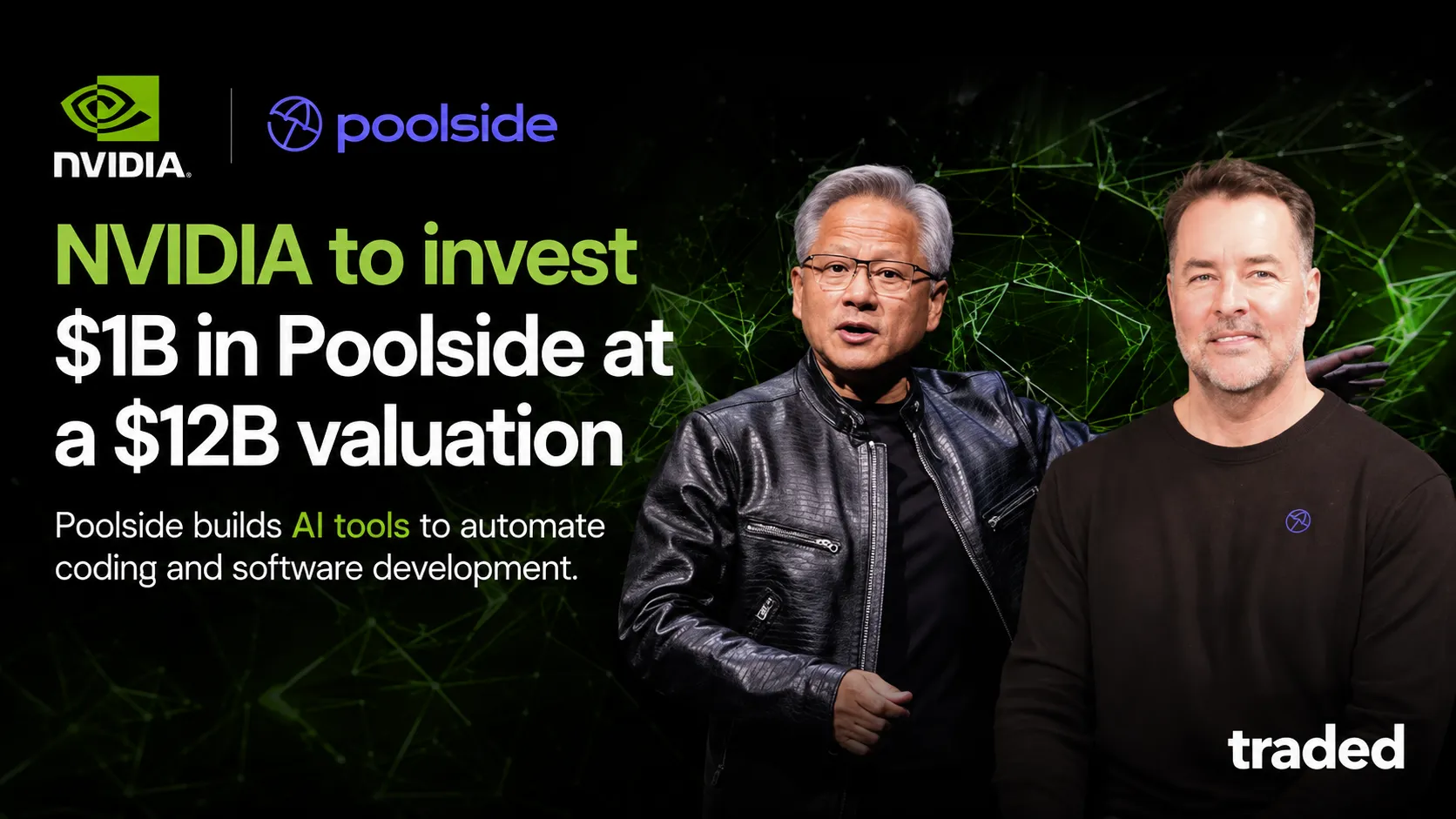
Nvidia's willingness to write billion-dollar checks into AI application companies has become an increasingly visible feature of the broader AI funding landscape throughout 2026, as the chipmaker seeks to reinforce its central position across the AI stack — not merely as a hardware supplier, but as a strategic investor with visibility into, and influence over, how its most important customers develop and deploy their technology.
For Poolside, the capital provides substantial runway to compete against both well-funded proprietary model developers and other open-weight AI labs, in a market where competitive advantage increasingly depends on a combination of model performance, developer trust and the depth of an underlying computing partnership.
The financing underscores a broader dynamic reshaping AI venture capital: strategic investors with direct commercial interests in the AI ecosystem's growth — chipmakers, cloud providers and hyperscalers among them — are increasingly displacing traditional venture funds as the largest single sources of capital for frontier AI companies, a shift that raises new questions about competitive independence even as it accelerates the pace of AI development.