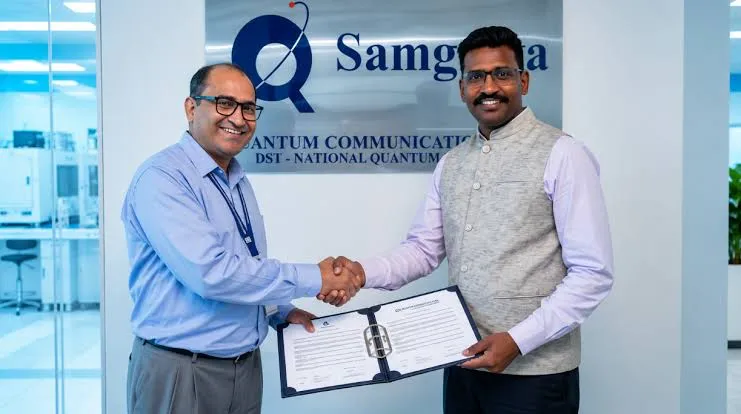
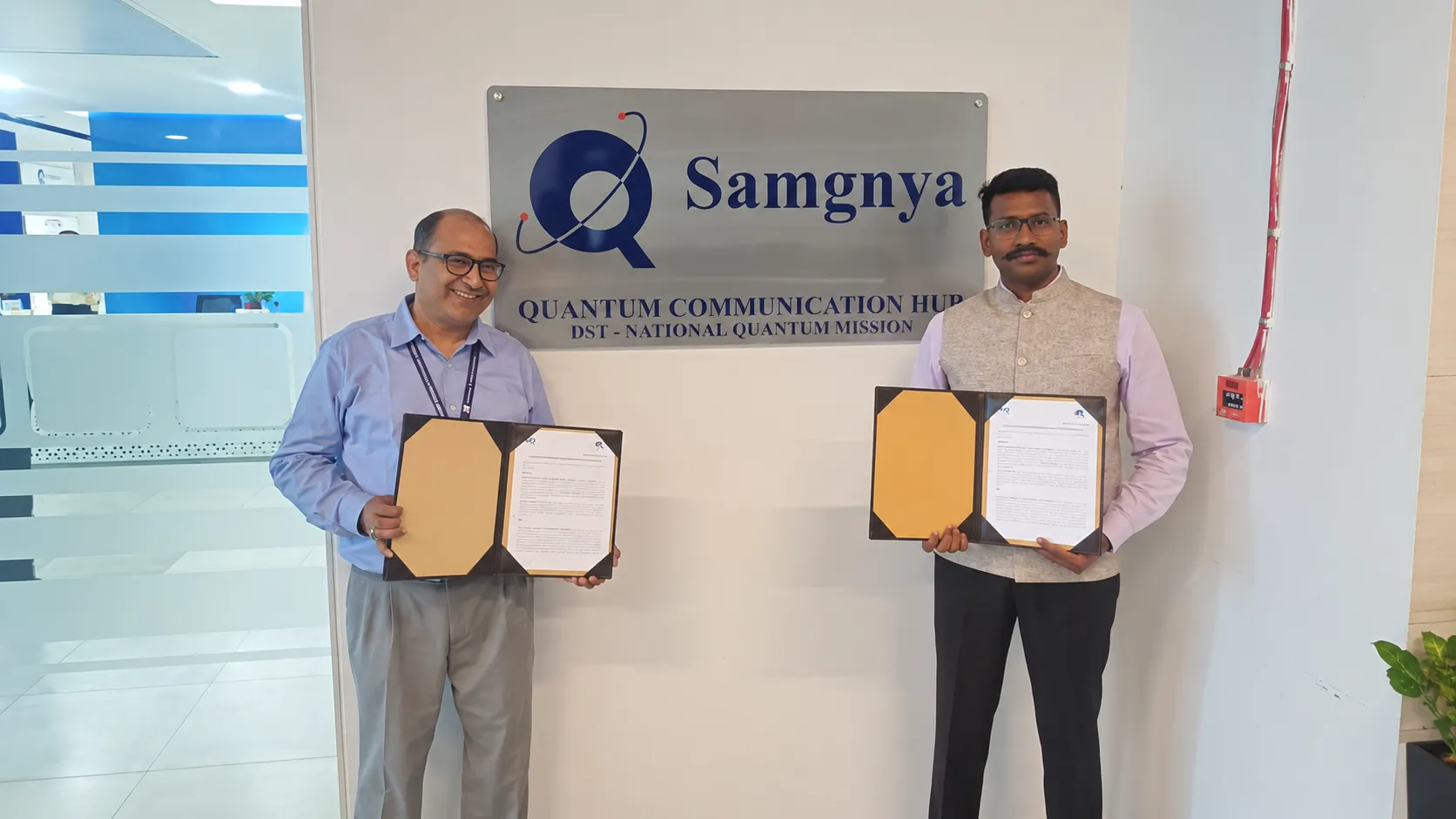
QClairvoyance Quantum Labs, an Indian quantum computing startup, has signed a memorandum of understanding with IITM C-DOT Samgnya Technologies Foundation, the entity designated as India's National Hub for Quantum Communication under the government's National Quantum Mission. The agreement, confirmed on September 11 as part of the day's roundup of Indian startup activity, formalises a collaborative relationship between the company and one of the country's central quantum research institutions.
The National Quantum Mission, approved by the Indian government with an outlay running into thousands of crores of rupees, was established to build domestic capability across quantum computing, quantum communication, quantum sensing and quantum materials — recognising that quantum technologies are increasingly viewed by governments worldwide as strategically significant, with implications spanning cryptography, secure communications, drug discovery and materials science. The designation of dedicated national hubs, including the quantum communication hub housed under the IITM C-DOT Samgnya Technologies Foundation, reflects an effort to concentrate research infrastructure and talent around specific quantum sub-disciplines rather than spreading resources thinly across a nascent and highly technical field.
For QClairvoyance, the MoU offers access to institutional research infrastructure and academic expertise that would be costly and time-consuming for a private startup to replicate independently. Quantum computing research requires highly specialised laboratory equipment, cryogenic systems and access to talent trained in a field where India, like most countries outside a handful of leading quantum research hubs in the United States, China and parts of Europe, has a comparatively small pool of specialists. Formal partnerships with national research hubs allow startups to supplement in-house capability with shared access to equipment and collaborative research relationships with academic quantum physicists.
The partnership also reflects a broader trend within India's quantum computing sector, which remains at an early and pre-commercial stage relative to classical software or even other deep-tech categories such as spacetech, where India has already produced globally competitive private companies. Quantum computing startups worldwide, including in more mature markets such as the United States and United Kingdom, have generally relied heavily on a combination of government research grants, academic partnerships and patient venture capital, given that commercially useful quantum computers capable of outperforming classical machines on real-world problems remain, by most expert assessments, several years away for all but a narrow set of specialised use cases.
India's quantum ecosystem has been building momentum through a combination of government funding, academic centres of excellence at institutions including the Indian Institutes of Technology, and a small but growing number of private startups attempting to commercialise research into products spanning quantum-safe cybersecurity, quantum sensing hardware and early-stage quantum computing platforms. Partnerships of the kind announced between QClairvoyance and the IITM-hosted national hub are likely to become more common as the government seeks to translate the National Quantum Mission's research investment into commercially viable domestic companies, rather than research output that remains confined to academic publication.
Neither QClairvoyance nor the IITM C-DOT Samgnya Technologies Foundation disclosed specific financial terms attached to the memorandum, nor detailed timelines for joint research outputs or technology transfer arrangements that might follow from the collaboration. Memoranda of understanding of this nature typically establish a framework for future collaboration — covering areas such as shared research facilities, joint publication, or staff exchange — rather than committing either party to specific deliverables, with more detailed terms to be negotiated separately as the relationship develops.
For India's broader deep-tech investment narrative, the announcement adds to a growing list of formal links being established between private quantum startups and the country's national research infrastructure, a pattern that mirrors similar public-private collaboration models used successfully in India's space technology sector, where partnerships between private companies and the Indian Space Research Organisation helped bridge the gap between government-funded research capability and commercially oriented private enterprise. Whether India's quantum sector can replicate that trajectory over the coming decade remains an open question, but the QClairvoyance-IITM partnership suggests the institutional scaffolding for such a transition is beginning to take shape.


