TechQuantum Computing Funding5 MIN READ

QpiAI Borrows ₹50 Crore at 13.85% as India's Quantum Hardware Ambitions Meet the Debt Market

Bengaluru's QpiAI has raised ₹50 crore through non-convertible debentures from InnoVen Capital, a rare venture-debt deal in India's quantum sector that tests how lenders price deep-tech risk.

By Aravind Kumar · Author6 October 2026New
QpiAI Borrows ₹50 Crore at 13.85% as India's Quantum Hardware Ambitions Meet the Debt Market

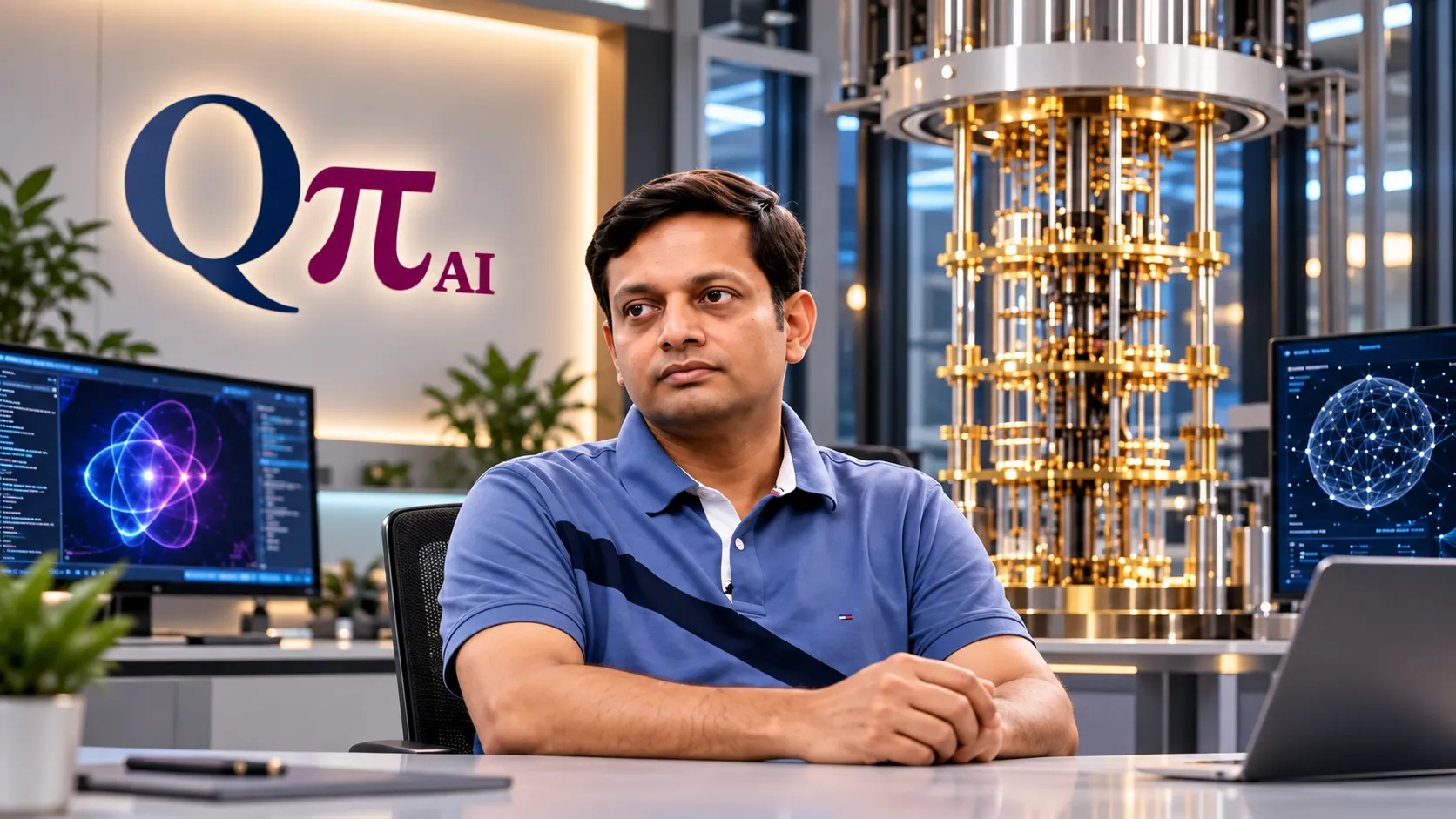
QpiAI, the Bengaluru-based company building quantum computers and artificial intelligence software, has raised ₹50 crore in debt from InnoVen Capital, a financing that offers an unusual window into how lenders are beginning to price the risk of India's nascent quantum hardware industry.

According to regulatory filings first reported by Entrackr on 5 October 2026, QpiAI's board approved the issuance of 5,000 non-convertible debentures with a face value of ₹1 lakh each to InnoVen Capital India Fund II. The debentures carry an annual coupon of 13.85% and are scheduled to mature by 1 December 2028. The board resolution was passed on 28 August, and the company has not disclosed how it intends to use the proceeds.

In a sector that globally relies almost entirely on equity and government grants, a fixed-rate debt instrument for a quantum hardware company is a notable development. It suggests that at least one specialist lender believes QpiAI's assets, backers and strategic position are strong enough to support regular interest payments.

A company at the centre of India's quantum plans

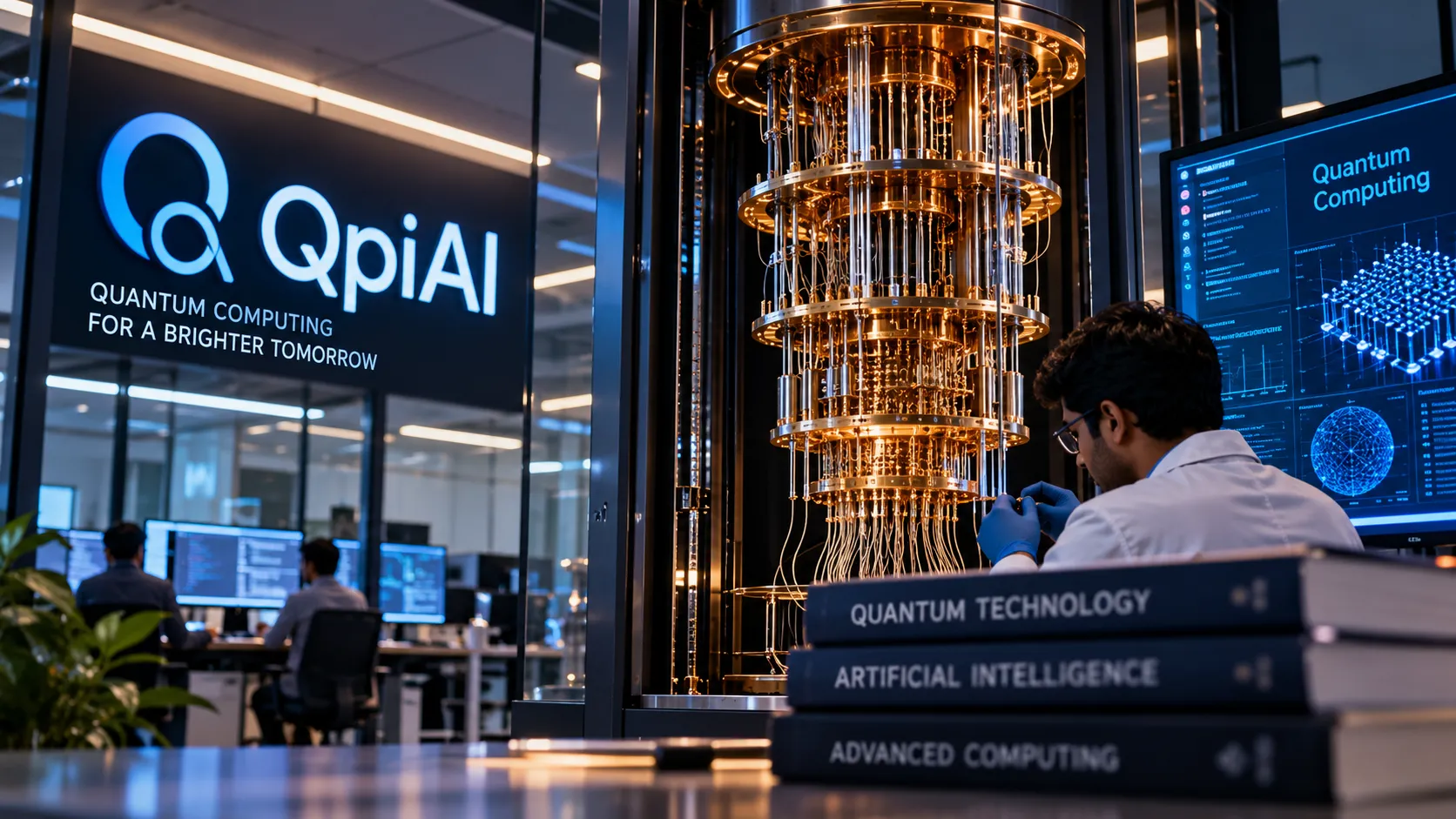
QpiAI has become one of the most visible private companies in India's quantum effort. It develops proprietary quantum hardware and software, targeting applications in drug discovery, materials science, manufacturing, finance and logistics, and pairs that work with AI tools for enterprise customers. In 2025 it unveiled what it described as India's first full-stack 25-qubit quantum computer.

Its funding history tracks the country's growing interest in the field. The company raised $6.5 million in a pre-Series A round in June 2024, led by YourNest and SIDBI Venture Capital. It followed that with a $32 million Series A in July 2025, co-led by Avataar Ventures and the National Quantum Mission, the government programme created to build domestic capability in quantum technologies. Entrackr estimated at the time that the round valued QpiAI at around ₹2,050 crore, or about $215 million.

That brings disclosed equity funding to roughly $38.5 million before the new debt. The participation of the National Quantum Mission as an investor, rather than merely a grant-maker, gives QpiAI a quasi-strategic status that lenders are likely to have weighed heavily.

Why debt, and why now

For a company at QpiAI's stage, debt is an unconventional choice. Quantum hardware businesses typically have long development cycles, limited near-term revenue and heavy capital requirements. Equity investors accept those characteristics in exchange for potential upside; lenders usually do not.

The arithmetic illustrates the trade-off. Annual interest on ₹50 crore at 13.85% amounts to roughly ₹6.9 crore. Analysis by StartupFox, citing filings, put QpiAI's FY25 operating revenue at about ₹2 crore, meaning a single year of interest would exceed that revenue several times over. On the other hand, raising the same ₹50 crore through equity at the company's last estimated valuation would have meant giving up about 2.4% of the business.

For founders who expect their company's value to rise substantially as hardware milestones are reached, avoiding dilution can justify a high coupon. Venture debt is also typically quicker to arrange than a new priced equity round and does not require the company to defend a fresh valuation in a market where investors have become more selective about deep technology.

Industry commentators have suggested that the proceeds may support the capital-intensive work of building out QpiAI's own chip fabrication capability, though the company has not confirmed this. Quantum processors require specialised fabrication, cryogenic systems and precision engineering, all of which consume significant capital before generating revenue.

“Lenders are underwriting government backing and hardware assets, not current revenue, and that is a new kind of confidence in Indian deep tech.”
— TIGI Analysis

How lenders think about deep tech

InnoVen Capital is one of India's most established venture debt providers, with a portfolio spanning consumer internet, fintech and enterprise software companies. Venture lenders typically protect themselves by lending to companies with strong equity backers who are likely to support future rounds, and by structuring instruments that rank ahead of equity in any downside scenario.

In QpiAI's case, the presence of the National Quantum Mission on the cap table, alongside institutional venture investors, provides that comfort. Commentators observing the transaction noted that the lender appears to be underwriting the strength of the company's backing and its hardware assets rather than its current cash flows. If QpiAI services the debt smoothly, the deal could open the door to similar financing for other Indian deep-tech hardware companies, from semiconductors to space technology.

5bf108bb-3b15-4445-9f2d-518fcec25286.png

The national context

The financing arrives as Indian policymakers push to turn quantum technology into a strategic industry. The National Quantum Mission, approved by the Union Cabinet in 2023 with an outlay of about ₹6,000 crore, aims to develop intermediate-scale quantum computers, secure communications and quantum sensing over the coming decade. Several state governments are competing to host quantum ecosystems, with Andhra Pradesh promoting an Amaravati Quantum Valley and Karnataka positioning Bengaluru as a deep-tech hub.

Globally, the field has drawn intense investment. Large technology companies and specialist startups in the United States, Europe and China are racing to build machines with more qubits and lower error rates, and governments increasingly treat quantum capability as a matter of national security. Against that backdrop, India's ability to build credible domestic hardware companies is seen as important both economically and strategically.

QpiAI has set itself ambitious technical goals, including a roadmap towards a 1,000-qubit system around the end of the decade. Commentators have noted that the debentures fall due in December 2028, around two years before that target, meaning the company will need to refinance or repay well before its most ambitious hardware milestone is reached.

Risks worth watching

The obvious risk is timing. Quantum computing has a long record of technical timelines slipping, and commercial demand for current-generation machines remains limited largely to research, pilot projects and government programmes. If revenue growth lags, servicing a high-coupon debt instrument could strain the company's cash position, potentially forcing an equity raise on less favourable terms.

There is also a concentration risk for the sector. If a high-profile quantum borrower were to struggle, lenders could become wary of the entire category, making it harder for others to access similar financing.

A milestone in financial maturity

For now, the transaction represents a milestone. It shows that Indian deep-tech companies with strong institutional backing can access capital beyond the traditional equity route, and that specialist lenders are willing to engage with technologies whose commercial payoff may still be years away.

For QpiAI, the ₹50 crore offers runway without dilution at a critical stage of hardware development. For India's broader innovation ecosystem, it is a small but meaningful sign that the financial infrastructure supporting frontier technology is beginning to mature. Whether that early confidence is rewarded will depend on QpiAI's ability to convert scientific progress into contracts, and to do so before its debentures come due.

TagsQpiAIInnoVen CapitalQuantum ComputingVenture DebtNCDNational Quantum MissionDeep TechBengaluruAvataar VenturesAIIndiaFunding

Reader reviews

Sign in to rate and review this article.
Loading reviews…

