India's startup ecosystem has grown into the third-largest in the world, but it will not be able to compete in the most strategic technologies without a dramatic increase in spending on research and development, according to one of the country's most prominent venture capitalists.
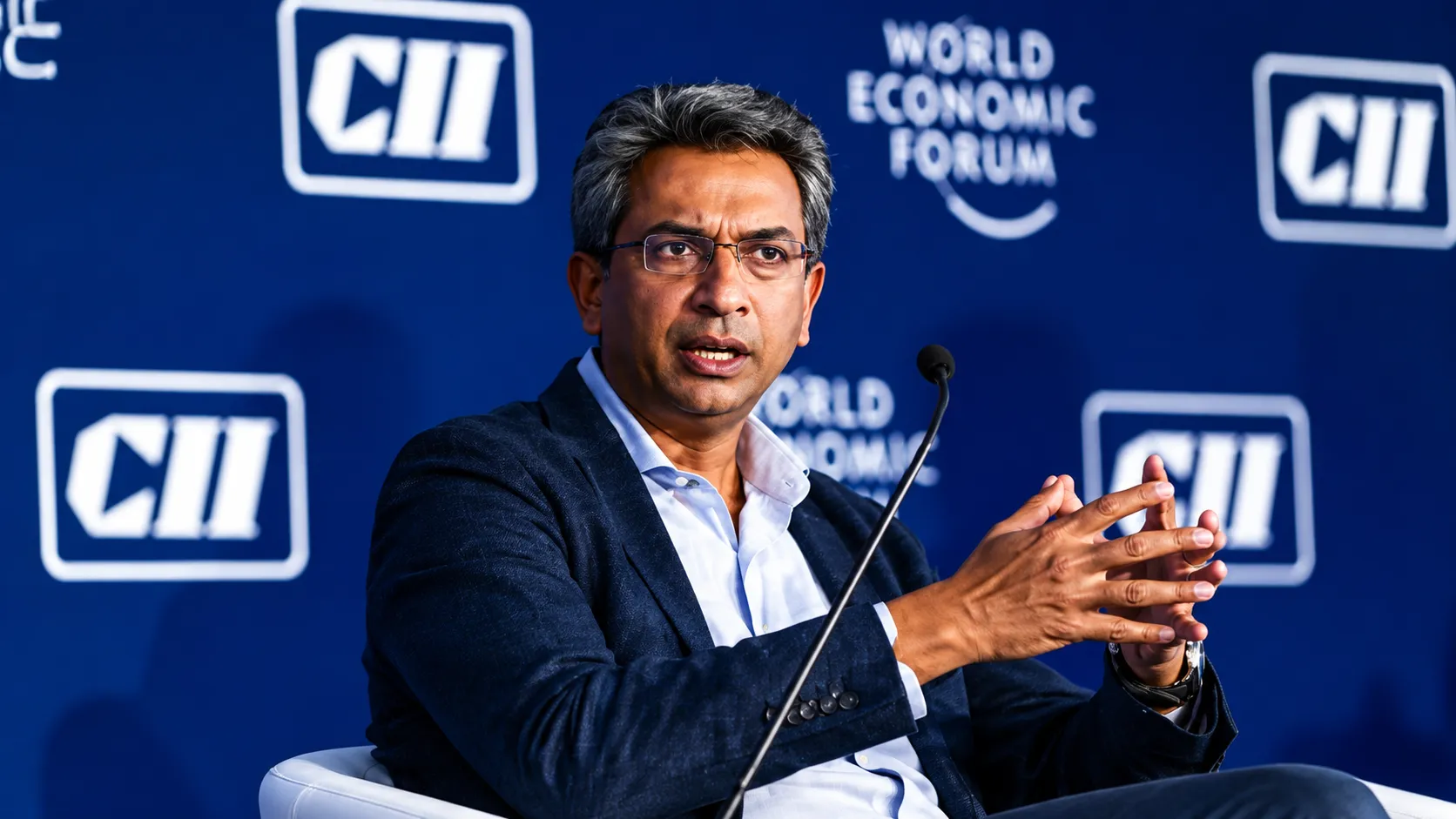
Rajan Anandan, managing director at Peak XV Partners, the venture firm formerly known as Sequoia India and Southeast Asia, said in an interview published by Business Standard on October 18 that R&D is "the Achilles' heel" of India's innovation ecosystem.
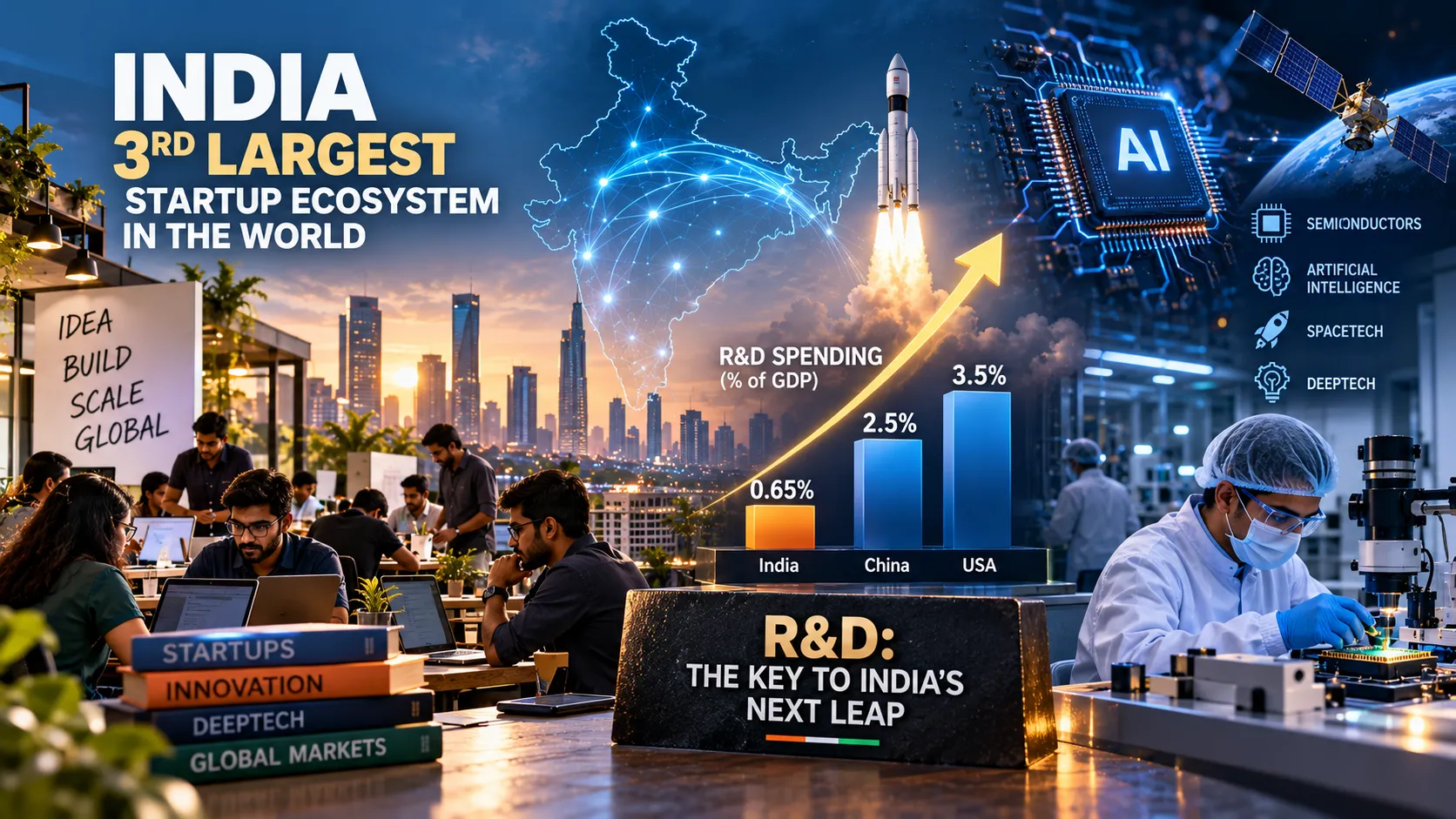
India currently spends about $18 billion a year on research and development, or roughly 0.65% of its gross domestic product. Anandan said the country needs to raise that to at least $100 billion, more than a fivefold increase. "Both the government and the private sector need to step up," he said.
How India compares
The comparison with other major economies is stark. The United States spends about 3.5% of GDP on R&D and China about 2.5%, according to the figures Anandan cited. Given the size of those economies, the gap in absolute spending is even larger.
"Israel, with a population of 10 million, spends more than we do," Anandan said. Israel is often cited as one of the most innovation-intensive economies in the world, with very high R&D spending relative to GDP and a dense ecosystem of technology startups, many with roots in defence and university research.
Without a dedicated push on R&D, Anandan warned, India will not be able to compete in strategic sectors such as semiconductors. He noted that the United States is currently focused on artificial intelligence, while China is focused on both AI and deeptech.
A "Cambrian explosion" of opportunity
Anandan was nonetheless optimistic about the trajectory of India's startup ecosystem. He described a "Cambrian explosion" of opportunities across sectors, pointing to about 400 spacetech startups and more than 100 semiconductor startups now operating in India.
He praised the quality of Indian founders, describing the country's fintech founders as "the best in the world," and said that companies are increasingly building for global markets rather than only for India. Venture capital in India has grown fivefold, he said, and the IPO market is opening up, giving investors a path to returns.
He credited government initiatives with helping to build the ecosystem, including India Stack, the digital public infrastructure behind services such as Aadhaar and UPI, the government's fund of funds for startups, deregulation of the space and defence sectors, and the Research Development and Innovation Fund (RDIF), which he called "a major game changer."
Regulatory cholesterol
Anandan was critical of some aspects of India's regulatory environment. He called for "smart regulation" and said some policies are not innovation-friendly.
He cited the so-called angel tax, which taxed startups on investments received above their assessed fair value, and which he said persisted for 15 years before it was abolished. He also highlighted the difficulty of closing a company in India, which he said takes about two years, compared with a nearly instant process in the United States. The ability to shut down failed ventures quickly is important in an ecosystem where many startups do not succeed, freeing founders and capital to move on to new ideas.
He described India's accumulated regulatory burden as "regulatory cholesterol," a memorable phrase for the layers of rules and procedures that slow down entrepreneurs.
On the RDIF, Anandan said a pause at the Technology Development Board, which is involved in administering it, was due to a large backlog of applications rather than a policy delay.
Peak XV's bets
Peak XV has secured $1.3 billion in fresh capital commitments for India and invests across all stages, from seed to growth. Its publicly announced investments include quick commerce company FirstClub, consumer brands company Nua and several spacetech companies. The firm has also made its first medtech investment, in a company still operating in stealth mode as part of its Surge programme.
Surge, Peak XV's early-stage accelerator, began seven years ago. At that time, about 10% of the companies it backed were building for global markets from day one, Anandan said. Today, he said, that figure is 70%. Typical Surge cheques have grown from $1 million to $2 million to as much as $5 million.
Anandan said consumer technology and deeptech, including AI, are both attracting strong investor interest and are not competing for capital, a view that contrasts somewhat with data showing a shift of venture funding away from consumer startups towards deeptech in 2026.
The funding gap
Despite its size, India's startup ecosystem receives just 3% of global venture capital, Anandan noted. Recent data from Tracxn showed Indian startups raised $10.9 billion between January and mid-October 2026, broadly flat on a year earlier, with fewer but larger deals as investors concentrated on deeptech and AI.
That gap is closely linked to the R&D challenge. Deeptech companies depend on a pipeline of research from universities and laboratories, highly trained scientists and engineers, and patient capital willing to wait years for returns. Countries with high public R&D spending tend to produce more deeptech startups, because government-funded research creates the knowledge and talent on which those companies build.
The talent dimension
R&D spending is not only about money. It also depends on the availability of scientists, engineers and researchers, and on institutions that can train and retain them. India produces large numbers of engineering graduates each year, but many of its most talented researchers have historically moved abroad for advanced study and careers.
That is beginning to change as Indian startups and global companies expand their research and development centres in India. Global capability centres operated by multinational companies now employ large numbers of engineers working on advanced technology. Channelling more of that talent into original research and new companies will be essential if India is to close its innovation gap.
What it would take
Raising R&D spending to $100 billion would require a major shift in both public and private investment. Indian companies, including large IT services firms, have historically spent relatively little on research compared with global peers. Government spending on research, while rising, remains modest as a share of the budget.
Initiatives such as the RDIF, the Anusandhan National Research Foundation and the India Semiconductor Mission are steps in that direction. But Anandan's message is that the scale of ambition must grow significantly if India wants to compete with the United States and China in the technologies that will define the coming decades.
For founders, investors and policymakers, the interview is a reminder that India's next phase of startup growth will depend not only on capital and talent but also on the research foundations that turn ideas into globally competitive technology.