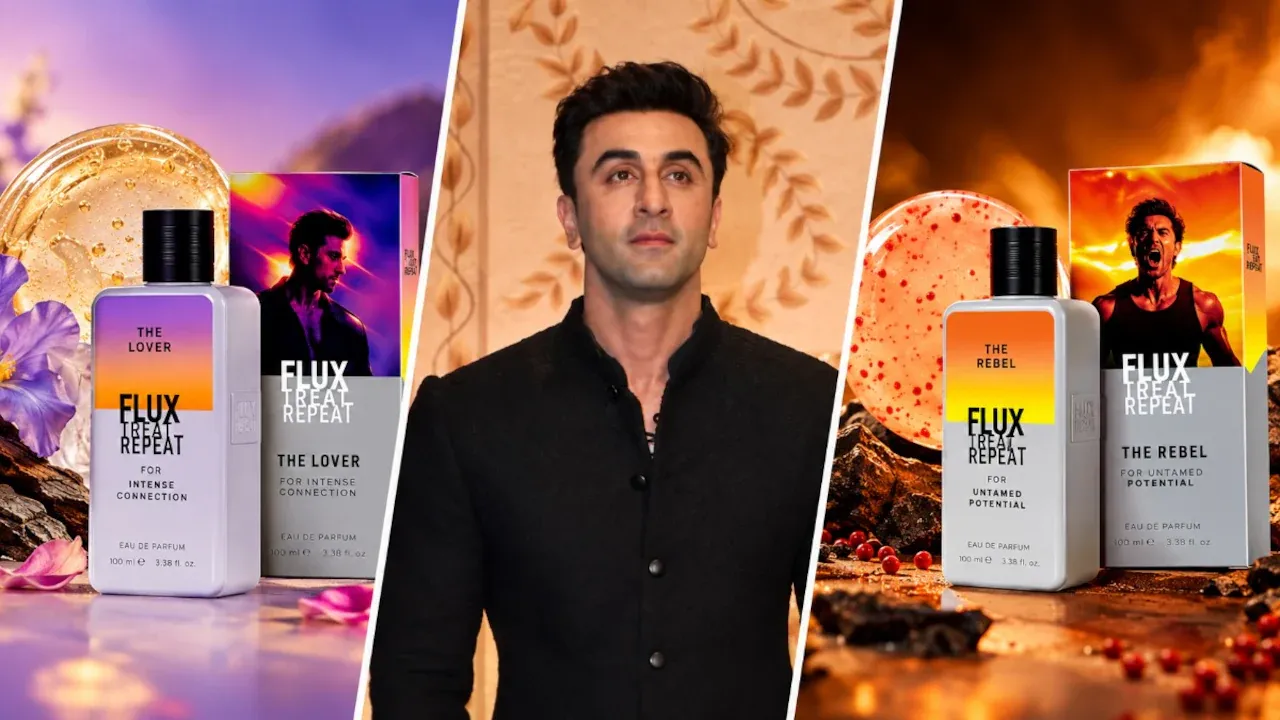
Ranbir Kapoor has become the latest Bollywood star to move from endorsing consumer products to owning them. The actor has launched Flux Theory, a shower gel and body wash brand, as its founder, entering India's fast-moving consumer goods (FMCG) market in a category dominated for decades by soap bars and a handful of multinational brands.
The brand, unveiled on 28 September 2026, was created with co-founder Advay Jhunjhunwala and Think9, a venture-building platform. Kapoor's involvement, according to the company, goes beyond the usual celebrity role of face and ambassador. He has been involved in the brand proposition, product experience, creative direction and visual identity.
Five personalities, five bottles
Flux Theory launches with five variants, each built around a personality archetype rather than a conventional product benefit. Sage offers deep cleansing with a bergamot note. Sport focuses on de-tanning and exfoliation with mint. Lover is positioned around glow with a sensual santal fragrance. Dreamer is designed for hydration with a spicy leather note. Rebel offers exfoliation with an earthy oud.
Together, the range covers the functional needs consumers look for in body care, including hydration, deep cleansing, exfoliation, brightening and moisturisation. The naming strategy, however, is deliberately emotional. It invites buyers to choose a bottle that reflects a mood or identity, an approach more common in fragrance and cosmetics than in everyday bathing products.
That choice ties into the brand's name and Kapoor's public persona. He has spoken about how acting involves inhabiting different versions of oneself, and Flux Theory builds its identity around the idea that people contain more than one personality and might want a different shower experience to match.
Where it will be sold
Flux Theory will be available through its own website and across India's main digital retail channels: Amazon, Flipkart, Myntra, Reliance's beauty platform Tira, and quick-commerce apps Zepto and Swiggy Instamart.
The channel mix is telling. The brand is starting where young, urban consumers already buy personal care products, and where a new label can gain visibility without the enormous cost of building distribution through India's millions of general trade stores. Quick commerce in particular has become a powerful launchpad for new personal-care brands, because consumers browsing for everyday items in ten-minute delivery apps are often willing to try something new at the point of purchase.
A large market with a stubborn habit
The size of the opportunity is clear. According to Euromonitor International data cited in coverage of the launch, India's bath and shower market grew 4 per cent in value in 2025, reaching retail sales of ₹35,370 crore.
The obstacle is equally clear. Mintel research found that 65 per cent of Indians were not using body wash in 2024. Soap bars remain the default for most households because they are cheap, familiar and last a long time. Body washes, which cost more per use and come in plastic bottles, have gained ground mainly among affluent urban consumers, in hotels and gyms, and among young buyers influenced by global beauty trends.
Flux Theory's challenge is therefore twofold. It must persuade a sceptical majority to change a daily habit, and it must win share among the minority that has already switched, where it competes with well-established brands from Hindustan Unilever, ITC, Godrej, Nivea and a growing list of digital-first labels.
The celebrity-founder playbook
Indian film stars have increasingly moved from brand endorsement to brand ownership. Deepika Padukone has launched the skincare brand 82°E, Katrina Kaif co-founded Kay Beauty with Nykaa, and a number of other actors and cricketers have taken equity stakes in consumer start-ups.
The logic is straightforward. A celebrity can generate awareness on launch day that would cost a conventional brand crores in advertising. Equity gives the star a share of the value they help create, rather than a fixed endorsement fee.
The record, however, is mixed. Fame drives first purchases more reliably than repeat purchases. Once the launch buzz fades, a personal-care product must succeed on the everyday experience of using it: the fragrance, the lather, how the skin feels afterwards and whether the price seems fair. Several celebrity-backed brands in India and abroad have faded after a strong opening because the product did not keep customers returning.
This is where Think9's involvement is relevant. Venture studios that build brands with celebrities typically bring the operational machinery a star lacks: sourcing, formulation, supply chain, performance marketing and retail partnerships. The quality of that execution will matter more to Flux Theory's future than any single campaign.

Kapoor's business profile
Kapoor is not new to business ownership. He has been a co-owner of Mumbai City FC in the Indian Super League and has been associated with a number of investments and brand collaborations over the years. Flux Theory, however, is his most visible move into building a consumer brand from scratch with a founder title.
His appeal cuts across age groups, but the brand's aesthetic, fragrance choices and channel strategy suggest its core target is urban consumers in their twenties and thirties. That demographic is most open to premium personal care, most active on e-commerce and quick-commerce platforms, and most receptive to identity-led branding.
What to watch
Pricing will be an early signal. The company did not disclose prices at launch. A premium price point would position Flux Theory against imported and niche brands and limit its reach. A mass-premium price would bring it closer to the high-volume brands of the large FMCG companies, which respond aggressively to new competition with discounts and promotions.
Repeat purchase rates, ratings on e-commerce platforms and the brand's ability to expand its range will also indicate whether Flux Theory can build a lasting business. Many personal-care start-ups begin with a single hero category and later add adjacent products such as deodorants, lotions and fragrances, raising average order values and customer loyalty.
The bigger picture
India's FMCG market is being reshaped by digital channels that have lowered the barriers to launching a brand. Celebrity founders are one expression of that shift, alongside direct-to-consumer start-ups and private labels from retail platforms.
For consumers, the result is more choice in categories that have changed little for decades. For established companies, it means defending share against rivals that can reach millions of consumers overnight. Flux Theory has a well-known face, a clear creative concept and access to India's fastest-growing retail channels. Its success will depend on whether a shower gel named for a mood can become part of a daily routine in a country that still mostly reaches for a soap bar.


