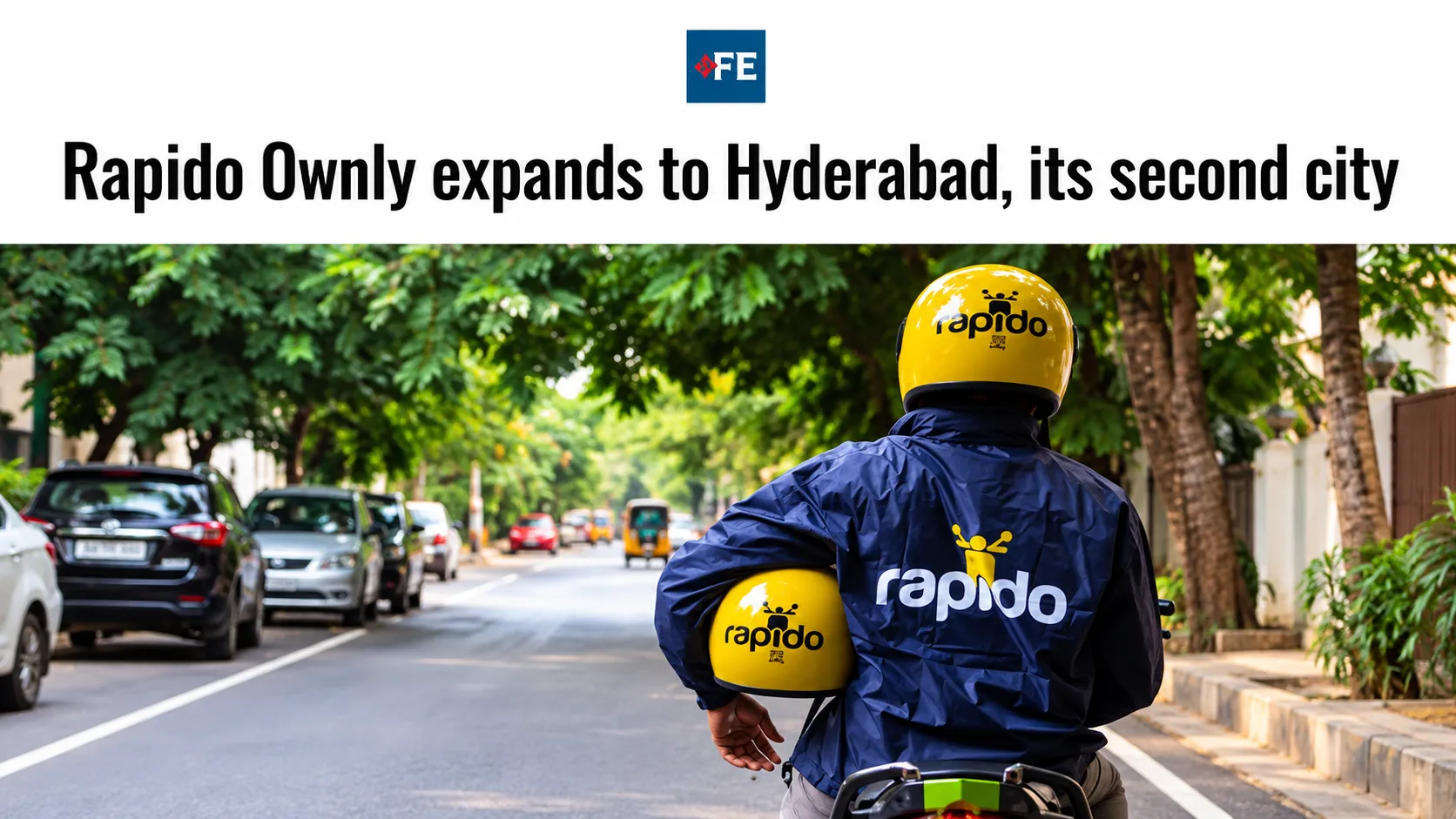
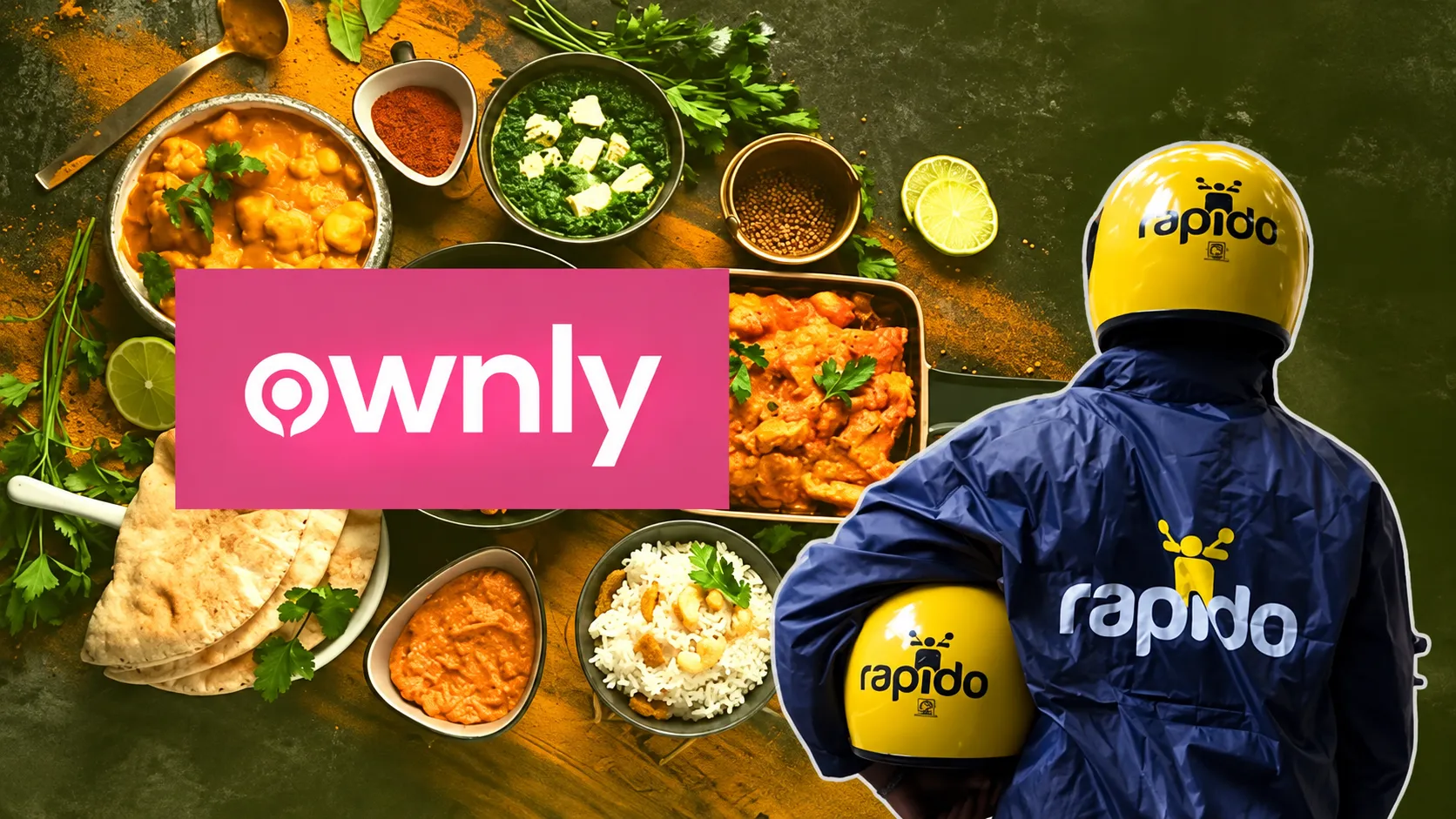
India's food delivery market has been a two-horse race for years. Rapido wants to make it three. The mobility company has launched its standalone food delivery app, Ownly, in Hyderabad, the second city for the service after Bengaluru.
The launch, announced on September 25, extends an experiment that Rapido began in Bengaluru and that has quickly drawn attention for its business model. Unlike the incumbents, Ownly does not charge restaurants a commission on orders. Instead, customers pay a delivery fee that reflects the cost of getting food to their door, allowing restaurants to retain the full value of each order.
Rapido marked the Hyderabad launch with a biryani celebration for its Captains, as the company calls its riders, featuring Telugu actor Nani. The app is available on iOS and Android and is also accessible through the main Rapido app.
Scale at launch
According to figures reported by ET Small Business, Ownly has onboarded around 10,000 restaurants in Hyderabad at launch and is targeting 30,000. Across its operations, Business Standard reported, the platform now works with more than 20,000 restaurant partners.
Hyderabad is a logical second market. It is one of India's largest food delivery cities, with a strong restaurant culture and a large population of young professionals. It is also a city where Rapido already has a significant presence in bike taxis and auto-rickshaws, giving it a ready-made fleet.
Why zero commission is a big deal
Commissions are the most contentious issue in Indian food delivery. Restaurant owners and industry associations have long complained that fees charged by aggregators, which can take a substantial share of an order's value once advertising and other charges are included, squeeze already thin margins.
Ownly's pitch to restaurants is straightforward: keep what you earn. By removing commissions, it hopes to attract restaurants that are frustrated with incumbents, and to allow them to offer lower menu prices on its platform. Business Standard has reported that the model relies on subscription-style fees rather than per-order commissions.
For customers, the trade-off is a visible delivery fee. Rapido is betting that if menu prices are lower and the fee is transparent, total costs will still be competitive, or cheaper, than on rival apps.
The Bengaluru numbers
The early data from Bengaluru suggests the model is finding an audience. According to ET Small Business, Ownly handles more than 50,000 orders a day in Bengaluru, where it began as a pilot in August 2025 before a formal launch in select areas such as Koramangala, HSR Layout and BTM Layout at the start of 2026.
Its average order value is about ₹250, compared with roughly ₹400 to ₹420 on Swiggy and Zomato. That points to a focus on everyday, affordable meals rather than larger or premium orders. About a quarter of Bengaluru orders are delivered within 20 minutes.
Perhaps most interesting is the finding that around 15 per cent of new orders in Bengaluru come from people who had never ordered food online before. If that pattern holds, Ownly is not only taking share from incumbents but expanding the market, drawing in consumers who were put off by higher prices.
Rapido's structural advantage
Delivery is the most expensive part of the food delivery business. ET Small Business cited estimates that delivery accounts for 85 to 90 per cent of incumbent aggregators' operating costs.
That is where Rapido believes it has an edge. The company operates in more than 400 cities and facilitates over 5 million rides a day, according to Business Standard. Its Captains are already on the road throughout the day. Adding food delivery can increase their utilisation and earnings, particularly during meal times when ride demand may dip, while spreading Rapido's fixed costs across more services.
The company has said its Captain community will play a central role in Ownly's Hyderabad operations, creating additional earning opportunities alongside the mobility business.
A market worth fighting for
India's online food delivery market remains one of the country's most attractive consumer internet segments. Jefferies estimates, cited by Business Standard, project that the market could grow to nearly $25 billion by 2029–30 from about $9 billion in 2024–25.
That growth has made the incumbents two of India's most valuable listed internet companies. Zomato, now part of Eternal, and Swiggy have both expanded into quick commerce, dining out and other services, and have strong brand recognition, loyalty programmes and restaurant relationships.
Challenging them is not easy. Previous entrants, including large global players, have struggled to gain share. The government-backed Open Network for Digital Commerce (ONDC) has also attempted to create a lower-cost alternative, with mixed results.
Risks for Ownly
Ownly's model faces several tests. First, it must attract enough restaurants to offer genuine choice. Many popular outlets rely on the marketing reach of the incumbents and may hesitate to divert attention to a new platform.
Second, it must prove that its unit economics work at scale. Low average order values leave little room for error, and delivery fees must be high enough to cover costs without deterring customers.
Third, it must manage the operational complexity of running food delivery alongside ride-hailing. Rider availability during peak meal times, service quality and customer support will all be closely watched.
Finally, incumbents are unlikely to stand still. They may respond with lower fees for restaurants, promotions for customers or new value-focused services of their own.
Part of Rapido's super-app ambition
Ownly is part of Rapido's broader strategy to build a unified consumer ecosystem. The company has expanded from bike taxis to auto-rickshaws, cabs, parcel delivery and flight bookings. Food delivery adds a high-frequency use case that can bring users back to the app several times a week.
Integrating food into the main Rapido app, while also offering a standalone Ownly app, gives the company two routes to customers. Existing ride users can discover food delivery without downloading anything new, while dedicated food customers can use a focused experience.
A third player at the table
Ownly's arrival in Hyderabad is the clearest sign yet that Rapido sees food delivery as a serious business, not a side project. The zero-commission model directly addresses one of the most persistent frustrations of India's restaurant industry, and early Bengaluru data suggests that affordable meals and transparent fees can attract new customers.
Whether Ownly can build lasting scale against two entrenched and well-funded incumbents remains to be seen. But for restaurant owners in Hyderabad, and for consumers looking for cheaper everyday meals, the arrival of a third serious player is likely to be welcome news.