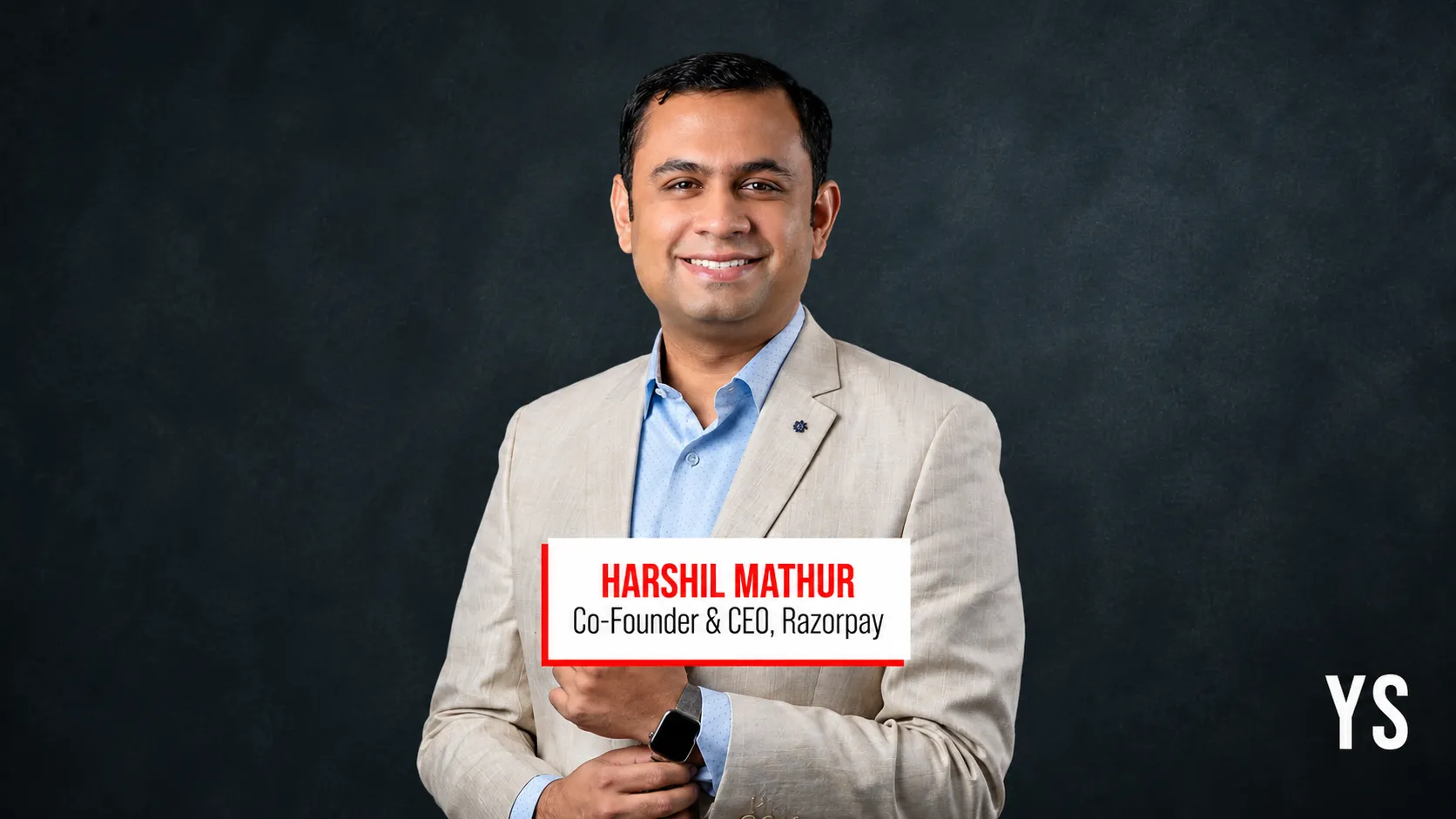
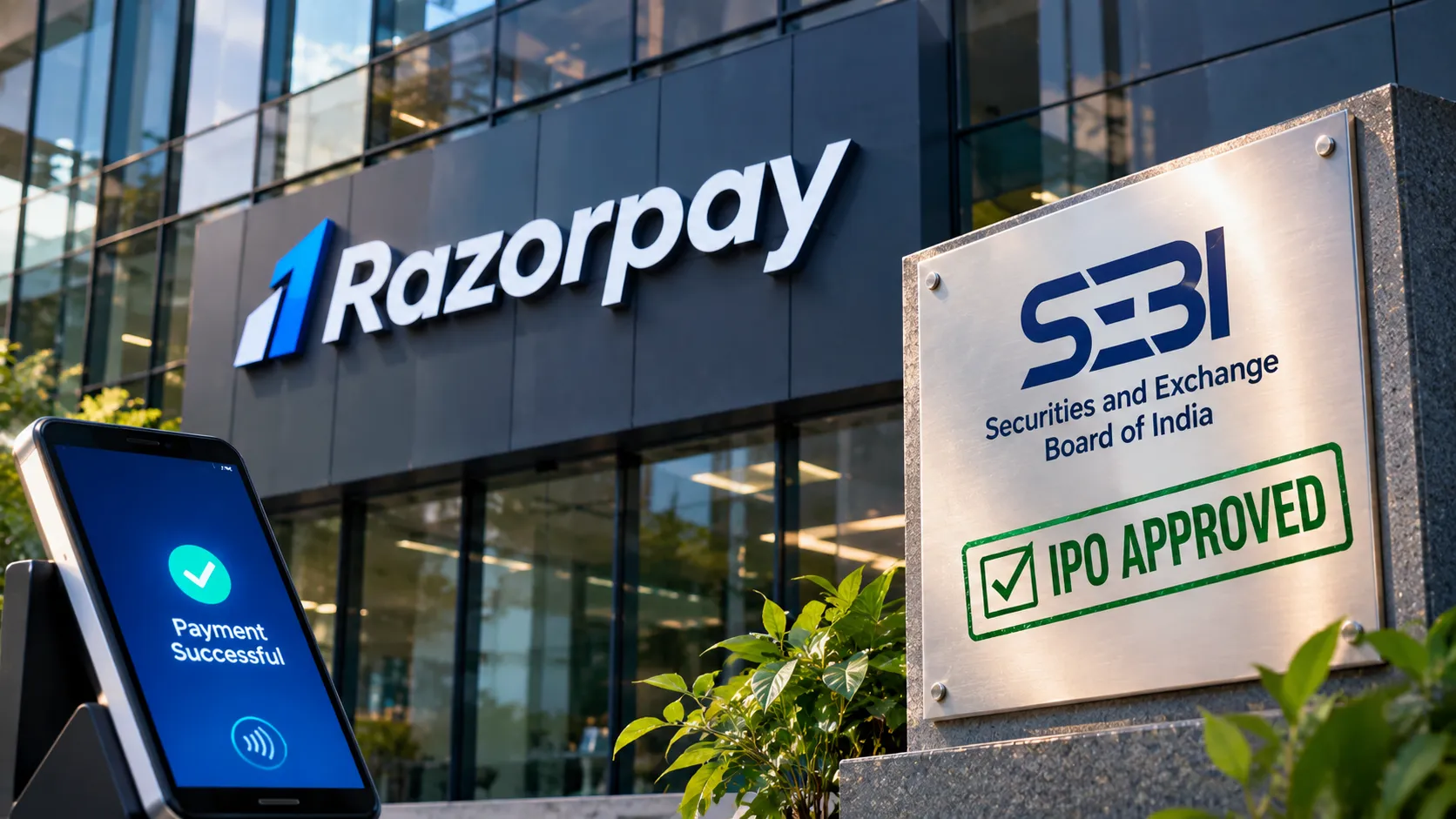
Razorpay, the Bengaluru-based payments company that became one of the defining fintech names of India's startup boom, has received approval from the Securities and Exchange Board of India (SEBI) for its initial public offering. That brings a public listing within reach for one of the country's most closely watched unicorns.
The approval was first reported by the Economic Times on November 3, citing people familiar with the matter, and was subsequently confirmed by several outlets including CNBC-TV18 and Inc42. Neither the company nor the regulator had issued a formal public statement at the time of writing. According to those reports, Razorpay aims to raise between ₹5,500 crore and ₹6,500 crore at a valuation of around $5 billion, or roughly ₹49,000–50,000 crore. Inc42, citing its own sources, put the issue size at ₹5,000–6,000 crore.
A valuation reset that tells its own story
The headline number is significant for what it reveals about the market's mood. Razorpay was last valued at $7.5 billion in 2021, when it raised $375 million at the height of the global venture capital frenzy. A $5 billion listing price would therefore mark a reset of roughly one-third from that private-market peak.
That is not unusual. Over the past three years, Indian technology companies have repeatedly gone public below their last private valuations, and public investors have shown a clear preference for disciplined pricing over headline numbers. Several listed new-age companies that priced conservatively have since rewarded early public shareholders, and bankers increasingly argue that leaving money on the table at IPO is a better outcome than a weak debut.
For Razorpay's investors, who include GIC, Peak XV Partners, Tiger Global, Ribbit Capital, Lightspeed, TCV and Y Combinator, the listing offers a long-awaited liquidity route. The offering is expected to combine a fresh issue of shares with an offer-for-sale (OFS) by existing shareholders, although the split between the two has not been disclosed.
The long road to the bourses
Founded in 2014 by IIT Roorkee alumni Harshil Mathur and Shashank Kumar, Razorpay began as a payment gateway for online merchants and has grown into a broad financial-services platform. Its products now span business banking, payroll, lending and merchant payment solutions. Its ascent tracked the explosion of digital commerce in India and the rapid adoption of the Unified Payments Interface (UPI).
The company spent much of the past two years preparing for this moment. In May 2025, Razorpay completed a "reverse flip", moving the domicile of its parent company from the United States back to India. The step required clearances from the Reserve Bank of India and the Ministry of Corporate Affairs and was a precondition for listing on Indian exchanges. Several prominent startups have taken the same route in recent years, encouraged by deepening domestic capital markets and regulators who have made it easier for technology companies to list at home.
On June 12, 2026, Razorpay pre-filed its draft red herring prospectus with SEBI and the stock exchanges through the confidential route. It disclosed the step publicly three days later in a newspaper advertisement. SEBI introduced the confidential filing mechanism in 2022. It allows companies to work through regulatory review without immediately publishing sensitive financial and business details, giving them more flexibility to time their market entry.
The financial picture
The numbers available so far show strong growth alongside the costs of corporate restructuring. Razorpay's consolidated operating revenue rose 65% year on year to ₹3,783 crore in FY25, from ₹2,296 crore a year earlier.
The company slipped into a loss that year. According to Inc42, this was largely because of ₹1,209 crore in employee stock option (ESOP) expenses, along with one-time restructuring and tax costs tied to the domicile shift. Those items are non-recurring in nature, and investors will look closely at the final offer document for evidence of underlying operating profitability. Detailed FY26 figures are expected to become public when the company files its updated prospectus.
Media reports indicate that Axis Capital, Kotak Mahindra Capital, JP Morgan and Citi have been appointed as bankers for the issue. The company is expected to file its final papers before March 2027. Some reports suggest a listing as early as December 2026, while others point to a January–March 2027 window, subject to market conditions.
What SEBI's approval does and does not mean
SEBI's nod, known formally as its "observations" on a draft offer document, is a necessary step but not a launch signal. After approval, a company must file its red herring prospectus, the final offer document, and then announce a price band and subscription dates. SEBI approval is generally valid for 12 months, which gives Razorpay considerable room to choose its moment.
That flexibility matters. Indian equity markets have been volatile in recent weeks. Foreign portfolio flows, oil prices and global risk appetite have all weighed on sentiment, and mid- and small-cap indices have come under particular pressure. A company of Razorpay's profile will want a stable window, strong anchor-investor interest and clear valuation comparables before opening its books.
Competitive and sectoral context
Razorpay will enter a public fintech universe that already includes Paytm parent One 97 Communications and Pine Labs, among others. The payments business in India is famously difficult to monetise: UPI transactions for consumers carry no merchant discount rate, which pushes payment companies to build revenue from adjacent services such as merchant lending, banking-as-a-service, payroll and enterprise software.
That is exactly where Razorpay has been investing. In March 2026, it partnered with Sarvam AI to roll out an AI voice agent that can complete food orders and payments on a user's behalf, a sign that the company is positioning itself for an era of "agentic" commerce in which software, rather than people, increasingly initiates transactions.
Its pitch to public investors is likely to centre on three pillars: the scale of its merchant base, the growing share of higher-margin non-payment revenue, and its ability to convert revenue growth into consistent profits once restructuring costs fall away.
Why the listing matters beyond Razorpay
For India's startup ecosystem, a successful Razorpay IPO would carry weight beyond one company's balance sheet. It would reinforce the case that Indian capital markets can absorb large technology listings at sensible valuations. It would also return capital to early-stage investors who can recycle it into new companies, and it would encourage other late-stage startups weighing a reverse flip.
For employees, many of whom hold stock options, it would mark one of the most significant wealth-creation events in Indian fintech since the sector's earliest listings.
The coming weeks will reveal more as the final prospectus takes shape. For now, the message from Dalal Street's regulator is clear: one of the most anticipated fintech IPOs of the decade has the green light. The remaining question is timing, and at what price public investors are willing to back the next chapter of Harshil Mathur and Shashank Kumar's company.
The Impactful Global Indian will track the issue's price band, anchor book and listing performance as details emerge.


