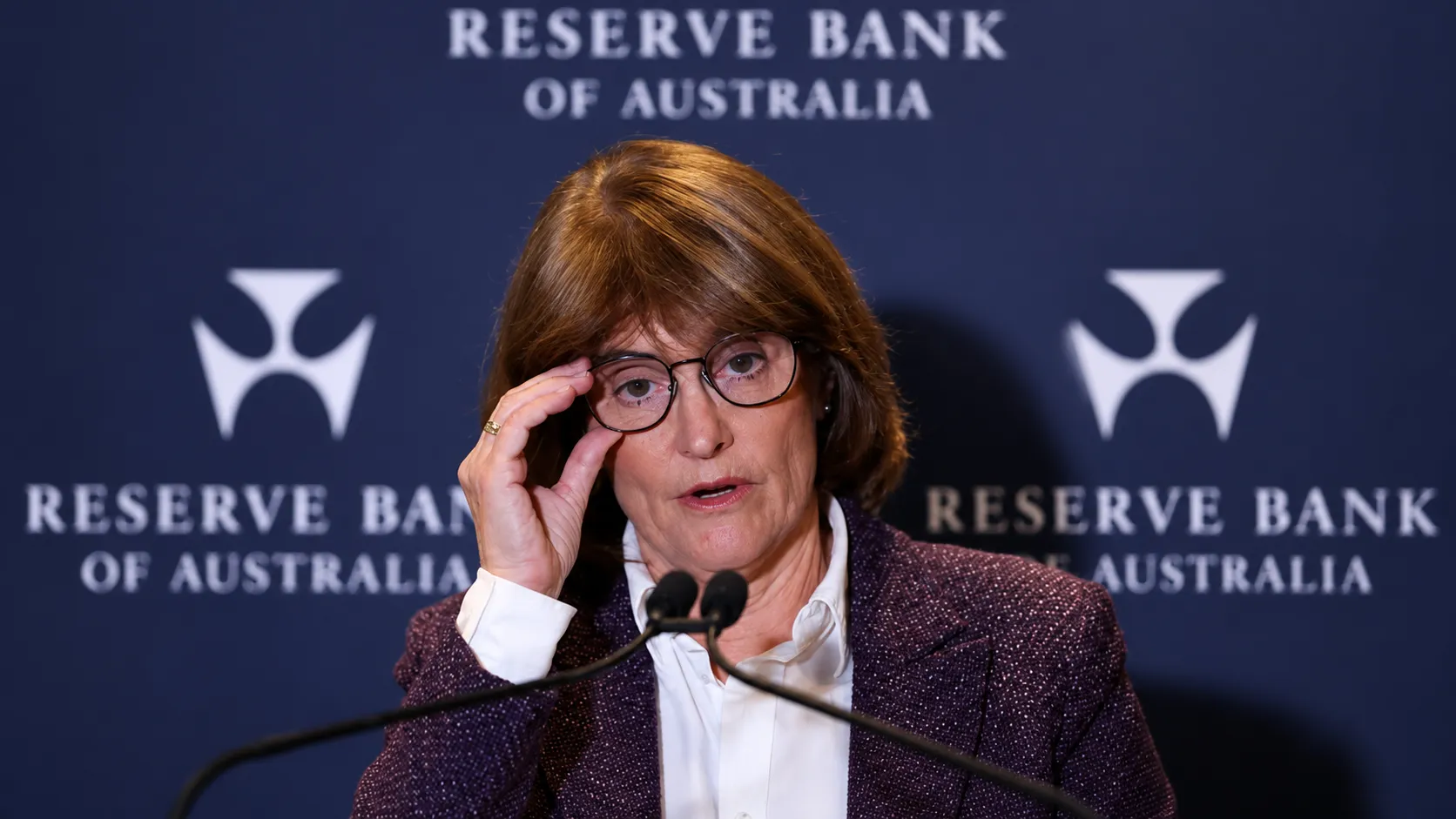
Reserve Bank of Australia Governor Michele Bullock has pushed back against increasingly optimistic assumptions about artificial intelligence's economic benefits, saying there is not yet clear evidence that the technology is improving national productivity and that AI could be part of a speculative bubble.
Speaking at a Committee for Economic Development of Australia (CEDA) event in Sydney on Tuesday, 22 September 2026, Bullock said central banks around the world regard AI as "the great white hope" to lift productivity, but have seen little sign of that effect so far. Instead, she said, rapid adoption and heavy investment in data centres are currently adding to inflationary pressures.
A candid assessment from a central banker
Bullock's remarks were notable for their candour. Asked about the possibility of an AI bubble, she said central banks were all a little worried about the risk. "Some people think it's a bubble, some people don't," she said. "I don't have a particular view one way or the other, but it's a risk that I think we're watching."
She warned that a disorderly fall in technology valuations could hurt economic activity. A sharp correction in AI-linked stocks could reduce household wealth and business investment, with knock-on effects for growth and employment.
The comments come at a moment when AI enthusiasm has driven technology stocks to new highs. On the previous day, US technology shares had surged after Meta debuted its new Muse AI agent, with Meta's own stock rising about 11%.
The productivity paradox, again
Bullock's scepticism about near-term productivity gains echoes a long-standing pattern in economic history. Transformative technologies, from electricity to personal computers, have often taken years or even decades to show up in aggregate productivity statistics. Economists sometimes refer to this as the productivity paradox.
Bullock explained that businesses often experience lower productivity while they adapt to major new technologies. As people experiment with new tools and try to work out how to use them, output per hour can actually fall before workflows are reorganised to capture the benefits.
She cited research from the Bank of Korea, South Korea's central bank, which found that employees adopting AI tended to produce the same output while working about 1.5 hours less each week. That finding suggests AI may be delivering benefits to individual workers in the form of time saved, but not necessarily translating into higher output for the economy as a whole.
Data centres as an inflationary force
One of Bullock's most striking observations concerned the inflationary effect of AI investment. Building data centres requires construction labour, materials, electricity infrastructure and equipment, all of which compete with other demands in the economy. In a labour market that the RBA considers still too tight, such investment can add to price pressures before any productivity benefits materialise.
This dynamic is not unique to Australia. Globally, the AI build-out has become one of the largest investment booms in recent memory, with technology companies committing hundreds of billions of dollars to chips, data centres and power infrastructure. Some economists have noted that this spending is currently supporting growth and employment in construction and manufacturing, while its long-term payoff remains uncertain.

Rates expected to rise
Bullock's comments came ahead of an RBA policy meeting next week, at which all four of Australia's major banks and most money-market traders expect the central bank to raise interest rates. She said the jobs market was probably still a little too tight and putting upward pressure on inflation.
Bullock also said the recent slump in Australian house prices was deeper than others in the country's recent history, adding another dimension to the economic picture. Resurgent oil prices have also weighed on markets and inflation expectations globally.
Her remarks contrasted with the optimism of the Albanese government, which has emphasised AI's potential to address Australia's economic challenges, including its long-running productivity slowdown.
Why her words matter globally
Bullock's comments carry weight beyond Australia. As one of a small but growing number of women leading major central banks, and as the head of the monetary authority of a major commodity-exporting economy closely tied to Asian growth, she is part of a global conversation among policymakers about AI's macroeconomic effects.
Central banks face a genuine dilemma. If AI eventually delivers a significant productivity boost, it could allow economies to grow faster without generating inflation, potentially justifying lower interest rates over time. But if the benefits are delayed while investment spending runs hot, AI could add to inflation in the near term, requiring tighter policy. And if valuations prove to be a bubble, a correction could pose risks to financial stability.
Getting that assessment right has consequences for borrowers, savers and investors worldwide.
Lessons for India
For Indian policymakers and investors, Bullock's remarks offer a useful counterpoint to the prevailing enthusiasm. India's technology services industry is directly exposed to AI's impact on enterprise spending, and the country is also experiencing its own data-centre investment boom. Understanding whether AI boosts productivity, displaces work or simply shifts costs will be important for India's growth and employment outlook.
The Reserve Bank of India, like its peers, will need to monitor how AI investment and adoption affect inflation, labour markets and financial stability, even as the government promotes AI as a driver of economic transformation.
The investment boom in context
The scale of AI-related investment globally has drawn comparisons with previous technology booms, including the build-out of telecommunications networks and internet infrastructure in the late 1990s. That earlier episode delivered lasting infrastructure but also a painful market correction when expectations outran revenues. Bullock's warning reflects a recognition among central bankers that the financial risks of an investment boom can materialise well before its economic benefits do.
A sober voice in an exuberant moment
Bullock's intervention does not dismiss AI's potential. She acknowledged that central banks share the hope that the technology will eventually lift productivity. Her point is that hope is not yet evidence, and that policymakers must deal with the economy as it is, not as enthusiasts expect it to become.
In a market environment where AI optimism has driven extraordinary valuations and investment, that sober perspective may prove valuable. Whether AI ultimately delivers the productivity revolution many anticipate, or whether the current boom proves to be ahead of its time, central bankers like Bullock will be watching the data closely, and adjusting policy accordingly.