India's long-awaited private investment revival appears to be gathering pace, at least on paper. Private corporate capital expenditure is projected to rise to ₹3.2 trillion in the 2026-27 financial year, up from ₹2.6 trillion in 2025-26, according to a study published in the Reserve Bank of India's September bulletin. The projection is based on the pipeline of projects sanctioned by banks and financial institutions, which reached a record aggregate cost of ₹4.4 trillion in FY26, compared with ₹3.7 trillion a year earlier.
The study, authored by RBI staff Purnendu Kumar, Snigdha Yogindran, Sukti Khandekar and Bhavyashree K, tracks how sanctioned projects translate into actual spending over several years. Because a project approved in one year is typically executed over three or four, the phasing of past sanctions provides a reasonable guide to capital formation in the year ahead.
Infrastructure leads, power dominates
Infrastructure continues to dominate the investment landscape. The sector accounted for 54.2 per cent of the total cost of projects sanctioned in FY26, with power the single largest component. That reflects the enormous capital requirements of India's energy transition, including solar and wind generation, battery storage, pumped hydro and transmission, as well as continued investment in conventional capacity to meet record demand.
Project sizes are growing. Mega projects accounted for 17 per cent of total project costs and large projects for 51.3 per cent. Banks and financial institutions sanctioned 12 mega projects and 100 large projects during the year. Greenfield projects, which involve building new capacity rather than expanding existing plants, made up 89.2 per cent of total costs, a sign that companies are committing to new assets rather than simply sweating existing ones.
A concentrated geography
The pipeline is heavily concentrated. Six states, Maharashtra, Gujarat, Rajasthan, Karnataka, Andhra Pradesh and Tamil Nadu, accounted for 67.1 per cent of total project costs. That concentration reflects a combination of factors: established industrial clusters, better land and power availability, port access, and state governments that have competed aggressively for investment with incentives and single-window clearances. Rajasthan's presence on the list owes much to its solar resources, while Andhra Pradesh has been attracting large data centre and renewable projects.
The flip side is that large parts of eastern and northern India continue to capture a relatively small share of private investment, a gap that has implications for regional employment and income convergence.
How projects are being funded
The study also highlights a shift in funding sources. Financing through external commercial borrowings strengthened, while funding through the initial public offering route declined. That pattern is consistent with the market conditions of the past year. Indian equities have fallen for seven consecutive weeks, and while the primary market has remained active with large listings, companies funding long-gestation capital projects have leaned on debt, including foreign-currency loans.
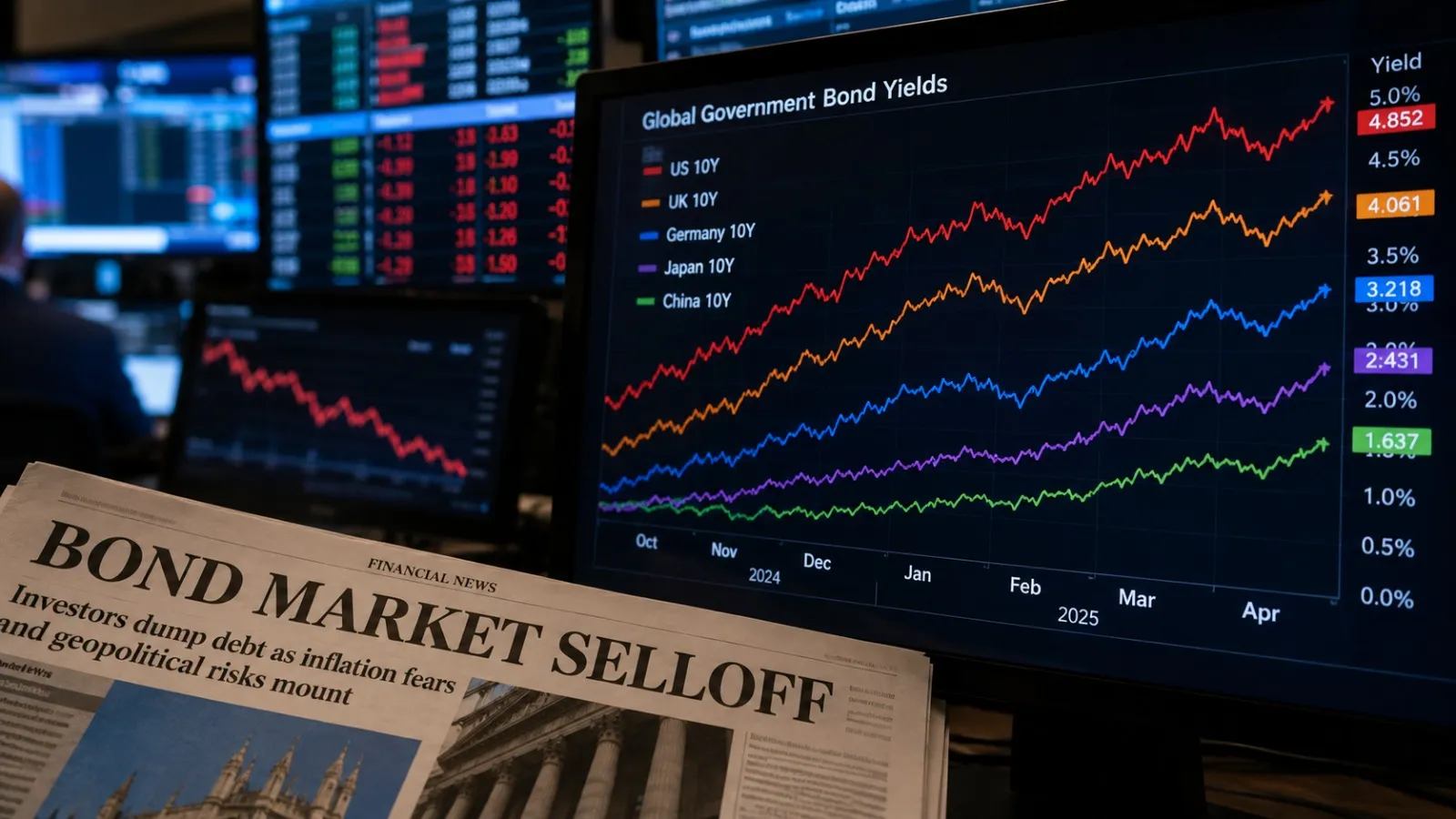
ECB funding carries its own risks. With US Treasury yields above 5 per cent and the rupee under pressure from high oil prices, the cost of hedging foreign-currency debt has risen. Companies that borrowed unhedged face balance-sheet risk if the rupee weakens further. The RBI has long monitored hedging ratios among corporate borrowers precisely for this reason.
The implementation caveat
The RBI authors are careful to note that actual capital formation will depend on timely implementation and on how the external environment evolves. Sanctioned projects do not always proceed on schedule. Land acquisition, environmental clearances, equipment supply chains and financing closures can all delay execution, and a sharp shift in demand conditions can lead promoters to slow or defer spending.
The global backdrop is less supportive than it was a year ago. The Federal Reserve, the European Central Bank and the Bank of Japan all raised interest rates in September, the first time the three have tightened in the same month. Oil prices above $100 a barrel, linked to disruption in the Strait of Hormuz, have raised input costs across industry. Trade policy uncertainty, including US tariff threats against India, adds a further layer of risk for export-oriented investment.

Why the number matters
India's growth model over the past five years has leaned heavily on public investment. The central government's capital expenditure budget has risen sharply since the pandemic, funding roads, railways, ports and defence. The policy intent has always been for public spending to "crowd in" private investment by improving infrastructure and demand visibility. A rise in private capex from ₹2.6 trillion to ₹3.2 trillion, if realised, would be a meaningful step towards that handover.
Corporate balance sheets are in a stronger position than during the last investment upcycle of the late 2000s. Leverage among large listed companies has fallen, and banks have cleaned up the bad loans that crippled lending in the 2010s. That makes a sustained private investment cycle more plausible than it has been for years, provided demand holds up.
Where the opportunities lie
For investors, the composition of the pipeline offers clues. Power, including renewables, storage and transmission, remains the largest opportunity, supporting equipment manufacturers, engineering and construction firms, cable and transformer makers, and financiers. Data centres are an emerging category, driven by artificial intelligence workloads and data localisation. Manufacturing projects linked to production-linked incentive schemes, particularly electronics and components, continue to feature.
For startups and technology firms, a capex upcycle creates demand for industrial software, project management tools, drones for site monitoring, and financing platforms for small suppliers in the construction value chain. For the Indian diaspora considering investment at home, infrastructure investment trusts and listed infrastructure companies provide exposure to the theme.
The central question is execution. A record pipeline of ₹4.4 trillion in sanctioned projects provides a strong foundation, and the RBI's projection of ₹3.2 trillion in FY27 spending suggests momentum. But the translation of sanctions into steel, concrete and machinery will depend on how companies read the next 12 months of demand, interest rates and geopolitics. The sanctions are strong; the question now is how quickly the cranes go up.
Banks are a central part of the story. Lenders have been growing their corporate loan books cautiously after the clean-up of the last decade, preferring retail and small business credit where margins have been higher. A pipeline of large infrastructure sanctions suggests that corporate credit demand is returning, which could shift the composition of bank balance sheets over the next two to three years. The pace at which banks disburse against those sanctions will be one of the clearest real-time indicators of whether the capex cycle is turning from intention into activity.
Economists will be looking at the next set of quarterly data on gross fixed capital formation for confirmation. If private investment rises as a share of GDP, it would mark a structural shift in India's growth drivers. If sanctions pile up while spending lags, it would suggest that corporate India, despite strong balance sheets, remains cautious in an uncertain world.