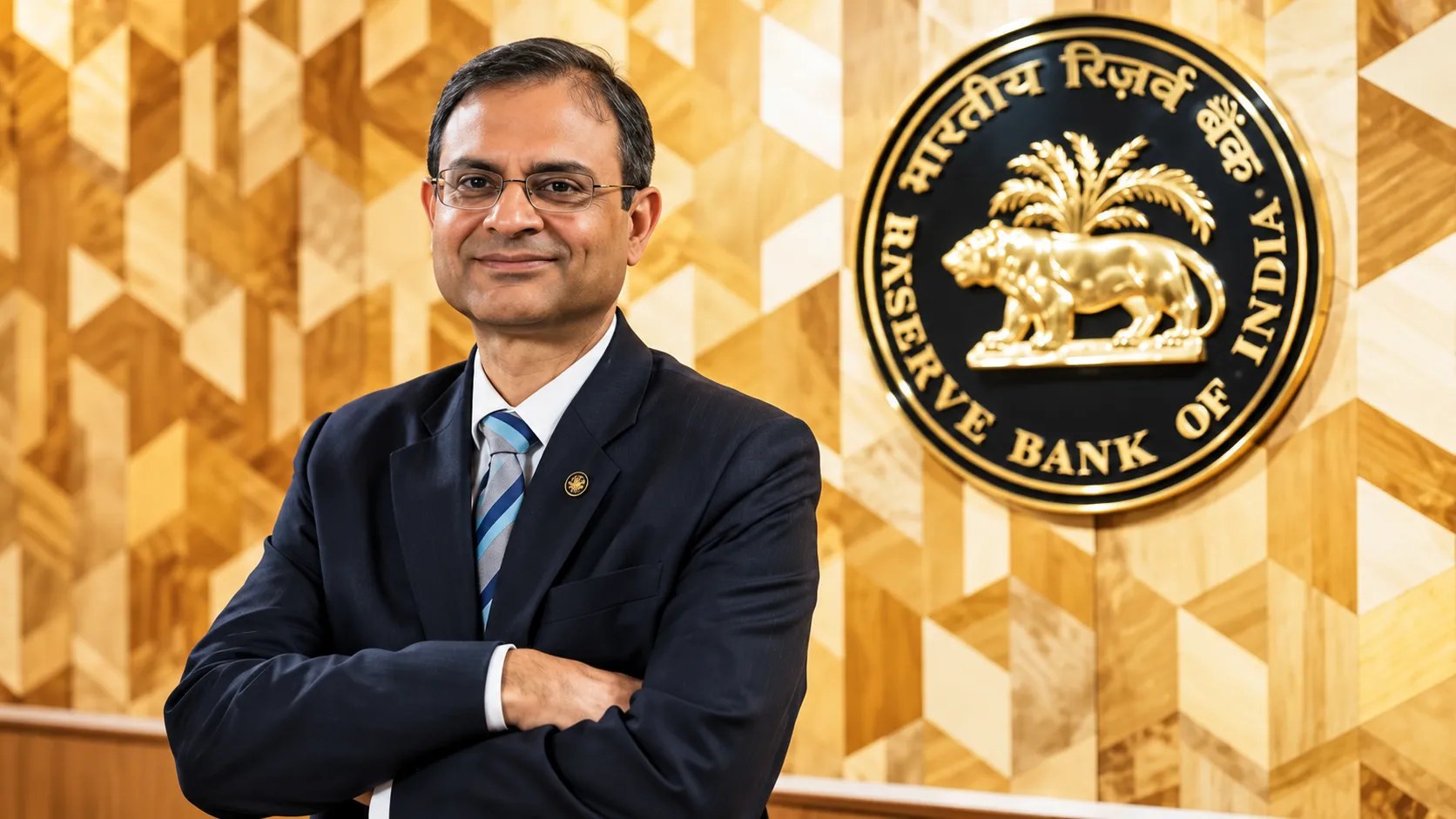
The Reserve Bank of India will continue to keep cryptocurrencies at arm's length while actively developing the technologies that underpin them, Governor Sanjay Malhotra said on Saturday, restating one of the central bank's most consistent policy positions at a time when other major economies are moving to bring digital assets into the regulated financial system.
Speaking at the Kautilya Economic Conclave in New Delhi on 3 October, Malhotra said India's caution stemmed from concerns about monetary sovereignty, the conduct of monetary policy and capital flows. He said the central issue was the "singleness of money", the principle that a country's currency should be the single, unambiguous unit of account and settlement within its economy, and the implications for monetary policy, especially in emerging economies that manage capital flows.
At the same time, he drew a clear distinction between crypto assets and the technology behind them. "So, our approach has been to promote the underlying technologies, and we are using some of these in the central bank and outside in PPP mode," he said, referring to public-private partnerships. He named distributed ledger technology and tokenisation as areas of active work.
Why the RBI remains wary
Malhotra's argument rests on a concern central bankers in emerging markets have voiced for years. If a significant share of domestic payments or savings moved into privately issued digital tokens, especially dollar-linked stablecoins, a central bank's ability to set interest rates and manage liquidity could weaken. In countries that manage capital flows, crypto rails could also provide a route around those controls.
The governor also questioned the practical case for crypto in India's domestic payments. He said payments within India, and within many other countries, are already "quite fast, cheap and convenient", limiting the benefit that cryptocurrencies could offer for everyday transactions.
That claim is grounded in India's experience with the Unified Payments Interface. UPI processed more than 24 billion transactions in September, according to data from the National Payments Corporation of India, even after a small monthly dip. For most Indian consumers and merchants, instant, free or near-free payments are already routine.

Cross-border: CBDCs over crypto
Where Malhotra acknowledged a genuine problem is in cross-border payments, which remain slow and costly in many corridors. Rather than turning to cryptocurrencies, he said, the RBI is exploring alternatives including central bank digital currencies.
India has been piloting its own CBDC, the e-rupee, since 2022, in both wholesale and retail forms. Central banks globally are also experimenting with linking domestic fast-payment systems and with multi-CBDC platforms that could settle cross-border transactions directly between central bank money.
For India, which is the world's largest recipient of remittances, cheaper and faster cross-border payments would bring tangible benefits to millions of households that depend on money sent home by family members working abroad, including the large Indian diaspora in the Gulf, North America and Europe.
Tokenisation as the bridge
The governor's emphasis on tokenisation is significant. Tokenisation refers to representing real-world assets, such as bonds, deposits, invoices or property, as digital tokens on a shared ledger. Its proponents argue it can make settlement faster, reduce reconciliation costs and allow assets to be divided into smaller units.
Global financial institutions have been investing heavily in tokenised money-market funds, bonds and deposits. By positioning the RBI as a supporter of the technology, while rejecting unbacked crypto assets, Malhotra is signalling that Indian banks and fintech firms can innovate within a regulated framework without the central bank's stance on crypto changing.
The approach also reflects the RBI's preference for running such experiments through partnerships it can supervise. The reference to "PPP mode" suggests a model in which the central bank sets standards and provides infrastructure, while regulated private entities build services on top, much as happened with UPI.
Global bond yields in focus
Malhotra also addressed the sharp rise in global bond yields. He attributed it to increased spending by governments and the private sector, including heavy investment linked to artificial intelligence, at a time when the supply of capital is limited. US 10-year Treasury yields climbed above 5.3% last week, their highest level since 2002, putting pressure on emerging-market currencies and capital flows.
Speaking at the same conclave, the governor warned that today's financial resilience may not imply immunity tomorrow, a caution that reflects the RBI's attention to external shocks as oil prices remain elevated and foreign investors sell Indian equities.
A position at odds with some peers
The RBI's stance contrasts with moves in several major jurisdictions to create comprehensive regulatory regimes for digital assets and stablecoins. In India itself, the government has taxed crypto gains since 2022 and applies a tax deduction at source on transfers, but has not established a full regulatory framework. Reports have suggested that parts of the government may be open to a stablecoin framework that differs from the RBI's preference. ## Stablecoins: the next flashpoint
The most immediate pressure on the RBI's position may come from stablecoins, digital tokens pegged to currencies such as the US dollar. The United States enacted a federal framework for payment stablecoins in 2025, and other financial centres have introduced their own regimes. As dollar stablecoins become easier to use globally, central banks in emerging markets worry that they could become a channel for capital flight or a substitute for local currency in cross-border trade.
Malhotra's emphasis on monetary sovereignty and capital flows speaks directly to that concern. For the RBI, a rupee-denominated digital currency issued by the central bank, rather than privately issued tokens, remains the preferred route to modernise payments.
That leaves India's crypto industry in a familiar position: legal to use, heavily taxed and without the regulatory clarity it has sought for years. Malhotra's comments suggest the central bank's view will not soften soon.
What it means for business
For banks, payment companies and fintech startups, the message is reasonably clear. Projects built on tokenisation, distributed ledgers and CBDC infrastructure are likely to find a receptive regulator, particularly when conducted in partnership with regulated entities. Business models that depend on retail crypto trading or private stablecoins will continue to operate under uncertainty.
For investors and the diaspora, the governor's remarks are a reminder that India's approach to financial innovation is shaped first by macroeconomic stability. The RBI's monetary policy committee is due to announce its next decision this week, against a backdrop of high oil prices, a weaker rupee and rising global yields. In that environment, the central bank's caution on anything that could weaken its control over money is unlikely to change.