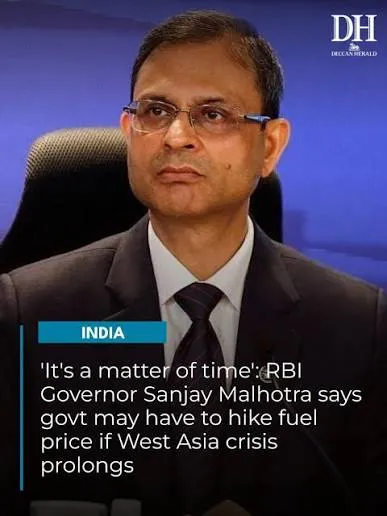
Reserve Bank of India Governor Sanjay Malhotra has offered one of the central bank's most explicitly positive framings yet of artificial intelligence's role in lending, arguing that AI systems are capable of approving loans that human underwriters, working with more limited data and more conventional risk models, would have turned down. Malhotra described AI as a capability to be responsibly harnessed rather than merely a risk to be contained — a formulation that marks a notable shift in tone from a regulator historically associated with caution around emerging financial technology.
The comments extend a pattern of increasingly detailed public remarks from Malhotra on the intersection of AI and financial services since he took charge of the RBI. Earlier this year, the governor had already urged India's regulated banks and non-bank financial companies to deploy AI-driven internal controls to address a growing volume of consumer complaints, noting that the country's 95 commercial banks alone received more than 10 million customer complaints related to mis-selling and aggressive sales practices in a recent financial year — a volume he warned would only grow as customer bases and product suites continued to expand.
Malhotra's latest remarks push the conversation further, from AI as a tool for detecting fraud and mis-selling to AI as a genuine credit-decisioning capability — one that could expand access to formal credit for borrowers who have historically been excluded or underserved by traditional underwriting models. India's credit-scoring infrastructure has long struggled to adequately assess borrowers without extensive formal financial histories, including large segments of the country's informal-sector workforce and first-time borrowers in smaller towns and rural areas, precisely the population that alternative, AI-driven credit models are often positioned to serve.
The governor's framing arrives at a moment when India's fintech sector has been pushing hard on AI-driven underwriting as a genuine competitive differentiator, with several lending platforms building models that incorporate alternative data signals — from utility payment histories to digital transaction patterns — to assess creditworthiness beyond what traditional bureau scores can capture. A supportive public stance from the RBI governor carries real weight for an industry that has, at times, operated in regulatory grey areas around data usage and algorithmic decision-making in lending.
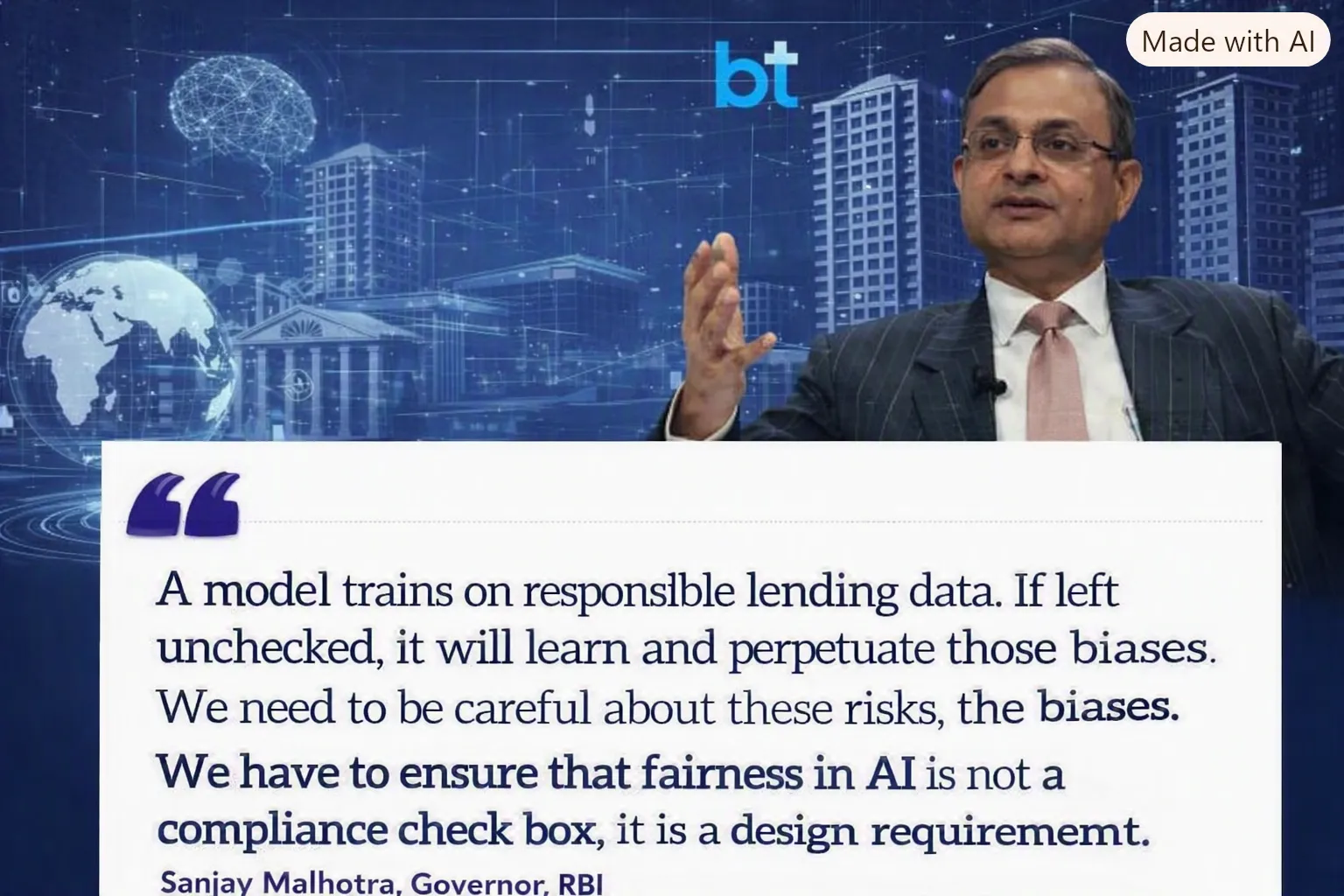
At the same time, Malhotra's comments are unlikely to signal a wholesale relaxation of regulatory scrutiny. The RBI under his leadership has continued to emphasise the importance of financial-system resilience, robust fraud safeguards, and effective grievance-redressal mechanisms even as it encourages technology adoption — a balance the governor has previously described in terms of soft-touch regulation designed to promote innovation without compromising systemic stability. His broader public commentary this year has also touched on the RBI's efforts to address rising digital fraud, including the rollout of dedicated domain names for regulated banks and financial entities intended to help customers distinguish legitimate institutions from fraudulent look-alikes.
For India's banking and fintech sectors, the governor's remarks add to a growing body of regulatory signalling that AI-driven decisioning — in lending, fraud detection and customer service — is likely to become an expected, rather than merely permitted, part of how regulated financial institutions operate going forward. How quickly that expectation translates into formal regulatory guidance, particularly around explainability and fairness in AI-driven credit decisions, remains an open question that lenders, fintech founders and consumer advocates alike will be watching closely in the months ahead.
As India's financial-inclusion ambitions continue to expand, Malhotra's framing of AI as an enabler of broader, fairer credit access — rather than simply a risk-management tool — is likely to shape how both regulated banks and fintech lenders position their own AI investments in the period ahead.


