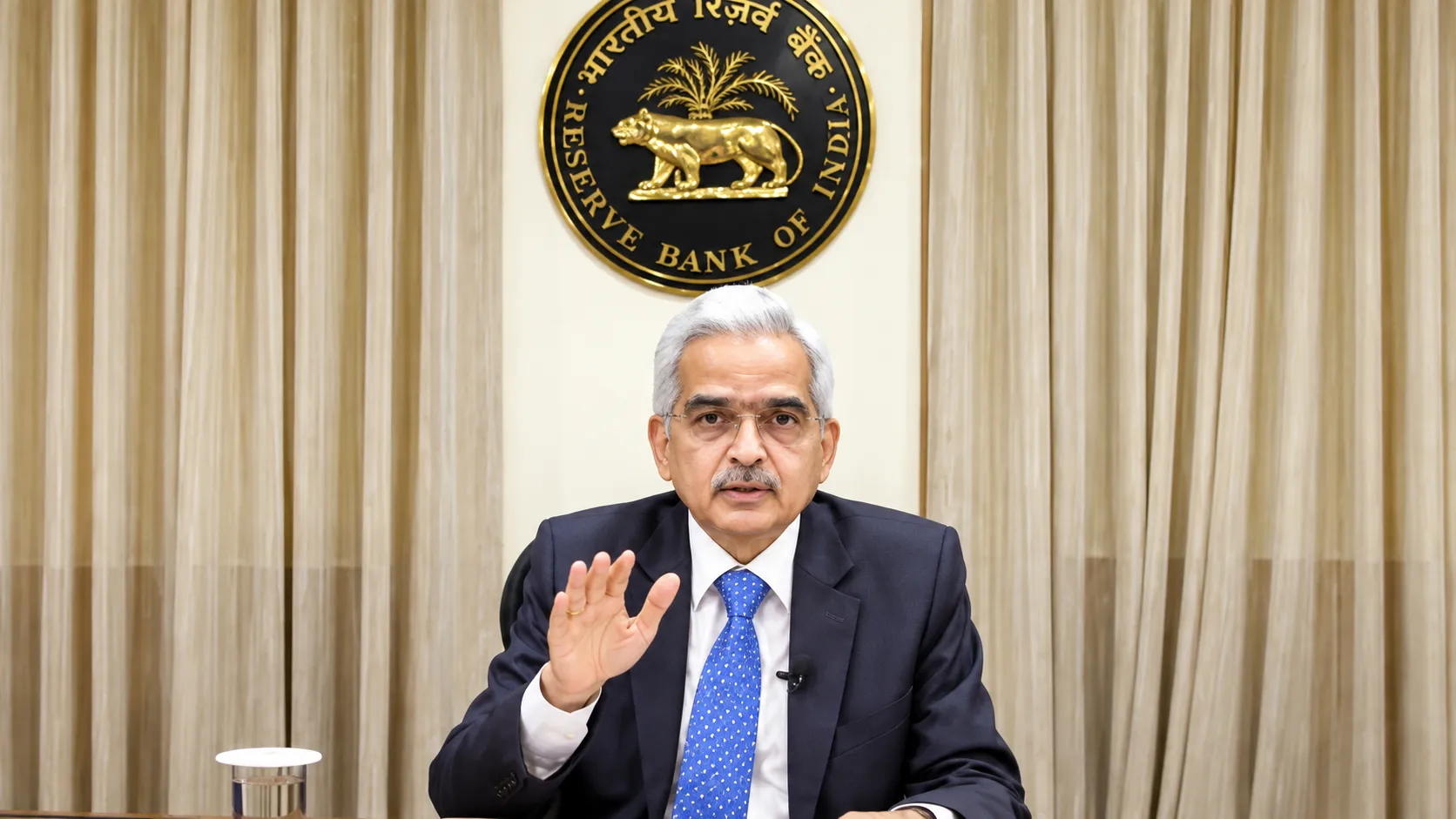
India's central bank chief has restated a rule that could force one of the country's most powerful private holding companies to go public, setting up a high-stakes test of regulatory resolve and corporate governance.
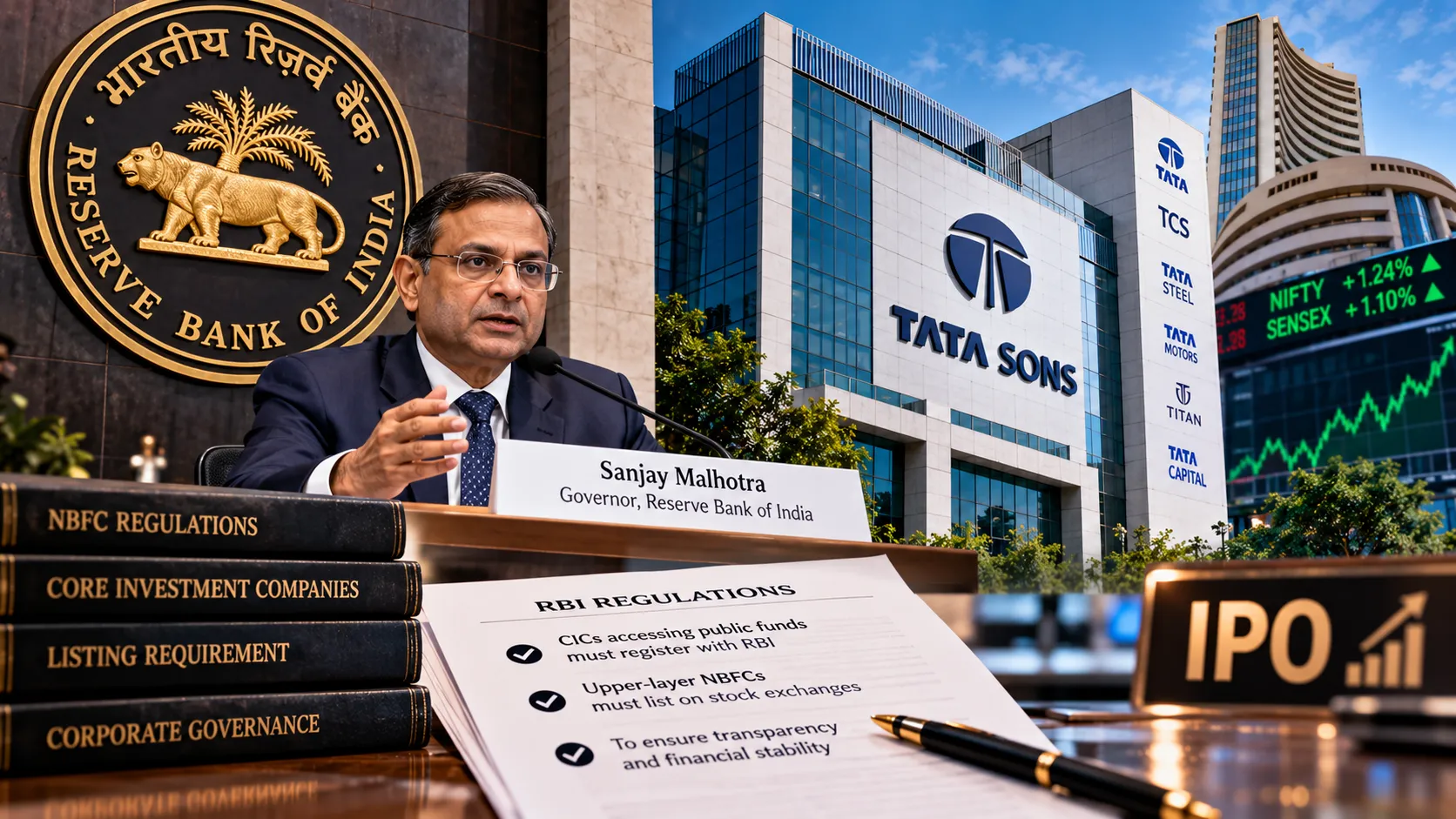
Speaking at the NDTV World Summit in New Delhi on Friday, October 23, Reserve Bank of India Governor Sanjay Malhotra said that core investment companies (CICs) that access public funds, directly or indirectly, must register with the RBI, and that non-bank financial companies (NBFCs) classified in the upper layer must list on stock exchanges, Business Standard reported.
Malhotra declined to discuss any specific company. "We do not answer questions relating to any specific regulated entity," he said. But his remarks were widely seen as relevant to Tata Sons, the holding company of the Tata Group.
Why CICs are regulated
Explaining why holding companies such as Tata Sons must register, Malhotra cited systemic risk, saying they "sit on top of group companies where they leverage funds." He said CICs are allowed not to register only where they lack direct or indirect access to public funds. If a CIC is in the upper layer, "then it is required to list," he said.
Core investment companies are holding companies that primarily invest in group companies. Because they can borrow money and channel it to group businesses, their failure could have knock-on effects across large conglomerates and the financial system. The collapse of IL&FS in 2018, a complex group of companies with heavy borrowings, highlighted the risks of opaque group structures.
The scale-based framework
In 2021, the RBI introduced a scale-based regulatory framework for NBFCs, dividing them into layers according to their size and risk. Upper-layer NBFCs, identified by the RBI based on size, interconnectedness and other factors, face stricter requirements, including mandatory listing within three years of being classified.
The listing requirement is intended to improve transparency and market discipline, since listed companies must disclose financial information regularly and are subject to scrutiny by investors and analysts.
The Tata Sons saga
The RBI classified Tata Sons as an upper-layer NBFC in 2022, giving it until 2025 to list. Instead of listing, the company repaid its outstanding debt and applied to cancel its registration as a CIC, arguing that it no longer accessed public funds.
Last month, the RBI rejected that request and directed Tata Sons to comply with upper-layer NBFC requirements, according to Business Standard.
Tata Trusts, the philanthropic trusts that control Tata Sons, have proposed an alternative route: merging Tata Electronics Systems Solutions and Tata Consulting Engineers into the holding company. The aim is to change Tata Sons' business mix so that it no longer qualifies as an NBFC or CIC, thereby avoiding the need to list. The plan requires approval from the Tata Sons board and a no-objection from the RBI.
Why listing matters to Tata
For the Tata Group, listing Tata Sons would be a profound change. Tata Sons sits at the top of a group that includes Tata Consultancy Services, Tata Steel, Tata Motors, Titan and many other companies. The Tata Trusts own about two-thirds of Tata Sons, and the Shapoorji Pallonji Group holds about 18%.
A listing would subject Tata Sons to public market scrutiny and could alter the balance of control. On the other hand, it could provide liquidity for minority shareholders, including the Shapoorji Pallonji Group, which has sought ways to monetise its stake to reduce its debt.
The group has been through governance tensions in recent years, including the high-profile dispute with former chairman Cyrus Mistry and, more recently, reported differences among trustees of the Tata Trusts.
Monetary policy and other remarks
Malhotra also discussed monetary policy and financial stability. He said the RBI generally does not use interest rates to address financial stability risks, relying instead on macroprudential tools, though he did not rule out monetary policy action in certain circumstances, which would be a decision for the Monetary Policy Committee. The MPC recently raised the repo rate by 25 basis points to 5.50% and shifted its stance from neutral to "calibrated tightening."
On cybersecurity, Malhotra acknowledged growing risks, noting that banks had reported customer data appearing on the dark web. He said the risks from AI to financial stability were real and should not be downplayed, citing data security and cyberattacks that could disrupt systems.
What it means for investors
For investors in Tata Group companies, the outcome of the Tata Sons listing question matters. A listing could unlock value and improve transparency at the holding company level, while the proposed merger route could have implications for the companies involved.
More broadly, Malhotra's comments signal that the RBI intends to apply its rules consistently, even to India's most prominent business groups. That consistency is important for the credibility of financial regulation.
Lessons from IL&FS
The collapse of Infrastructure Leasing & Financial Services in 2018 shaped the RBI's thinking on large NBFCs. IL&FS, a group with more than 300 subsidiaries and over ₹90,000 crore of debt, defaulted on its obligations, triggering a liquidity crisis in India's NBFC sector that spread to mutual funds and banks. The episode exposed how complex group structures and heavy borrowing could create systemic risks.
The scale-based regulatory framework, introduced in 2021, was partly a response to that crisis. It subjects the largest and most interconnected NBFCs to bank-like oversight, including governance requirements, concentration limits and listing obligations, to bring greater transparency and market discipline.
Who else is affected
Tata Sons is not the only company affected by the upper-layer rules. The RBI's list of upper-layer NBFCs includes major lenders such as Bajaj Finance, Shriram Finance, Cholamandalam Investment and Finance, and the housing finance arms of large groups. Most are already listed. Tata Capital, another Tata Group company classified in the upper layer, listed on the stock exchanges in 2025 to comply with the requirement.
What comes next
The next steps rest with Tata Sons and the RBI. The Tata Sons board must decide whether to pursue the merger plan, and the RBI must decide whether to approve it. Alternatively, Tata Sons could proceed with a listing.
Whatever the outcome, the case will set an important precedent for how India regulates large conglomerates and their holding companies. Investors will be watching for the board's next move.