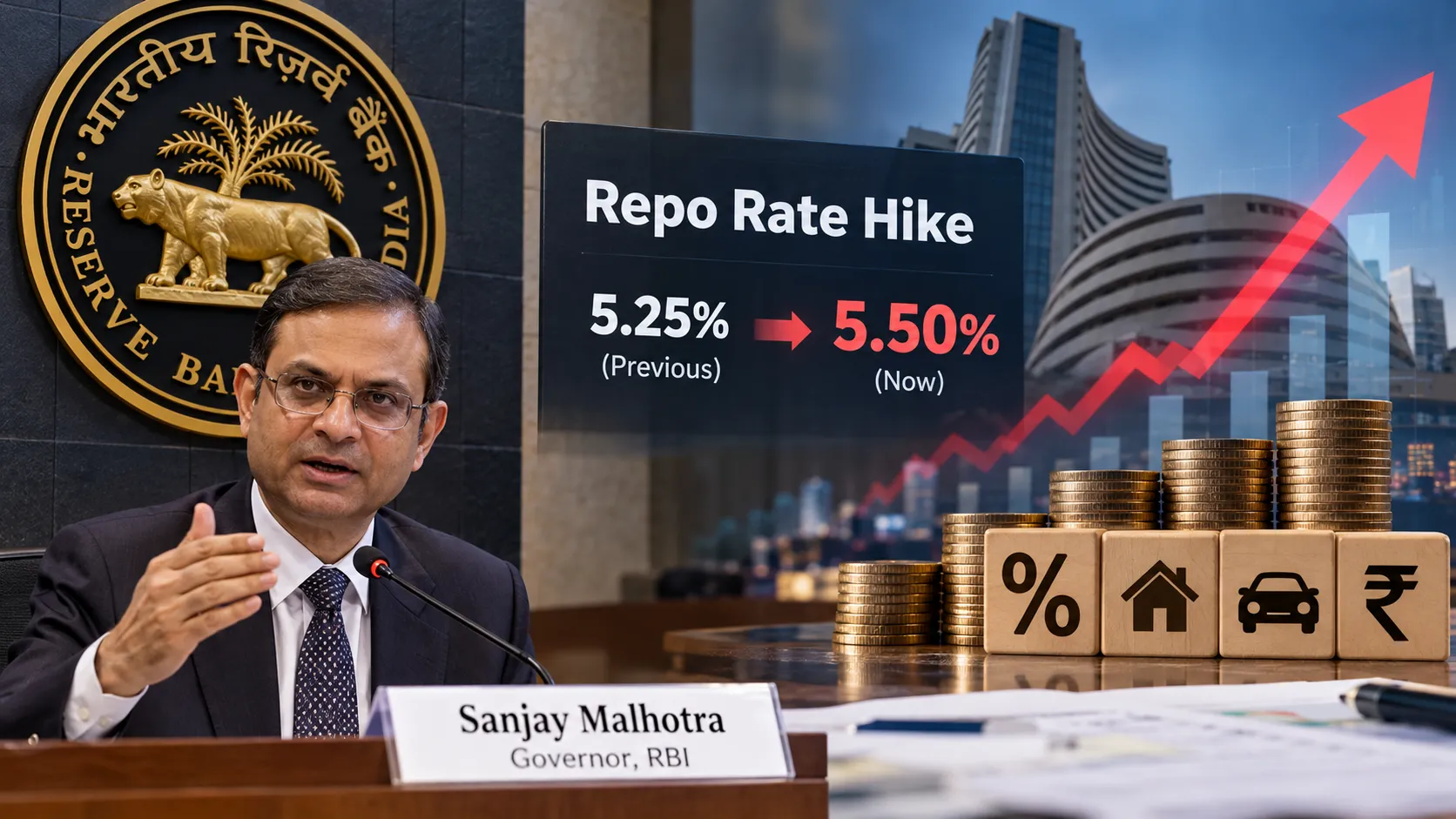
The Reserve Bank of India raised its benchmark repo rate by 25 basis points to 5.50% on 7 October, its first increase since February 2023, as the central bank turned its attention from supporting growth to containing inflation that has started to spread across the consumer basket.
All six members of the Monetary Policy Committee (MPC) voted for the hike. The committee also changed its policy stance to “calibrated tightening”, a phrase that, in practice, closes the door on rate cuts for the foreseeable future and leaves room for further increases. Business Standard reported that the stance change itself was carried by a 4-2 vote.
It is the first rate rise under Governor Sanjay Malhotra, who took charge of the central bank in December 2024. At the previous meeting in August the repo rate had been held at 5.25%, and for much of 2026 borrowers had been expecting the next move to be a cut rather than a hike.
With the decision, the standing deposit facility rate moves to 5.25%, while the marginal standing facility rate and the bank rate rise to 5.75%.
Why the RBI moved now
The central bank's case rests on inflation that is no longer confined to a few volatile items. Consumer price inflation rose to 4.8% in August from 4.5% in July, driven mainly by food and fuel, according to the policy statement as reported by Business Standard. Price increases in food became more broad-based, with sugar and onions among the notable risers.
More telling for a rate-setter is core inflation, which strips out food and fuel. It climbed to 4.2% in August after three months at 3.9%. The weighted share of items in the consumer price index running above 4% rose to about 37% in August, a sign that pressure is spreading rather than fading.
The RBI now expects headline inflation to average close to 5.8% over the current and next two quarters. Its full-year inflation forecast for FY27 was raised to 5.2%, and core inflation is projected at 4.4%. That is well above the 4% midpoint of the target band the central bank is mandated to aim for.
Malhotra said the length and extent of any tightening cycle would depend on underlying inflation, how widely price pressures spread, second-round effects of supply shocks and the state of demand. Future decisions will be gradual hikes or pauses, guided by incoming data.
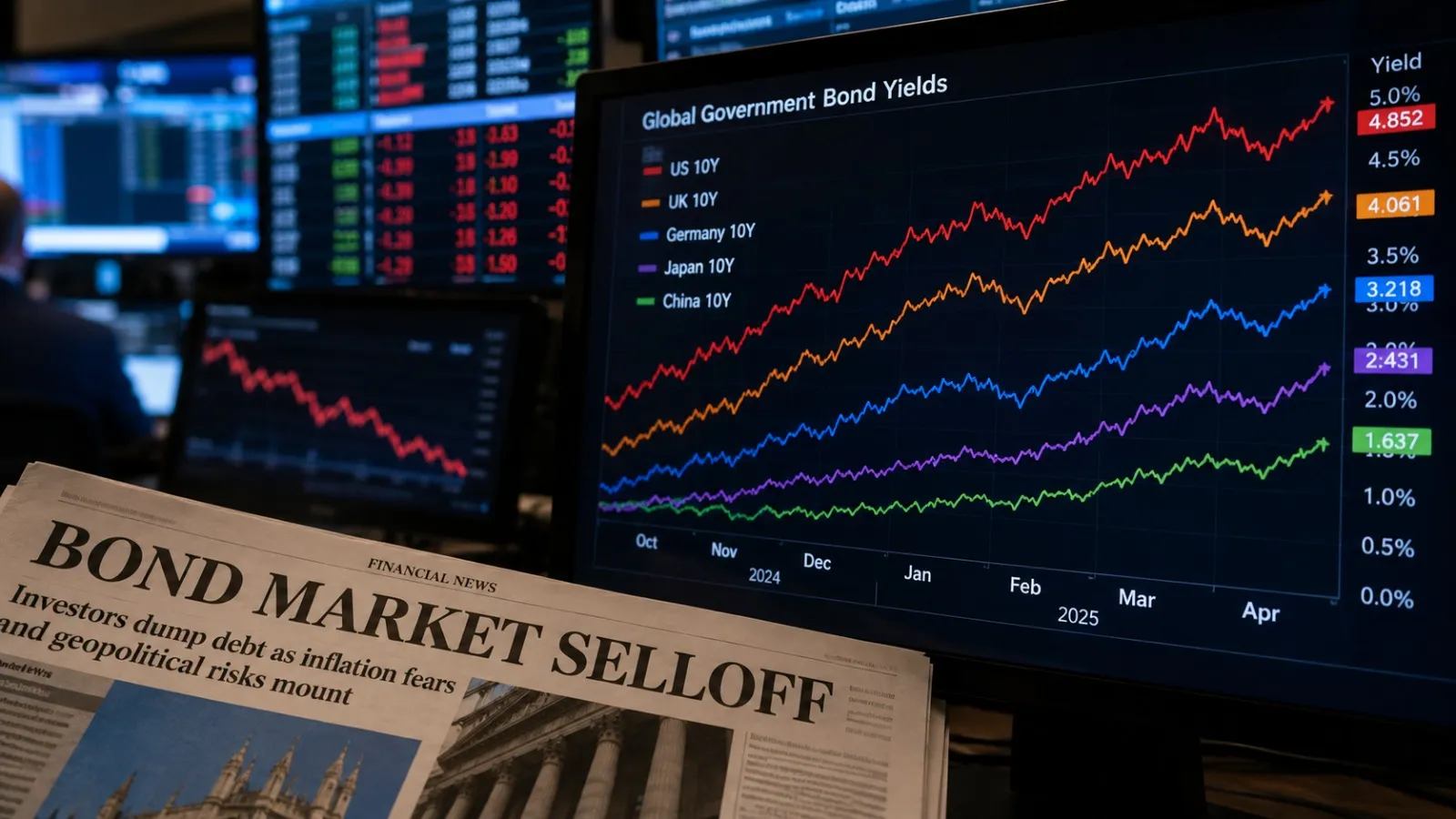
External conditions have also hardened. The policy statement flagged slower global growth, higher energy and food prices, rising bond yields in advanced economies, a stronger dollar and the unresolved conflict in West Asia. Brent crude, the global oil benchmark, rose 1.41% to $102 a barrel on the day of the decision, according to ETV Bharat, a significant cost for a country that imports most of its oil.
At home, a deficient southwest monsoon and strong El Niño conditions pose risks to farm output and rural demand, though the RBI said healthy foodgrain stocks and government measures could help contain the damage. It also noted strong growth in money supply and credit, a demand-side argument for tighter policy.
Growth forecast raised, not cut
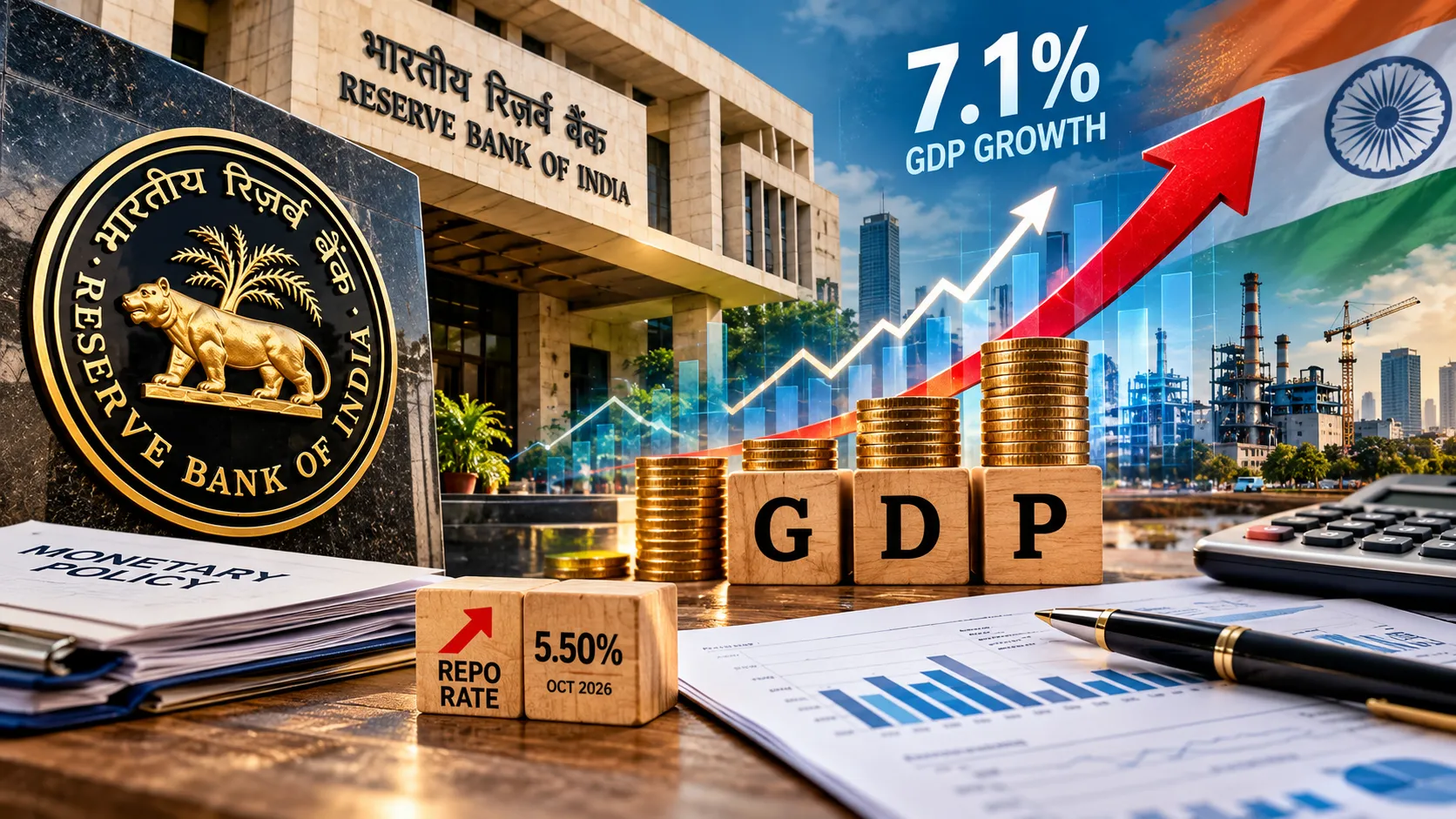
Unusually for a hiking central bank, the RBI raised rather than lowered its growth outlook. It now projects real GDP growth of 7.1% for FY27, with quarterly estimates of 7.2% for the July–September quarter, 6.9% for October–December and 6.8% for January–March. Growth for the first quarter of FY28 is projected at 7.1%. The risks to growth were described as evenly balanced.
The economy grew 7.8% in the April–June quarter, with investment rising by nearly 12%. Activity in the second quarter stayed strong, although momentum eased from the first, and both manufacturing and services remained in expansion territory.
That combination of resilient growth and rising prices gave the MPC room to act. A central bank that is confident output can absorb higher borrowing costs is more willing to tighten early, before inflation expectations become entrenched among households and businesses.
Economists had largely seen the move coming. In a report released on 29 September, Bank of America Securities forecast a 25 basis point increase in October and further tightening into the first half of 2027, taking the repo rate to 6.25%, according to IANS. SBI Research had also argued in September for a hike in October followed by another in December.
The RBI had already begun withdrawing liquidity before the meeting. It announced ₹1 lakh crore of government bond sales in September, which some commentators described as its first net bond sale in two years and an early tightening signal.
Alongside the rate decision, the central bank said account aggregators, the regulated entities that allow customers to share financial data across institutions with consent, will be made interoperable, letting users work through a single aggregator of their choice. The target date for implementation is 31 December 2026.
Markets, borrowers and what comes next
Equity markets fell after the announcement. The BSE Sensex closed 429.11 points, or 0.59%, lower at 72,638.70, having fallen as much as 599 points during the session, ETV Bharat reported. The NSE Nifty dropped 173.05 points, or 0.76%, to 22,603.05. Twenty-six of the 30 Sensex stocks ended lower, with Titan, Bharat Electronics, Asian Paints, Infosys, Larsen & Toubro and Adani Ports among the biggest losers.
Lenders were the exception. Kotak Mahindra Bank, ICICI Bank and Bajaj Finance gained, alongside Bharti Airtel, as investors weighed the benefit of higher lending rates for banks. Business Standard reported that bank and non-bank lender stocks rebounded while auto and real estate shares traded weak.
Vinod Nair, head of research at Geojit Investments, said the market “reacted more sharply to the shift in policy stance from neutral to calibrated tightening” than to the rate rise itself. The 10-year government bond yield rose to 7.27%, and the rupee slipped 22 paise to 96.57 against the US dollar, Business Standard reported.
For borrowers, the effect will show up over the coming months as banks reprice loans linked to the external benchmark. Floating-rate home loans, many of which are tied directly to the repo rate, are typically the first to adjust, while depositors can expect a gradual rise in fixed deposit rates.
For Indians abroad, the picture is mixed. A weaker rupee raises the value of remittances sent home, while higher domestic deposit rates make Indian fixed-income products relatively more attractive. Non-resident investors in Indian equities, however, face both a softer currency and pressure on rate-sensitive sectors.
The MPC is next due to meet in December. Having ruled out near-term cuts and kept the option of further hikes open, the RBI has left markets to watch the monthly inflation prints, oil prices and the rupee closely. If core inflation keeps climbing and crude stays above $100, the October increase is unlikely to be the last.