Two San Jose-based artificial-intelligence companies, Realset AI and Flatkey, have announced that they have raised $10 million in Series A funding, according to press releases issued on Wednesday, September 23.
Realset AI describes itself as a real-world data lab that produces training data for large language models, frontier models and embodied agents — AI systems designed to operate in the physical world, such as robots. Flatkey is an AI infrastructure platform that brings models, tools and data together behind a single application programming interface key.
Realset said the funding would expand its capture network of real workplaces and studio environments, grow its pool of expert demonstrators and domain experts, and support open benchmarks that measure whether AI policies work outside the lab.
‘The internet is exhausted’
Realset’s pitch rests on a thesis that has gained traction across the AI industry: that the supply of high-quality text data on the public internet is running out.
Frontier labs and robotics companies have largely consumed the text available on the internet, Realset said in its announcement, framing the physical world as the next major source of training data. The company summarised the argument in a heading of its release: the internet is exhausted, but the physical world is not.
That idea has become increasingly influential as AI developers look for new sources of data to improve their models. For language models, the challenge is finding high-quality, specialised information that is not already widely available. For robots and embodied agents, the need is even more acute: systems that interact with the physical world must learn from demonstrations of real tasks performed in real environments.
Capturing how work is done
Realset’s approach involves capturing data from real workplaces and purpose-built studio environments, using expert demonstrators and domain specialists to perform tasks. That data can then be used to train and evaluate AI systems designed to understand or replicate those tasks.
The emphasis on domain experts reflects a broader shift in AI training. Early AI models were trained largely on data labelled by general-purpose annotators. Increasingly, companies are paying specialists — from doctors and lawyers to skilled tradespeople — to create high-quality examples that can teach AI systems expert-level behaviour.
This trend has made AI training data one of the fastest-growing segments of the AI economy, with larger players in the sector commanding multi-billion-dollar valuations as frontier labs compete for the data needed to improve their models.
Demand for such data comes from several directions. Robotics companies need demonstrations of physical tasks such as picking, assembling and handling objects. Developers of AI agents that operate software need recordings of how professionals actually use tools in real workflows. And frontier labs need specialised, high-quality examples to evaluate whether their models behave reliably outside curated test sets.
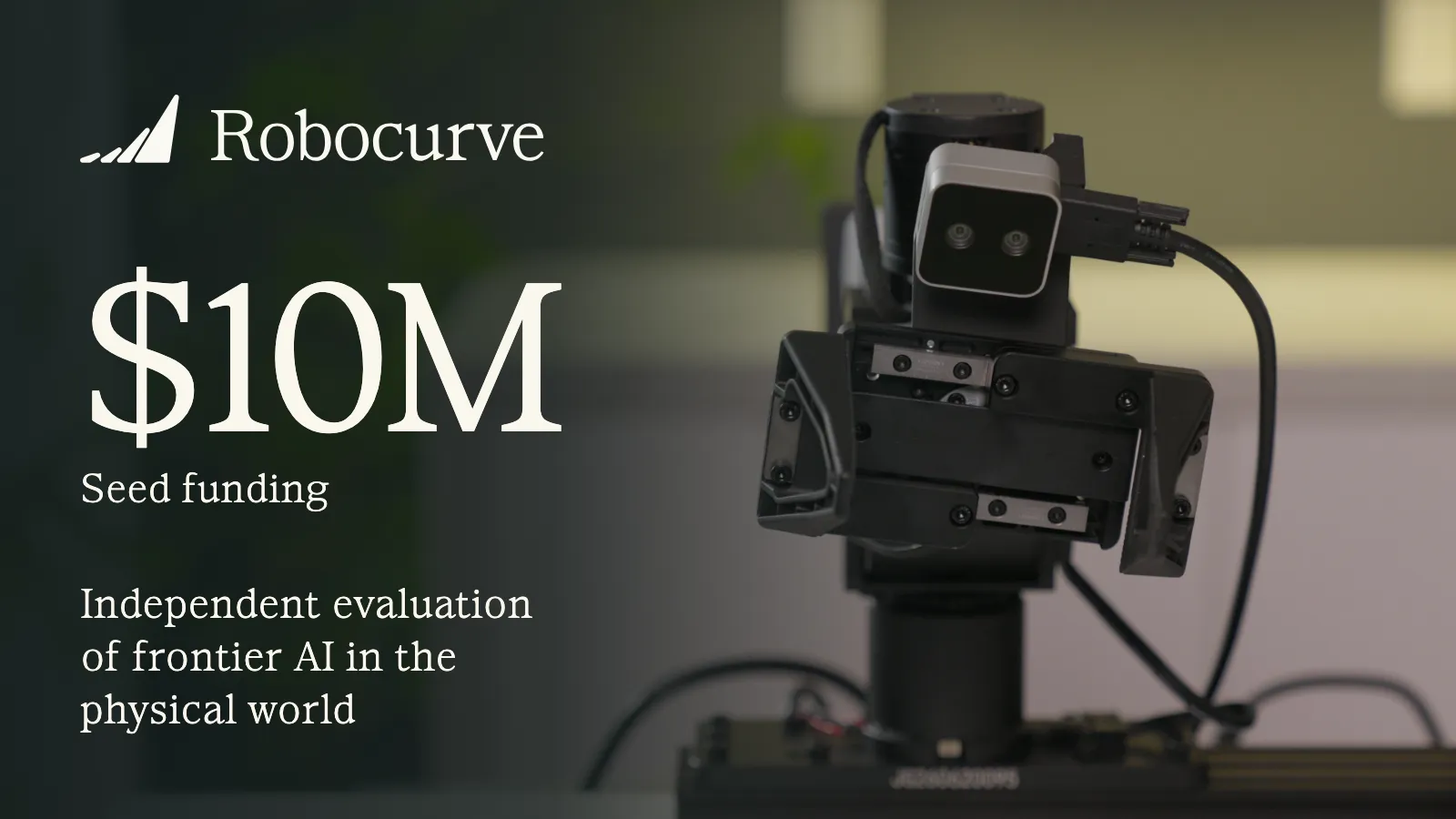
Benchmarks for the real world
Realset also plans to support open benchmarks that measure whether AI policies work outside the lab. In robotics, a policy refers to the learned behaviour that determines how a system acts in response to its environment.
Benchmarks are important because AI systems that perform well in controlled testing often struggle in messy real-world conditions. Open, standardised benchmarks can help developers, investors and customers assess whether a robot or agent is genuinely capable of performing a task reliably — a critical question as embodied AI moves towards commercial deployment.
Flatkey: one key for the AI stack
Flatkey addresses a different problem: the complexity of building with a fragmented AI ecosystem. Developers today often juggle multiple model providers, each with its own interface, billing and access rules, along with a growing array of AI tools.
Flatkey gives developers access to more than 100 official AI models and more than 1,000 AI tools through one key and one balance, according to the company. Launched in July 2026, the platform said it had surpassed 10,000 developers in two months.
That rapid uptake suggests strong demand for simplifying access to the AI stack. For developers, a single integration point can reduce engineering effort, make it easier to switch between models and simplify cost management.
How the two businesses fit together
The two companies announced the funding jointly, and both are headquartered in San Jose. Taken together, they span two layers of the AI value chain: Realset supplies specialised data for training and evaluating models, while Flatkey provides the infrastructure through which developers access models and tools.
The releases did not disclose the lead investors in the round or the individual allocation between the two companies.
A crowded but growing market
Both companies operate in competitive markets. AI training-data providers range from large, well-funded platforms to specialised startups focused on particular domains or data types. Model-aggregation and API-routing platforms are also multiplying as developers seek flexibility in a fast-changing model landscape.
Realset’s focus on real-world capture and embodied AI positions it in one of the most promising — and most demanding — segments. Collecting high-quality physical-world data at scale is expensive and operationally complex, requiring access to environments, experts, equipment and careful data management, including attention to privacy and consent.
Flatkey’s challenge will be to differentiate in a market where large cloud providers and established developer platforms are also offering unified access to multiple models.
Why it matters
The funding highlights a key question for the next phase of AI: where will the data come from? As text data becomes scarcer and AI systems move into physical environments, companies that can reliably capture, curate and benchmark real-world data could become critical suppliers to frontier labs and robotics developers.
For the global talent pool — including India’s large base of engineers, domain experts and skilled workers — the rise of real-world data labs could create new kinds of work, from demonstrating tasks and annotating complex data to building the infrastructure that captures it.
Realset and Flatkey are early-stage companies, and a $10 million Series A is modest by the standards of today’s AI megarounds. But the problems they are tackling — real-world data and simplified developer access — sit at the centre of how AI will be built and deployed in the years ahead.