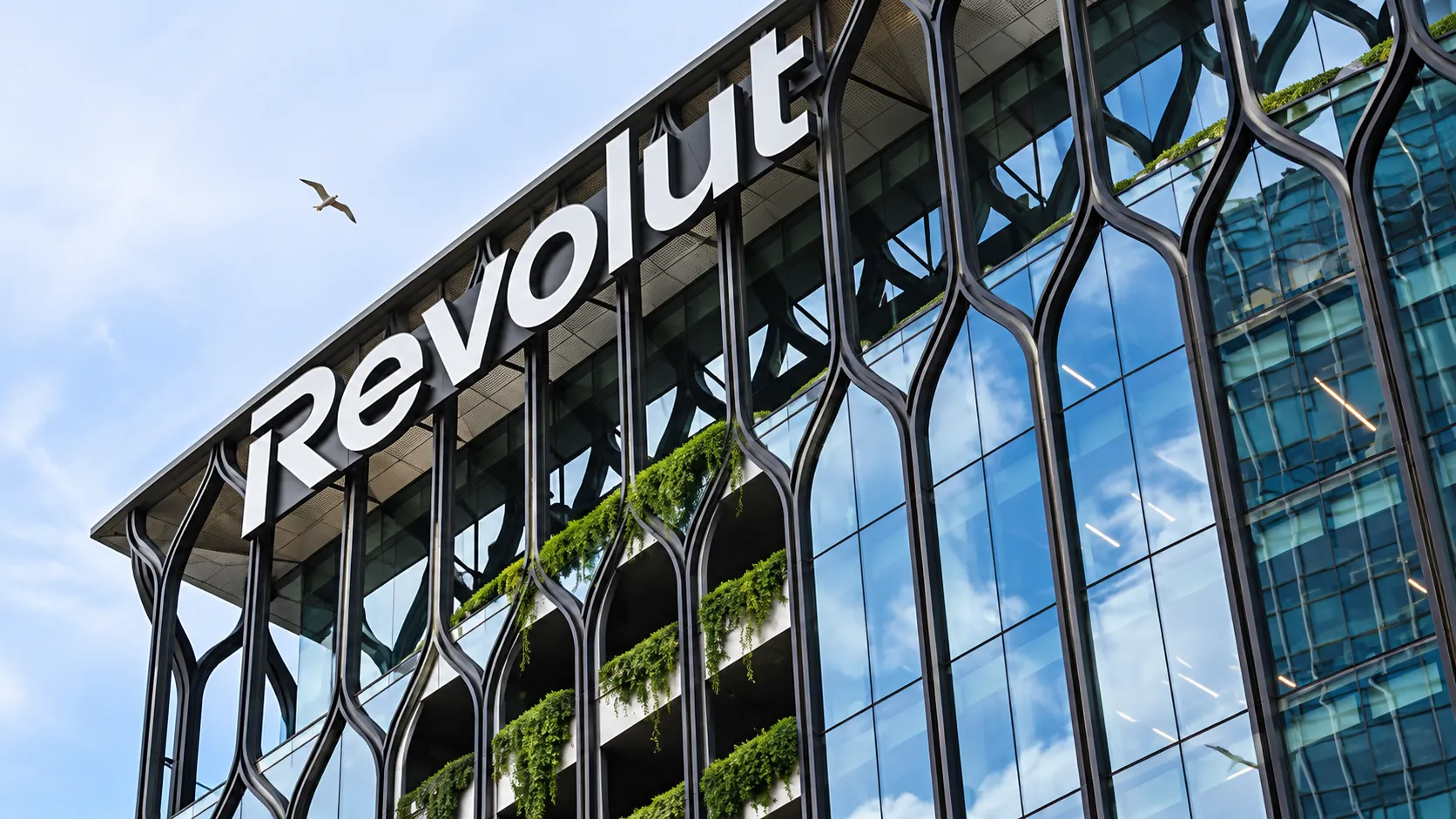
Revolut, the London-based financial technology company, has completed a secondary share sale that values it at $115 billion. The deal confirms Revolut as Europe's most valuable fintech company and one of the most valuable privately held technology companies in the world.
The sale, confirmed on Wednesday, November 4, was led by a group of investors including Glade Brook, Coatue, Durable Capital, T. Rowe Price and Baillie Gifford. It was a secondary transaction, which means existing shareholders, including employees, sold shares to new and existing investors. Revolut did not raise any new capital for itself.
The valuation works out to about $2,017 per share. It represents a 53% increase on the $75 billion valuation Revolut achieved in a similar share sale in November 2025, and is more than double the $45 billion valuation of 2024.
The planned sale was first reported in July 2026. The completion this week formalises the new valuation.
Strong financial performance
The valuation increase reflects Revolut's strong financial performance. In 2025, the company reported revenue of $6.0 billion, up 46% from the previous year. Pre-tax profit rose 57% to $2.3 billion.
Those figures make Revolut one of the few large fintech companies to combine rapid growth with significant profitability. Many digital banks and payment companies have struggled to turn a profit, but Revolut has built a diversified business that generates income from several sources.
The company now has more than 80 million customers around the world. It offers a wide range of financial products through a single app, including current accounts, foreign exchange, stock and cryptocurrency trading, savings, credit and business banking.
Why secondary sales matter
Secondary share sales have become an important tool for large private technology companies. They allow employees and early investors to turn some of their shares into cash without the company having to go public.
For employees, secondary sales provide a way to benefit financially from the company's success while it remains private. That can help with retention and recruitment, particularly when a company has been private for many years.
For the company, a secondary sale sets a new reference valuation without diluting existing shareholders through the issue of new shares.
The investors
The group of investors in the sale includes some of the most prominent names in technology and growth investing. Coatue is a major technology investor. T. Rowe Price and Baillie Gifford are large asset managers known for backing high-growth companies in both public and private markets.
Their participation signals confidence in Revolut's long-term prospects. It also suggests that large institutional investors are willing to take significant positions in the company ahead of a potential stock market listing.
Global expansion
Revolut's growth has been driven by expansion into new markets and new products. The company has obtained banking licences in several countries, allowing it to offer a wider range of services, including lending and deposit-taking.
Co-founder and chief executive Nik Storonsky has made international expansion a central part of Revolut's strategy. "Every bank we launch means more people get a better way to manage their money, wherever they live," he has said.
The company has been building out its banking operations in the UK, its home market, and has expanded in Europe, the Americas and Asia.

Revolut and India
India is an important market for Revolut. The company has been building its operations in the country, where it has a significant technology and operations workforce and has been building its consumer offering.
India's large, digitally active population and its fast-growing digital payments ecosystem make it an attractive market for fintech companies. However, competition is intense, with strong domestic players and well-established digital payment systems such as UPI.
Revolut's offering of multi-currency accounts and international money transfers could be particularly relevant to Indians who travel, study or work abroad, as well as to the Indian diaspora sending money home. Remittances to India are among the largest in the world, and fintech companies are competing to offer cheaper and faster transfers.
Comparison with other fintechs
Revolut's $115 billion valuation places it far ahead of other European fintech companies. It also compares favourably with publicly listed fintechs and some traditional banks.
The valuation reflects investors' belief that Revolut can continue growing rapidly while remaining profitable. Its broad product range and international reach give it multiple routes to growth.
However, high valuations also bring high expectations. Revolut will need to keep delivering strong growth and profitability to justify its valuation, particularly if it eventually lists on a stock exchange, where it would face greater scrutiny.
Regulatory challenges
Revolut has faced regulatory challenges in the past. Its path to a UK banking licence took several years, and regulators have scrutinised areas such as its financial controls and compliance processes.
As Revolut expands into more markets and offers more banking products, it will face increasing regulatory demands. Banking regulators typically require strong capital positions, robust risk management and effective controls against financial crime.
How Revolut manages these demands will be important for its long-term success. Strong regulatory relationships will be essential as it seeks licences in new markets and expands its range of services.
The IPO question
Revolut has often been mentioned as a candidate for one of the largest fintech IPOs. Storonsky has spoken about the possibility of a listing but has not committed to a timeline. Questions about where Revolut would list, whether in London, New York or elsewhere, have attracted attention, particularly in the UK, where policymakers are keen to attract major technology listings.
The secondary sale gives Revolut flexibility. By providing liquidity to employees and early investors, it reduces pressure on the company to go public quickly. Revolut can choose the timing of any IPO based on market conditions and its own readiness.
What it means for fintech
Revolut's valuation is a strong signal for the fintech sector. After a difficult period in which many fintech valuations fell sharply, Revolut's rise suggests investors are willing to reward companies that combine scale, growth and profitability.
For fintech founders in India and around the world, Revolut's success shows the potential for building a global financial services platform from a single app. Its model of offering many products to a large customer base has been widely studied and copied.
Outlook
With more than 80 million customers, strong revenue growth and significant profits, Revolut is well positioned to keep expanding. Key areas to watch include its progress on banking licences, its expansion into new markets such as India, and any moves towards a public listing.
The $115 billion valuation confirms Revolut's status as one of the most successful fintech companies of its generation. Its next challenge will be sustaining that success as it grows into a global bank.


