In a luxury industry where most rivals are struggling to grow at all, Richemont delivered a strong set of results. Investors still found reasons to sell.
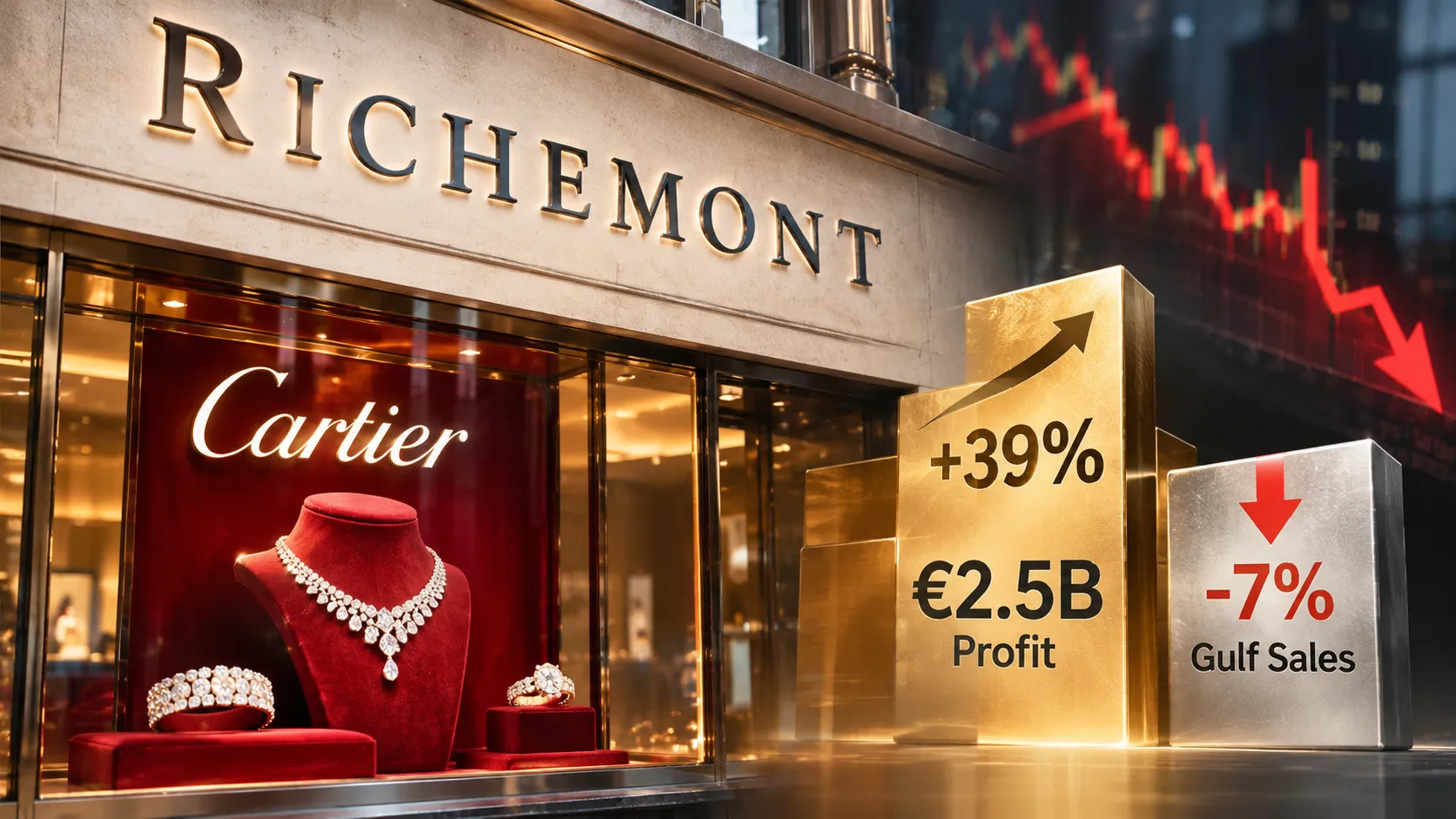
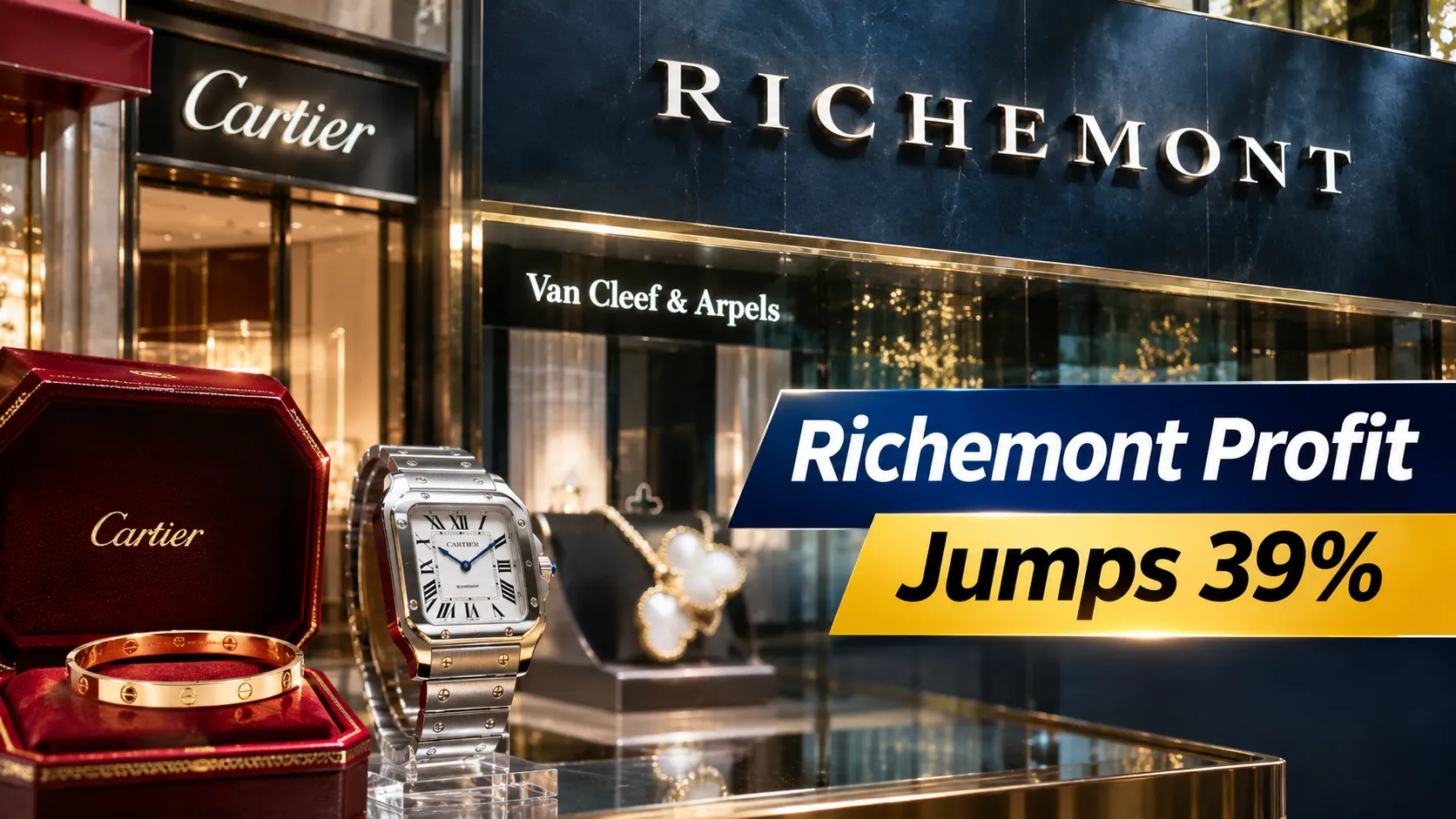
The Swiss group, which owns jewellery houses Cartier, Van Cleef & Arpels and Buccellati as well as watchmakers including IWC, Jaeger-LeCoultre and Vacheron Constantin, reported a 39% rise in profit for the six months to September 30, 2026, to €2.53 billion, according to its results statement published on Friday, November 13. That was above the €2.26 billion consensus forecast, according to BigGo Finance.
Sales rose 16% at actual exchange rates and 17% at constant rates to €12.28 billion. Operating profit rose 33% to €3.13 billion, and the operating margin improved by 330 basis points to 25.5%.
Why the shares fell
Despite the profit beat, Richemont's shares fell more than 4% at the open on Friday, according to BigGo Finance and Yahoo Finance. The main reason was a slowdown in its most important business: jewellery.
Sales at the Jewellery Maisons rose 19% at constant currencies to €9.15 billion for the half, according to BigGo Finance. But growth in the second quarter slowed to 14%, below the 16% projected in an RBC analyst survey. Group sales growth slowed to 13% in the second quarter, after 20% in the first.
Investors also noted that a €229 million positive one-off item related to tariffs accounted for almost a third of the operating profit gain. Excluding it, operating profit was €2.9 billion and the operating margin was 23.6%, according to the company. Higher gold costs trimmed the underlying gross margin by 70 basis points.
The Gulf slowdown
The weakest region was the Middle East and Africa, where sales fell 7% in the second quarter, after 22% growth a year earlier, according to BigGo Finance. Regional tensions during the summer reduced tourist spending, and chief executive Nicolas Bos said destinations reliant on tourist purchases were hit hardest, citing Dubai's shopping malls.
The Middle East, particularly Dubai, has become an important market for luxury brands, attracting wealthy tourists from around the world, including India. Conflict in the region, including tensions involving Iran, has deterred some travellers.
Strength elsewhere
Other regions grew at double-digit rates. Japan led with 30% growth in the second quarter, followed by the Americas at 23%, Asia Pacific at 16% and Europe at 13%, according to BigGo Finance. Sales in mainland China, Hong Kong and Macau rose 7%.
Japan has benefited from a weak yen, which makes luxury goods cheaper for foreign tourists and attracts shoppers from across Asia.
Jewellery's resilience
Jewellery has been the strongest segment of the luxury industry over the past few years. Wealthy consumers have favoured jewellery, which is seen as a store of value and less exposed to changing fashion trends, while demand for handbags and clothing has slowed. Cartier's iconic designs, such as the Love bracelet and the Juste un Clou, and Van Cleef & Arpels' Alhambra collection have become particularly sought after.
The Jewellery Maisons' operating margin was 35.3%, or 33.4% excluding one-time items, according to Richemont.
Mamta Valechha of Quilter Cheviot said that 14% growth was "a relatively strong outperformance" given that peers averaged 1% to 2% organic growth, according to BigGo Finance. Bernstein called the results excellent and said Richemont remains well ahead of its major rivals.
Watches recover
Richemont's watch business, which has struggled in recent years, showed signs of recovery. Sales at the Specialist Watchmakers rose 9%, or 10% at constant rates, to €1.7 billion, with second-quarter growth of 12% at constant rates, according to the company. Operating profit tripled to €150 million from €50 million, although the operating margin of 8.8% remains far below that of jewellery.
Demand for watches in China remained soft, and Asia Pacific watch sales were stable.
Strong cash position
Richemont's financial position is strong. Operating cash flow rose to €2.5 billion from €1.85 billion, and its net cash position reached €7.73 billion, up from €6.52 billion, according to the company.
The outlook
Chairman Johann Rupert struck a cautious note. "We expect the macroeconomic and geopolitical environment to remain volatile for the foreseeable future," he said. Rising gold prices, tariffs, currency movements and geopolitical tensions all pose risks to luxury demand.
What it means for India
India is a growing market for luxury brands, including Cartier, which operates boutiques in major Indian cities. Indian consumers are also significant buyers of luxury goods abroad, particularly in Dubai, London and Paris. The slowdown in Gulf tourist spending may partly reflect fewer trips by Indian travellers, among others, during a period of regional tension.
India is also the world's second-largest consumer of gold, and rising gold prices have affected the domestic jewellery market. Indian jewellers such as Titan's Tanishq, Kalyan Jewellers and others have reported strong demand for lighter and lower-carat jewellery as prices climb. Richemont's experience with higher gold costs mirrors the challenges facing jewellers in India.
The luxury industry's divergence
Richemont's results highlight a growing divide within the luxury industry. Jewellery has proved more resilient than fashion and leather goods, as wealthy consumers view high-end jewellery as a store of value as well as a fashion purchase. Brands with strong heritage and pricing power have been able to raise prices without losing customers, while companies more dependent on aspirational shoppers have struggled.
Rivals such as LVMH and Kering have reported weaker demand in parts of their fashion businesses, particularly in China, where economic uncertainty and a weak property market have dampened spending by middle-class consumers.
Currency and gold
Luxury groups are also exposed to swings in currencies and commodity prices. A strong Swiss franc raises costs for watchmakers that produce in Switzerland, while high gold prices increase the cost of materials for jewellers. Companies with strong brands can pass some of these costs on through price increases, but repeated increases risk testing customers' willingness to pay.
For investors, the key question is whether the slowdown in jewellery growth is temporary or a sign that even the strongest luxury category is reaching the limits of price increases. Richemont's next quarterly update, covering the important holiday season, will offer further evidence.
What comes next
Investors will watch Richemont's performance during the crucial holiday season, the trajectory of demand in the Middle East and China, and the impact of gold prices on margins. With the luxury industry broadly struggling, Richemont's ability to sustain double-digit growth in jewellery will keep it in a strong position relative to its peers.