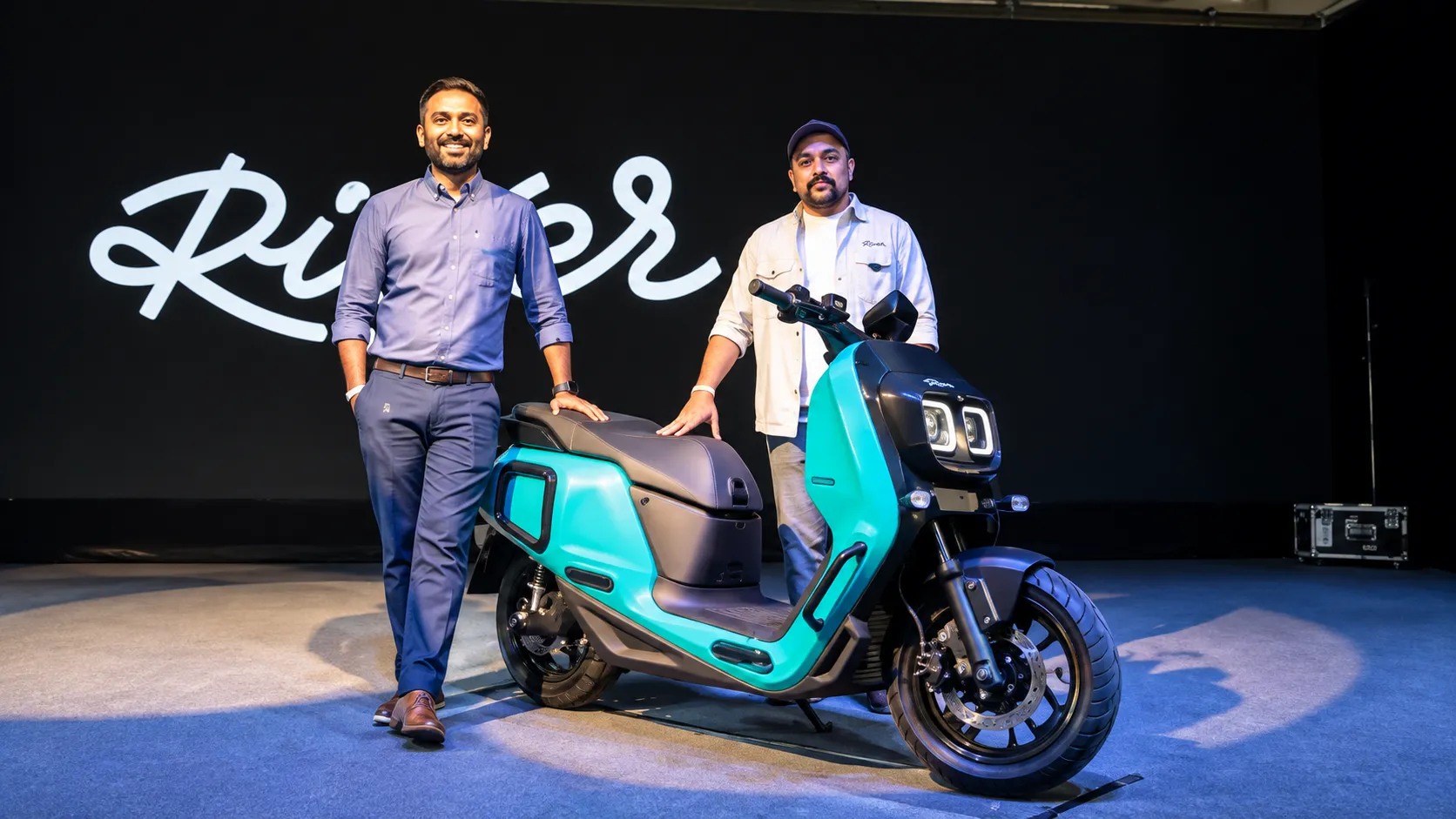
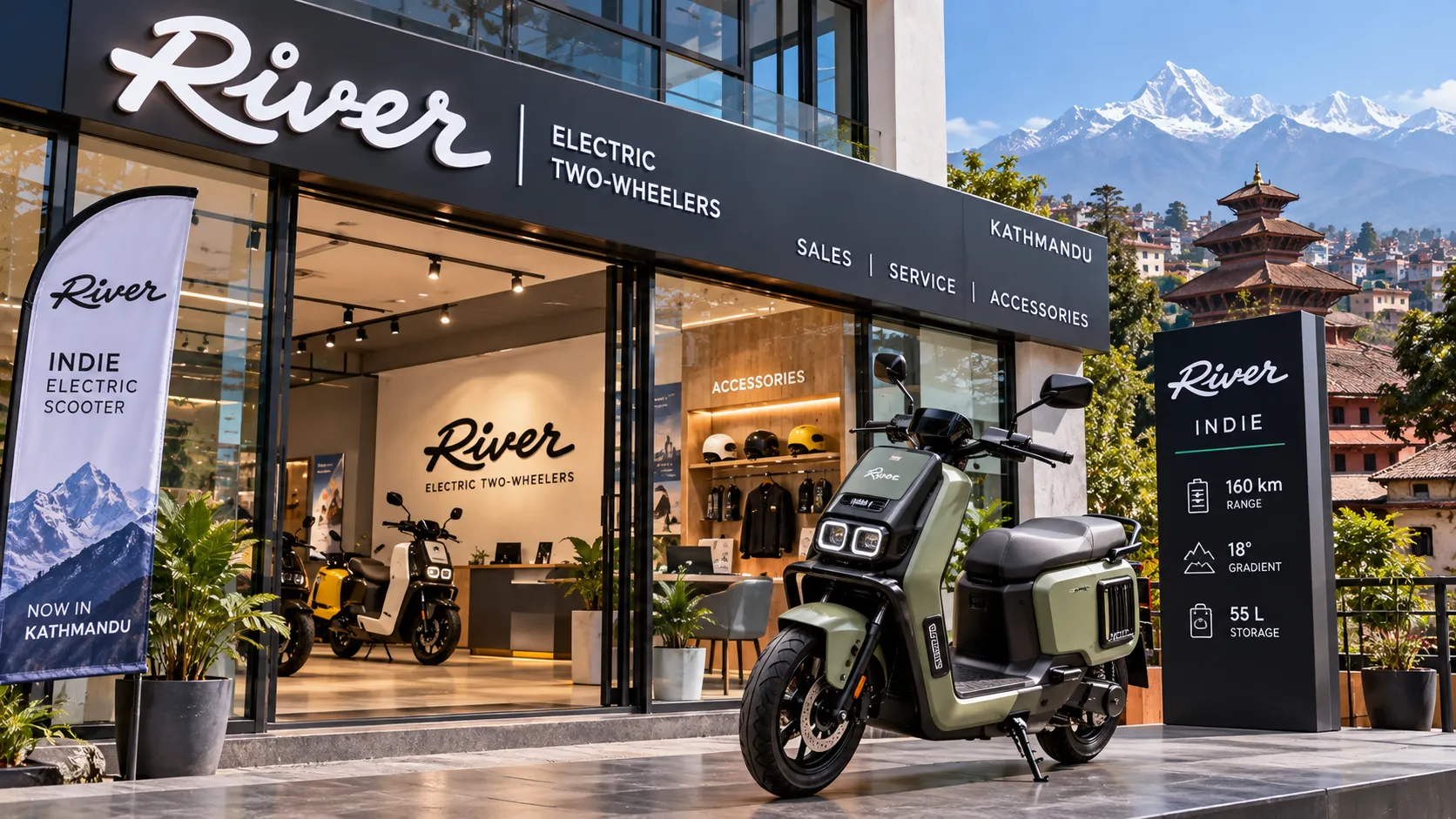
River Mobility, the Bengaluru-based electric two-wheeler maker, has opened its first international retail and service store in Kathmandu, marking the start of its expansion beyond India. The outlet, in the capital’s Naxal area, has been set up with Vishal Group, River’s partner for retail and after-sales operations in Nepal.
The store sells River’s Indie electric scooter, along with accessories and merchandise, and includes a dedicated service centre. The Indie is priced at NPR 3,70,000 ex-showroom in Kathmandu. Test rides and bookings are open at the outlet, and River plans to add retail and service locations in other major Nepali cities, though it has not given a timeline.
The move comes as River builds out its domestic network. The company has more than 90 stores across Karnataka, Telangana, Tamil Nadu, Delhi-NCR, Gujarat and Madhya Pradesh and aims to have more than 400 by March 2028.
A scooter built for rough roads
River has positioned the Indie as a practical, rugged scooter instead of a sleek urban commuter. The company calls it the “SUV of scooters”, and its specifications reflect that pitch. The Indie uses a 4 kWh battery and offers an IDC-certified range of up to 160 km on a single charge, with a claimed top speed of 90 km/h.
It has 177 mm of ground clearance, can climb gradients of up to 18 degrees and offers 55 litres of lockable storage, a large figure for the segment. Riders can choose among three riding modes. The design has won both the Red Dot Design Concept Award in 2024 and the Red Dot Product Design Award in 2025.
Those features matter in Nepal, where steep terrain, uneven roads and monsoon conditions test vehicles hard. Before entering the market, River said it tested the Indie on Kathmandu’s roads, including uphill routes such as the climb to White Gumba, a monastery on the edge of the Kathmandu Valley. The scooter made its Nepali debut earlier this year at the NAIMA Nepal Mobility Expo, where its price was first announced.
River’s chief executive and co-founder, Aravind Mani, has said the partnership with Vishal Group will anchor the company’s expansion in the country.
Why Nepal
Nepal has become one of the most dynamic electric-vehicle markets in South Asia, and an attractive first stop for Indian EV makers looking abroad. Three factors set it apart.
The first is electricity. Nepal generates most of its power from hydropower and has, in recent years, moved from chronic shortages to seasonal surpluses, at times exporting power to India. Charging an EV in Nepal draws on largely renewable electricity, strengthening the environmental case for electrification.
The second is fuel. Nepal imports all of its petroleum, mostly through India, which makes fuel expensive and exposes the economy to price shocks. With global oil prices elevated because of conflict in the Middle East, the running-cost advantage of EVs over petrol vehicles has widened.
The third is policy. Nepal has used lower customs and excise duties on electric vehicles than on fossil-fuel vehicles to encourage adoption, helping EVs gain a meaningful share of new car and two-wheeler imports.
Nepal offers Indian EV makers something rare: a market where clean electricity, high fuel costs and policy support line up. Proximity and cultural ties help too. Indian brands are well known in Nepal, supply chains run through India, and many Nepali consumers are familiar with Indian two-wheelers.


