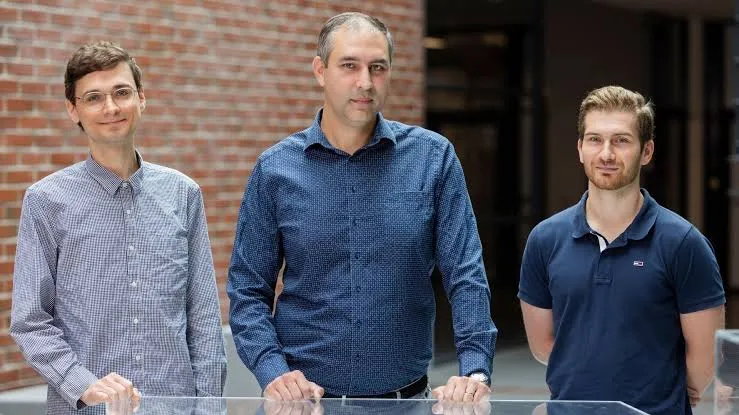
Finnish deep-tech startup S-Transistors has raised €2.6 million in pre-seed funding, the company confirmed on August 31, led by Lifeline Ventures with participation from an angel investor. The Espoo-based company, spun out of academic research in superconducting electronics, is developing component technology aimed at addressing critical hardware bottlenecks within the rapidly maturing global quantum-computing industry.
S-Transistors focuses on quantum computing and superconducting electronics, a specialised deep-tech category that sits at the foundational hardware layer underpinning quantum-computing systems more broadly. As global investment in quantum computing has accelerated across both public and private sectors, component-level innovation in areas such as superconducting circuits has increasingly attracted specialist investor attention, given the critical role such components play in determining the performance, stability and scalability of quantum-computing systems.
Finland has emerged as a notable, if less internationally prominent, hub for quantum-computing research and startup activity, building on the country's strong academic tradition in physics and materials science alongside government research funding that has supported the translation of academic quantum research into commercially oriented startup activity. S-Transistors' emergence from this ecosystem reflects a broader pattern of Nordic deep-tech commercialisation, where strong university research pipelines increasingly feed into venture-backed startup formation.
Lifeline Ventures, one of Finland's most established venture-capital firms with a long track record spanning both consumer technology and increasingly deep-tech investments, brings significant local ecosystem credibility to the round. The firm's willingness to lead a pre-seed round in a highly technical, long-development-cycle hardware category like superconducting electronics reflects growing venture appetite for deep-tech bets that would have been considered too capital-intensive or too far from commercialisation for typical early-stage venture investment just a few years ago.
The broader global quantum-computing industry remains in a comparatively early commercialisation stage relative to more mature technology categories, with the sector still working through fundamental questions around which underlying quantum-computing architectures — superconducting, trapped-ion, photonic and others — will ultimately prove most commercially viable at scale. Companies like S-Transistors, focused on component-level innovation rather than building complete quantum-computing systems, occupy a strategically flexible position, potentially able to supply critical components across multiple competing quantum-architecture approaches rather than betting exclusively on a single technological path.
For early-stage investors in the quantum-computing hardware space, component and infrastructure plays like S-Transistors offer a differentiated risk profile compared to companies attempting to build complete, end-to-end quantum-computing systems — a category that typically requires substantially larger capital commitments and longer paths to commercial revenue given the immense engineering complexity involved in building functional, scalable quantum computers from the ground up.
As global interest in quantum computing continues to intensify across government, academic and private-sector research initiatives, S-Transistors' pre-seed round adds to a small but growing cohort of specialised European deep-tech startups positioning themselves as critical infrastructure suppliers within an industry still in the relatively early stages of translating decades of fundamental physics research into commercially viable computing technology.