FundingLatest Deals6 MIN READ

Samsung Commits $1 Billion to KKR's Helix as the AI Race Turns Into a Battle for Power and Infrastructure

Samsung Electronics and five affiliates are investing $1 billion in Helix Digital Infrastructure, the AI infrastructure company launched by KKR with the Kuwait Investment Authority, Nvidia and Vistra, and led by former AWS chief Adam Selipsky.

By Aravind Kumar · Author30 September 2026New
Samsung Commits $1 Billion to KKR's Helix as the AI Race Turns Into a Battle for Power and Infrastructure

ChatGPT Image Sep 30, 2026, 11_59_13 AM.png

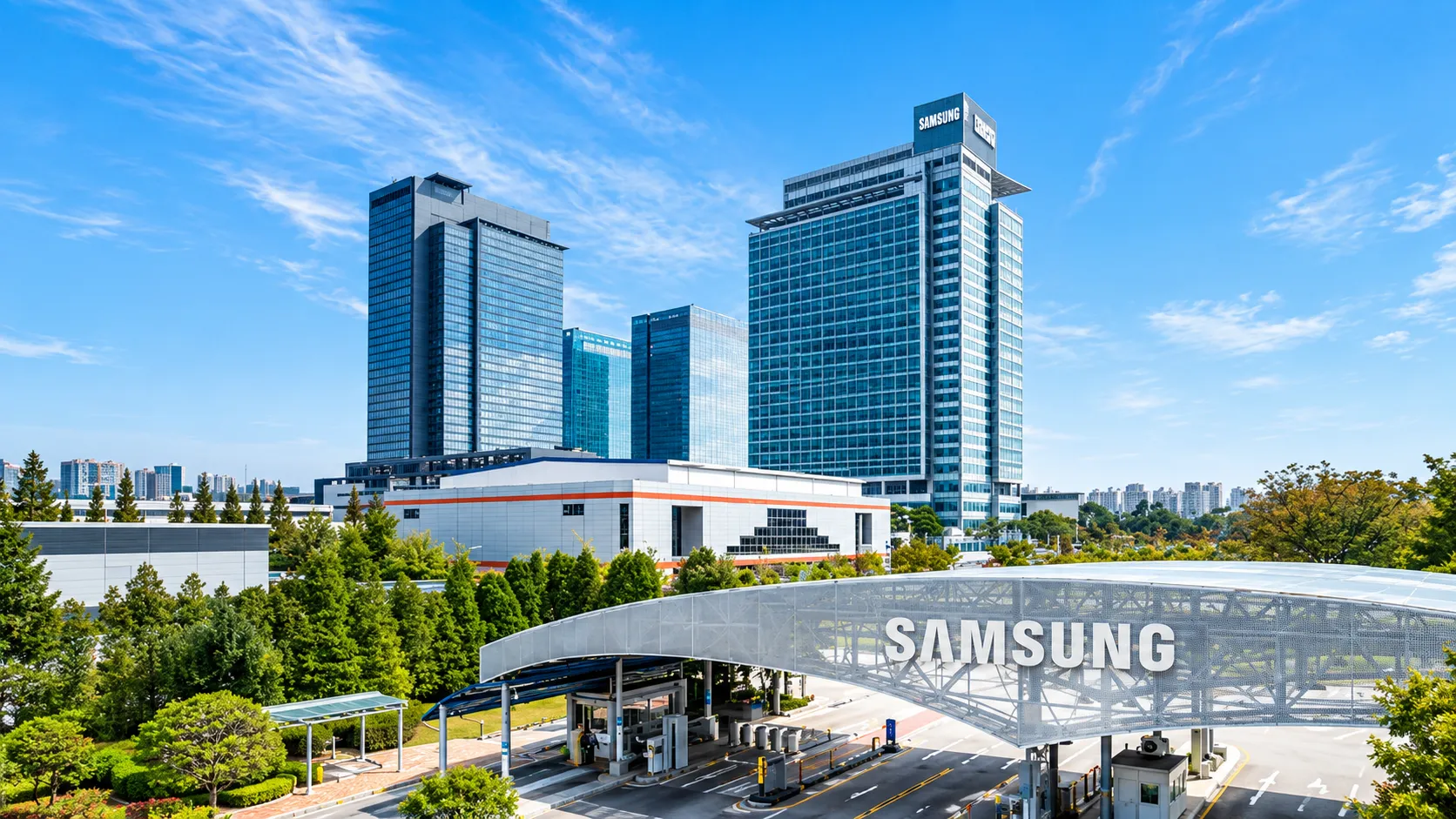
Samsung Electronics and five of its affiliates are investing a combined $1 billion in Helix Digital Infrastructure, the artificial intelligence infrastructure company created by investment firm KKR earlier this year, in a move that underlines how the AI race is increasingly being fought over power, land and physical infrastructure rather than algorithms alone.

Samsung Electronics is contributing $500 million, with the remaining $500 million coming from Samsung C&T, Samsung SDS, Samsung SDI, Samsung Life Insurance and Samsung Fire & Marine Insurance. The investment, announced on 29 September 2026, adds Samsung to a group of founding backers that includes KKR, the Kuwait Investment Authority, Nvidia and US power producer Vistra.

Helix is led by Adam Selipsky, the former chief executive of Amazon Web Services. It launched in June with more than $10 billion in long-duration capital commitments, and Samsung's investment pushes the total capital available to its strategy above $11 billion.

What Helix does

Helix is designed to address a problem that has become one of the defining constraints of the AI era. Training and running large AI models requires enormous computing capacity, housed in data centres that consume vast amounts of electricity. Securing graphics processing units is only one part of the challenge. Developers also need land, grid connections, power generation, transmission capacity, cooling and high-speed fibre, often in locations where those resources are already stretched.

According to Samsung's announcement, Helix provides "integrated solutions across the entire value chain, including hyperscale data center development and operations, power generation (covering both baseload and flexible energy sources), transmission and distribution infrastructure, and fiber-optic networks." Nvidia serves as a strategic technology partner and Vistra as a preferred power partner.

The integrated approach reflects a recognition that the traditional model, in which data centre developers, utilities and equipment suppliers operate separately, is too slow for the pace of AI demand. By combining these capabilities under a single platform with patient capital, Helix aims to deliver capacity faster and with greater certainty to hyperscale customers.

Samsung's strategic logic

For Samsung, the investment is about more than financial returns. The conglomerate's affiliates span many of the components that go into AI infrastructure. Samsung Electronics' Device Solutions Division makes memory chips, including the high-bandwidth memory that is essential for AI accelerators. FläktGroup, a Samsung subsidiary, supplies data centre cooling products. Samsung C&T provides engineering and construction services, Samsung SDS operates data centres, and Samsung SDI makes batteries and power backup systems.

By investing in Helix, Samsung positions itself to supply products and services across the full stack of AI infrastructure, moving beyond individual components toward a role in shaping how data centres are designed and built. The participation of Samsung's insurance affiliates also reflects the attraction of long-duration infrastructure assets for investors seeking stable returns.

Samsung's announcement was explicit about the underlying constraint: "power availability is currently the greatest bottleneck in AI infrastructure."

The power problem

The emphasis on energy is well founded. Across the United States and other major markets, utilities are receiving requests for new grid connections from data centre developers on a scale not seen in decades. In some regions, the wait for a new connection can stretch for years. Power prices have risen in several markets, and regulators are debating how to allocate the costs of new generation and transmission between data centres and other customers.

“Power availability is currently the greatest bottleneck in AI infrastructure.”
— Samsung, announcing its investment in Helix

That has prompted technology companies and infrastructure investors to pursue new strategies: building data centres alongside power plants, signing long-term contracts with nuclear generators, investing in gas-fired generation and exploring technologies such as fuel cells and small modular reactors. Vistra's involvement in Helix gives the platform access to an operator of a large fleet of power plants, including gas and nuclear facilities.

The broader capital markets context is also relevant. On the same day, German startup Reverion raised $175 million to scale production of reversible fuel-cell power plants, in part to serve rising electricity demand from data centres. Oracle's recent decision to invoke force majeure on its large Stargate campus in New Mexico is a reminder that AI infrastructure projects face significant execution risks.

KKR's infrastructure bet

KKR, one of the world's largest investors in infrastructure, has made digital infrastructure a central theme of its strategy. Helix represents a new model for the firm: rather than investing in individual data centre developers or power projects, it has created a vertically integrated platform with strategic partners across the value chain.

The choice of Adam Selipsky as chief executive signals an ambition to build a business capable of serving the largest cloud and AI companies. Selipsky led AWS during a period of rapid growth and has deep relationships with enterprise and hyperscale customers. His experience in building infrastructure at scale is directly relevant to the challenges Helix aims to solve.
## Implications for India

The Helix model is directly relevant to India, which has emerged as one of the fastest-growing data centre markets in the world. Global cloud providers and Indian conglomerates have announced large investments in data centre capacity in Mumbai, Chennai, Hyderabad and other cities, while states such as Andhra Pradesh and Maharashtra are courting AI infrastructure projects with incentives.

India faces its own version of the power challenge. Data centres require reliable, round-the-clock electricity, and increasingly want it to be clean. Meeting that demand will require investment in renewable generation, battery storage, transmission and grid modernisation, as well as policies that allow data centre operators to procure green power efficiently. Integrated platforms that can plan power and compute together could accelerate that build-out, and Indian investors and companies are likely to study Helix's progress closely.

Risks and rewards

Infrastructure investments of this scale carry significant risks. Returns depend on sustained demand for AI computing capacity, the ability to secure permits and power, construction costs, the pace of hardware innovation and long-term utilisation rates. If AI demand grows more slowly than expected, or if efficiency gains reduce the need for new capacity, some investments could struggle to earn their expected returns.

Yet the participation of sovereign wealth funds, technology leaders, power producers and now one of Asia's largest industrial groups suggests that major investors view AI infrastructure as a decade-long opportunity rather than a short-term cycle. Samsung's commitment reinforces that view.

For countries such as India, which is seeking to attract data centre investment and build domestic AI capacity, the Helix model offers a lesson. The competition for AI infrastructure will be won not only by those with chips and capital, but by those who can deliver reliable power, land and connectivity at speed. Nations and companies that can integrate those elements will be best placed to host the next generation of AI workloads.

TagsSamsungHelix Digital InfrastructureKKRNvidiaVistraKuwait Investment AuthorityAdam SelipskyAI InfrastructureData CentresPowerEnergyHyperscaleInvestment

Reader reviews

Sign in to rate and review this article.
Loading reviews…