Samsung Electronics has posted the most profitable quarter in the history of the technology industry, according to its own assessment, as the artificial intelligence boom sent memory chip prices and demand to unprecedented levels.
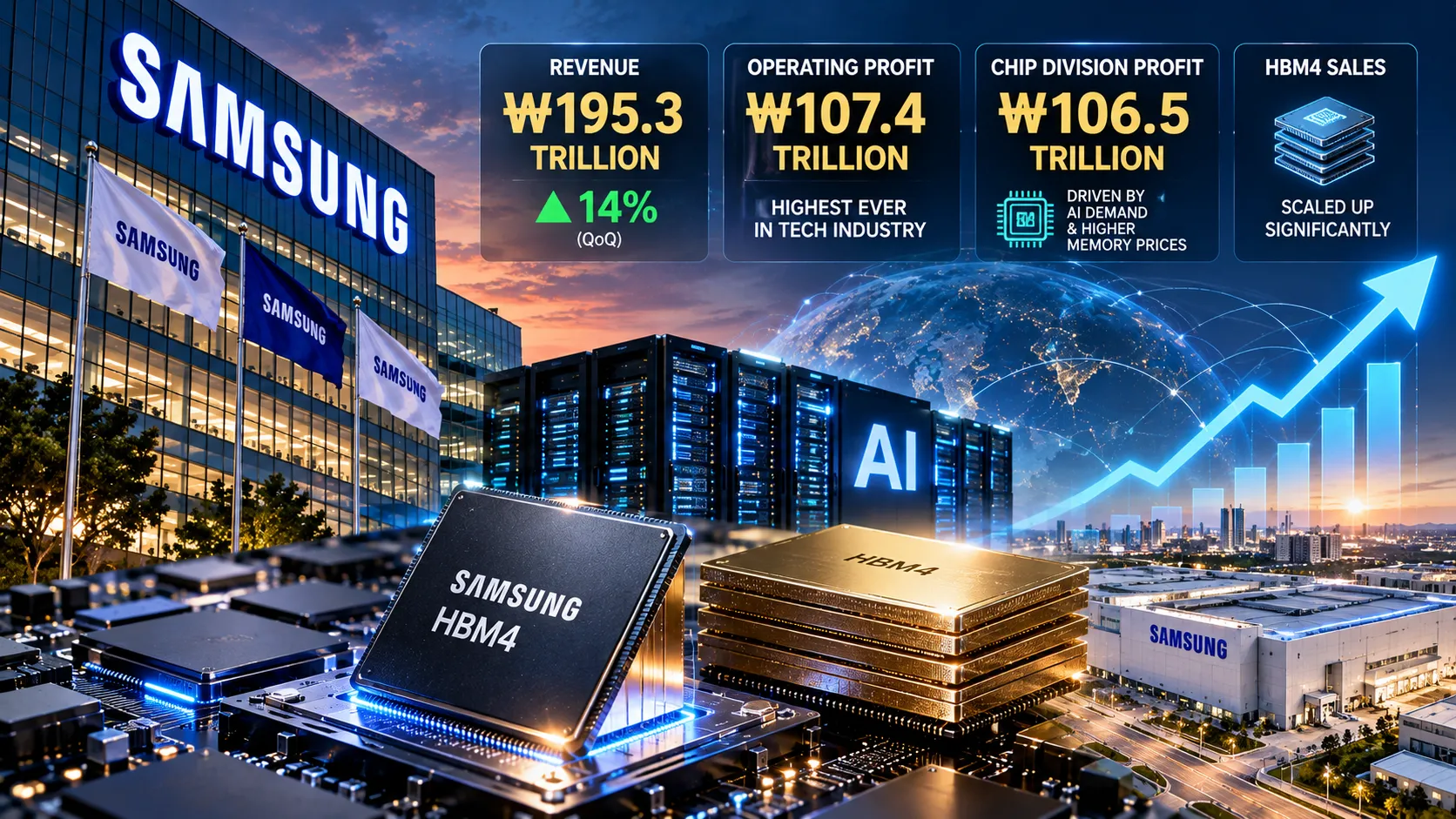
The South Korean company reported revenue of ₩195.3 trillion for the July-September quarter, an all-time quarterly high and 14% higher than the previous quarter, according to its earnings release on Thursday, October 29. Operating profit reached ₩107.4 trillion. Samsung said it is the first technology company to exceed ₩100 trillion in quarterly operating profit.
The result comes a day after rival SK hynix reported operating profit of ₩83.3 trillion, underscoring the extraordinary windfall that the AI boom has delivered to Korea's memory chip makers.
Chips drive everything
Samsung's Device Solutions (DS) division, which includes memory, foundry and chip design, accounted for almost all of the profit. The division reported revenue of ₩147.1 trillion, up 15% from the previous quarter, and operating profit of ₩106.5 trillion.
The memory business posted record quarterly revenue and operating profit, driven by AI demand and higher prices across all applications. Sales of HBM4, the latest generation of high-bandwidth memory used alongside AI processors, scaled up significantly.
HBM has been the most important battleground in the memory industry. SK hynix took an early lead as Nvidia's main supplier, and Samsung has been working to catch up. Significant growth in HBM4 sales suggests that Samsung is gaining ground in the most valuable segment of the market.
A bold outlook for 2027
Samsung expects AI infrastructure investment to remain strong in the fourth quarter of 2026. More strikingly, it expects AI-driven demand in 2027 to far exceed industry supply, compared with 2026.
That outlook suggests memory prices could remain elevated, or rise further, next year, supporting profits for Samsung, SK hynix and Micron. It also implies continued cost pressure for companies that buy memory, including smartphone and PC makers, cloud providers and AI infrastructure builders.
Foundry and chip design
Samsung's foundry business, which manufactures chips for other companies, improved its earnings on sales of HBM base dies and advanced-node chips. It is targeting double-digit revenue growth in the fourth quarter. Samsung's new fabrication plant in Taylor, Texas, is set to begin operations in 2027.
The System LSI business, which designs chips such as smartphone processors and image sensors, grew revenue on mass production of chips for new models launched in the second half.
Phones and TVs under pressure
Outside chips, Samsung's businesses were weaker. The MX (mobile) and Networks division reported combined revenue of ₩37.7 trillion but an operating loss of ₩0.6 trillion, as cost pressures, including higher memory prices, weighed on earnings despite new flagship launches, including foldable phones.
The visual display and digital appliances businesses reported combined revenue of ₩13.9 trillion and an operating loss of ₩0.2 trillion, hurt by higher raw material and logistics costs. Harman, Samsung's automotive and audio unit, improved its earnings, helped by one-off US tariff refunds.
Samsung Display reported revenue of ₩8.0 trillion and operating profit of ₩1.1 trillion.
The divergence highlights a paradox: soaring memory prices that boost Samsung's chip profits also raise costs for its own phones and appliances.