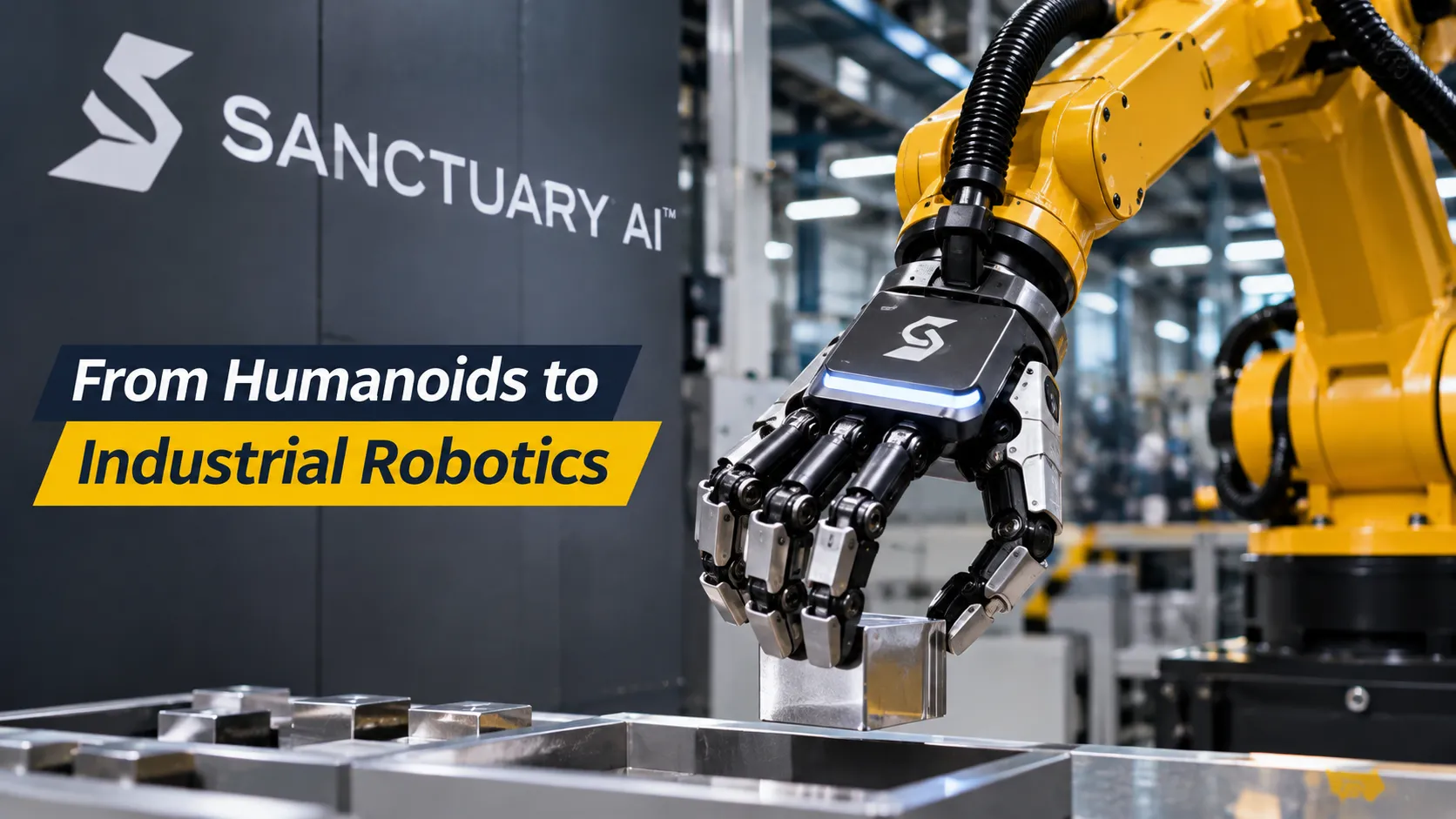
Sanctuary AI, a Canadian robotics company that has been one of the more prominent developers of humanoid robots, is changing course. The company is shifting its focus from building full humanoid robots to putting its physical AI software and robotic hands on existing industrial robot arms, according to reports on November 20-21.
The company has also named Daniel Friedmann as chief executive. Task results cited by the company in connection with the shift are self-reported.
The pivot is a notable moment for the humanoid robotics industry, which has attracted enormous investment and attention in recent years but has yet to demonstrate large-scale commercial deployment.
From humanoids to hands
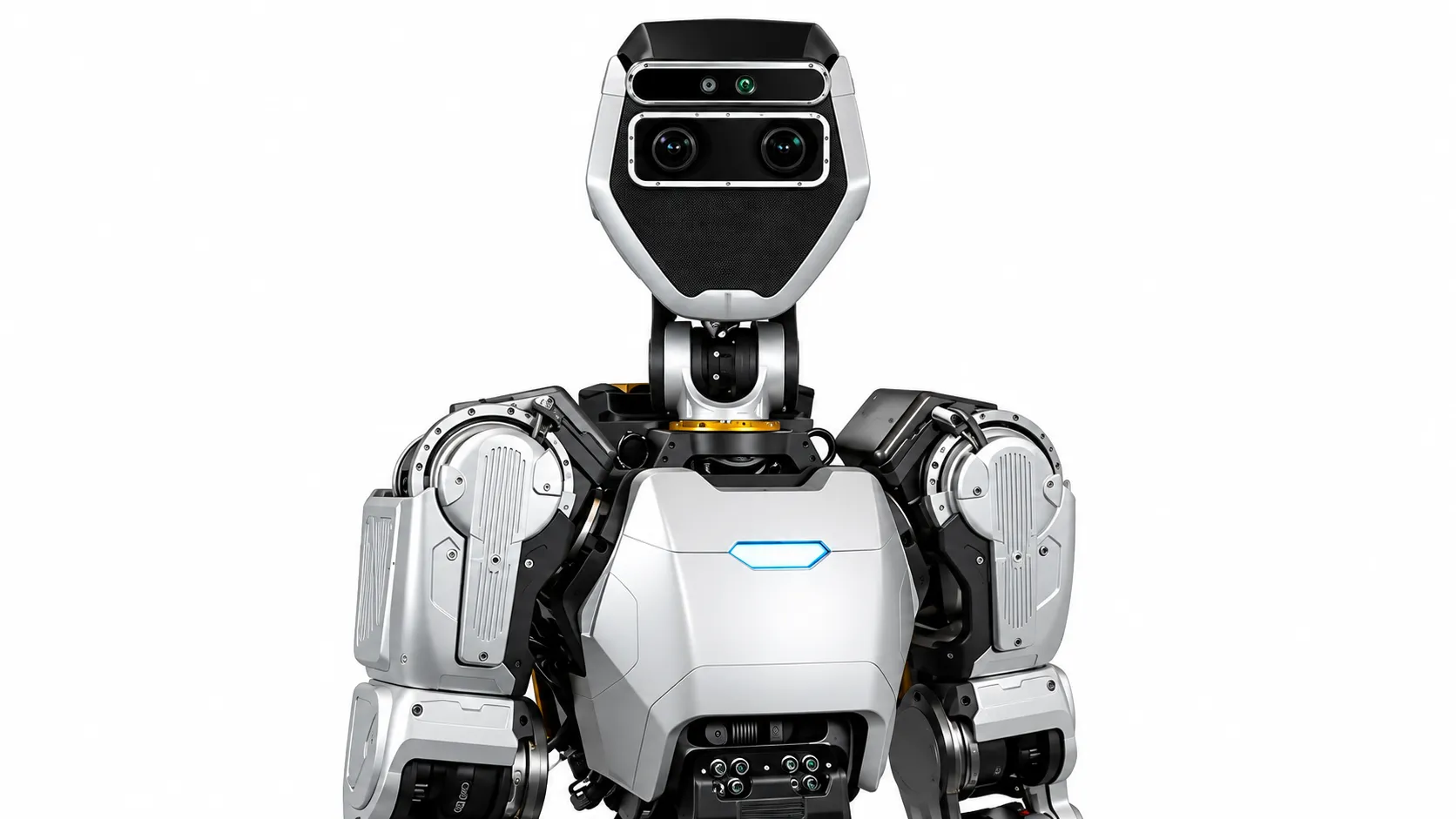
Sanctuary AI, based in Vancouver, became known for its general-purpose humanoid robots, designed to perform a wide range of tasks in human environments. The company emphasised dexterous hands and AI systems capable of learning and carrying out work.
Building full humanoid robots is extremely challenging. Humanoids must balance, walk, manipulate objects and operate safely around people, all while being affordable and reliable enough for commercial use. Each of these challenges requires significant engineering, and combining them adds further complexity.
By focusing on industrial arms, Sanctuary is targeting a much more established market. Industrial robot arms are already widely used in manufacturing, logistics and other industries. They are proven, reliable and supported by large ecosystems of integrators and suppliers. However, many existing arms have limited dexterity and require extensive programming for each task.
Sanctuary's strategy is to add value to these existing robots through its physical AI, which can help robots learn and adapt to new tasks, and its dexterous hands, which can handle objects that conventional grippers cannot. This could allow factories and warehouses to automate tasks that were previously too complex or variable for robots.
Why pivots are happening
The shift reflects a broader reality in the robotics industry. Despite rapid advances in AI, turning robots into commercially viable products takes time. Investors and customers increasingly want to see revenue and practical deployments, not just impressive demonstrations.
Industrial arms offer a faster path to revenue because the hardware already exists and is deployed at scale. Software and components that enhance existing robots can be sold to a large installed base, without the cost and risk of developing an entirely new robot.
A booming but uneven sector
Physical AI, which refers to AI systems that act in the physical world, has become one of the hottest areas in technology investment. In the same week as Sanctuary's pivot, French-American startup Genesis AI raised $500 million, and German company Agile Robots raised $500 million at an $8.5 billion valuation. In India, Bengaluru-based Humyn Labs raised $47 million to collect real-world footage of people doing work, which is used to train robots and AI models.
Tesla has also continued to promote its Optimus humanoid robot. Elon Musk said at a recent summit that the first Optimus deployments would be in mining and ore refining, with external deliveries targeted for late 2027.
However, the sector also faces challenges. Training robots requires large amounts of real-world data, which is costly to collect. Hardware remains expensive. Safety, reliability and cost-effectiveness need to be proven before large-scale adoption. And international tensions are affecting the industry, with reports of US visa denials for staff from Chinese robotics companies ahead of the CES technology show.
The hands problem
Dexterous hands are one of the hardest problems in robotics. Human hands can perform an extraordinary range of tasks, from lifting heavy objects to manipulating delicate items, thanks to their many joints, sensitive touch and precise control.
Replicating this in robots requires sophisticated mechanics, sensors and control software. Musk himself has described hands and forearms as the hardest problem for humanoid robots.
Sanctuary has long focused on dexterous hands, and its pivot suggests it sees this technology as its most valuable asset. By making its hands and AI compatible with existing robot arms, it can bring that capability to a much larger market.
Implications for manufacturing
If physical AI can make existing robots more capable and flexible, it could accelerate automation in manufacturing and logistics. Tasks such as assembling small parts, handling irregular objects, packing mixed items and inspecting products are difficult for conventional robots but common in factories and warehouses.
For manufacturers facing labour shortages or rising labour costs, more capable robots could improve productivity. However, automation also raises concerns about job displacement, particularly for workers in routine manual roles.
The India angle
India's manufacturing sector is growing rapidly, supported by government incentives and global supply chain diversification. Indian factories have generally been less automated than those in countries such as China, Japan, South Korea and Germany, partly because labour costs are lower.
As Indian manufacturing becomes more sophisticated, demand for automation is likely to grow, particularly in electronics, automotive and precision manufacturing. Physical AI that makes robots easier to deploy and adapt could be particularly valuable for Indian manufacturers that produce a variety of products in smaller batches.
India is also emerging as a source of data and talent for physical AI, as the Humyn Labs funding shows.
What to watch
Key questions for Sanctuary include how quickly it can sign commercial customers for its industrial arm solution, how its technology performs in real-world deployments, and how the new leadership under Daniel Friedmann executes the strategy.
For The Impactful Global Indian's readers, Sanctuary's pivot is a reminder that even in the most exciting areas of technology, commercial reality shapes strategy. The path to widespread robotics may run through upgrading the robots already in factories, rather than replacing them with humanoids.
Investor sentiment
Pivots like Sanctuary's can be read in different ways by investors. Some see them as a sign of discipline, an acknowledgement that a company must find a commercially viable path rather than pursue an ambitious vision indefinitely. Others may view them as evidence that the original vision was too difficult. For robotics companies raising capital in a competitive market, demonstrating paying customers and repeatable deployments has become essential, regardless of the form factor of their robots.


