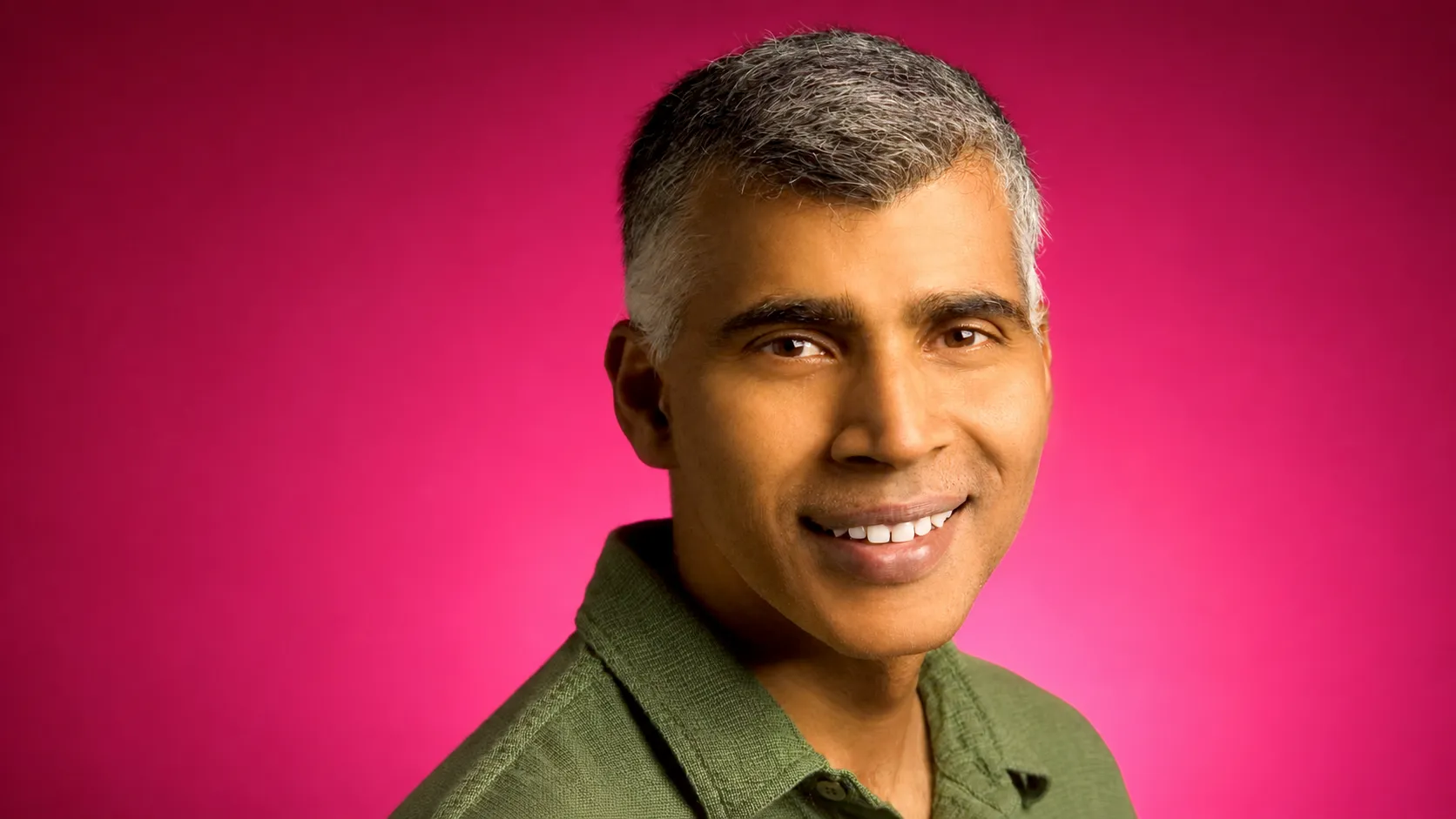
In one of the most closely watched engineering exits Silicon Valley has seen in years, Sanjay Ghemawat — the Indian-American computer scientist whose fingerprints are on some of the most consequential infrastructure in the history of the internet — is leaving Google to co-found a new artificial intelligence company. He is joined by Jeff Dean, one of the most influential technologists of the past two decades, along with Quoc Le, a founding member of Google Brain, and Oriol Vinyals, a senior research scientist at Google DeepMind. Dean is expected to serve as chief executive of the new venture, while Ghemawat, Le and Vinyals join as co-founders, according to reporting confirmed this week.
For a diaspora that has long measured its influence in Silicon Valley through the number of Indian-origin names attached to category-defining technology, Ghemawat's move carries a particular resonance. He is not a boardroom appointee or a public-facing chief executive of the kind that headlines usually reserve for Indian-American achievement in the United States. He is, instead, one of the quiet architects of the modern internet — an engineer whose work shaped how the world's largest technology companies store, process and retrieve information at a planetary scale, largely without his name ever appearing on a product box.
Ghemawat joined Google in 1999, when the company was still a private search startup operating out of modest offices in Mountain View. Over the following quarter-century, he became one of a small handful of engineers entrusted with solving problems that did not yet have established solutions, because the scale at which Google was operating had never existed before. Alongside colleague Jeff Dean, he co-designed MapReduce, the programming model that allowed enormous datasets to be processed across thousands of machines simultaneously — a system that effectively became the intellectual ancestor of the modern big data industry, inspiring open-source frameworks such as Hadoop that many enterprises still rely on today.
He also co-created Bigtable, the distributed storage system that became foundational to how Google — and later much of the broader tech industry — manages structured data across data centres spanning continents. His technical contributions extended into file systems, compiler design and the low-level infrastructure that made Google's later advances in search, cloud computing and artificial intelligence possible in the first place. Colleagues have long described Ghemawat and Dean as one of technology's most effective engineering partnerships, a duo whose collaborative output over two decades quietly underwrote entire product lines that Google would eventually spin into billion-dollar businesses.
That partnership is now being reconstituted outside Google's walls. According to people familiar with the plans, the new venture will focus on frontier artificial intelligence research and applied AI products, positioning itself in direct competition with a growing field of independent AI labs that have drawn away some of the industry's most senior technical leadership over the past three years. The founding team's combined resume reads like a checklist of the foundational papers and systems that underlie today's large-scale AI models — a level of technical depth that is likely to attract serious investor interest even before the company has articulated a public product roadmap.
The move also reflects a broader realignment within the artificial intelligence industry, where senior researchers increasingly view founding or joining an independent lab as offering greater autonomy, faster decision-making and more direct equity upside than remaining inside a large, publicly listed technology company. Google, Microsoft, Meta and Amazon have all seen senior AI talent depart in recent years to launch or join independent ventures, several of which have gone on to raise capital at valuations that rival or exceed those of long-established public companies. What distinguishes this latest departure is the sheer concentration of technical seniority involved — four researchers, each individually recognised as among the most accomplished engineers of their generation, exiting together rather than in a staggered sequence.
For the Indian-American technology community specifically, Ghemawat's exit adds a new dimension to a well-established narrative. Indian-origin executives have increasingly come to occupy the chief executive suites of some of the world's largest technology companies — Google's own parent Alphabet among them, under Sundar Pichai. But Ghemawat represents a different, less publicly celebrated category of diaspora achievement: the deep technical architect whose influence is measured not in shareholder letters or keynote appearances, but in the invisible scaffolding that allows software to function reliably at a scale most engineers will never personally encounter. Industry observers argue that this category of contribution deserves at least as much recognition within diaspora narratives of success as the more visible executive track, precisely because it has shaped the technical trajectory of the entire industry rather than the fortunes of a single company.
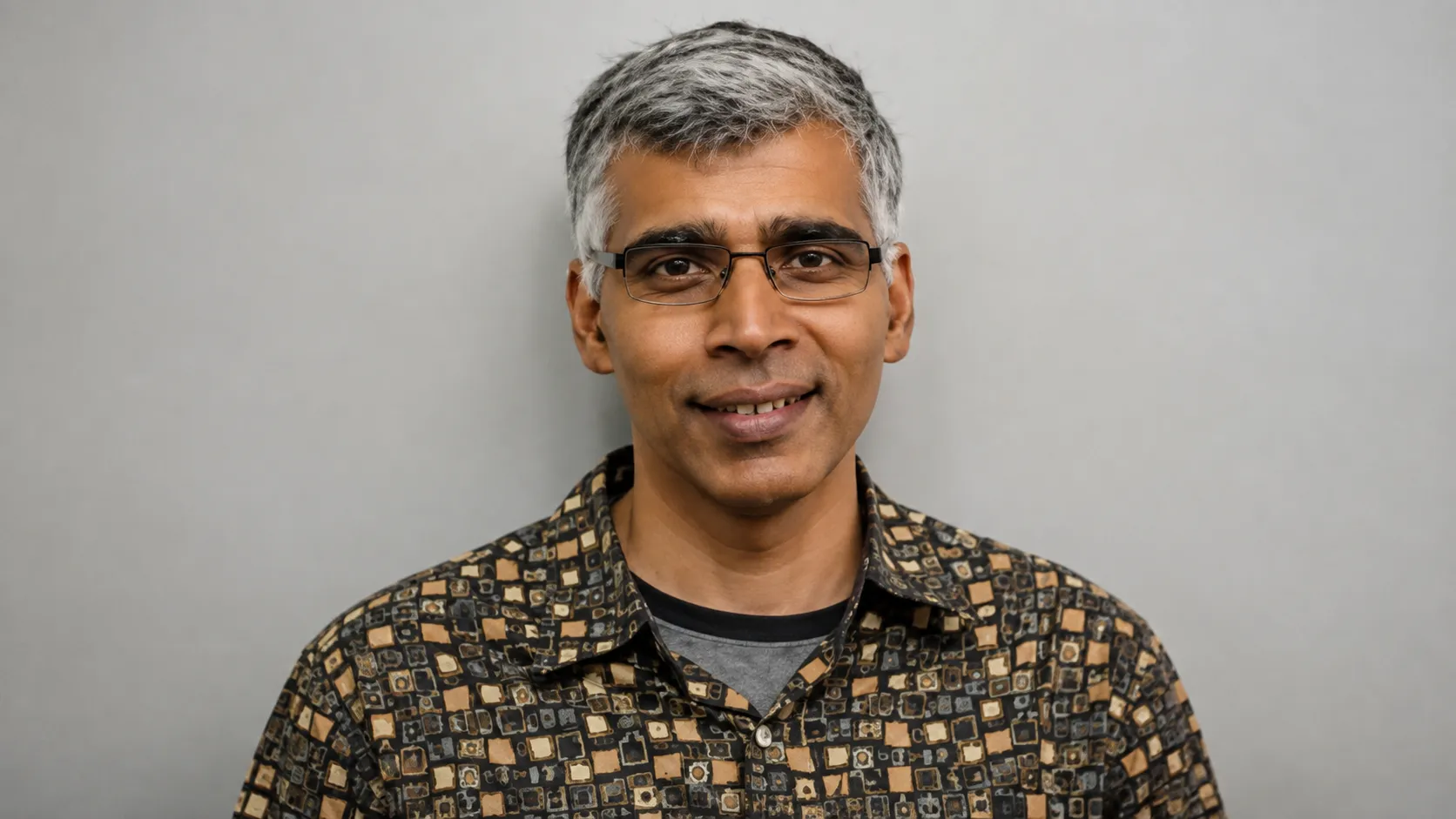
The new venture arrives at a moment when capital continues to flow aggressively into foundational AI research, even as public markets show signs of growing selectivity about which AI companies can convert research breakthroughs into durable commercial businesses. Venture investors have shown a strong preference in recent funding cycles for teams with demonstrated infrastructure-scale engineering experience, on the theory that the next wave of differentiation in artificial intelligence will depend as much on efficient, reliable systems engineering as on model architecture innovation. Ghemawat's specific expertise in distributed systems and large-scale infrastructure is likely to be viewed by investors as a genuine strategic asset rather than a peripheral credential, particularly as AI compute costs and reliability concerns become more central to enterprise adoption decisions.
Google, for its part, has not issued a detailed public statement beyond confirming the departures, a pattern consistent with how the company has handled previous exits of senior AI personnel. The company continues to operate one of the largest AI research organisations in the world through Google DeepMind, and executives have previously argued that talent circulation between Google and the broader AI ecosystem ultimately benefits the industry as a whole, even when it results in the loss of individual star researchers. Still, the optics of losing a co-architect of MapReduce and Bigtable — systems that remain embedded in Google's own infrastructure decades after their creation — will likely generate continued scrutiny of the company's ability to retain its most senior technical talent in an increasingly competitive hiring environment.
For the global Indian diaspora watching from outside the immediate Silicon Valley ecosystem, the episode offers a useful corrective to narratives that equate diaspora success narrowly with founder-CEO visibility. Ghemawat's career suggests a more textured model of influence — one built over twenty-five years of unglamorous, foundational engineering work that nonetheless proved decisive to how billions of people now interact with technology every day. As he embarks on a new venture at a career stage when many peers might have opted for a quieter transition into advisory roles, Ghemawat's decision to build again from first principles offers a data point that will be closely studied by the next generation of Indian-origin engineers weighing similar choices between the stability of established technology giants and the higher-risk, higher-autonomy path of the independent AI lab.
The episode also arrives against the backdrop of an increasingly competitive market for frontier AI talent, in which independent labs, hyperscale incumbents and a fast-growing tier of well-capitalised mid-stage startups are all bidding for the same relatively small pool of engineers capable of operating at the true frontier of large-scale systems design. Compensation packages for this tier of talent have risen sharply over the past three years, with equity structures in particular becoming more aggressive as companies compete not merely on salary but on the promise of meaningful ownership in ventures that could, if successful, generate outsized returns comparable to the earliest employee cohorts at companies such as Google and Meta. For engineers already several decades into distinguished careers, that calculus increasingly favours joining or founding an independent venture over remaining inside an incumbent whose equity upside, for a senior employee already holding a substantial vested position, has become comparatively modest by percentage terms.
The broader competitive landscape the new venture will enter is itself in flux. A cluster of well-funded independent AI labs has emerged over the past several years, several founded by former senior researchers from Google, OpenAI and Meta, each pursuing a distinct thesis about where the next major breakthroughs in artificial intelligence capability are likely to originate — whether through further scaling of existing model architectures, through new approaches to reasoning and planning, or through more efficient training and inference techniques that could reduce the enormous computational costs currently associated with frontier model development. Ghemawat's specific background in systems efficiency and large-scale infrastructure design positions the new venture credibly within this latter camp, and investors close to the deal are understood to view infrastructure efficiency as a genuinely differentiated angle at a moment when the industry's collective compute costs have become a central strategic concern for nearly every major AI developer.
For India's own ambitions in artificial intelligence, the departure of senior Indian-origin technologists from major American technology companies to found independent ventures carries a more complicated set of implications than the straightforwardly celebratory framing that diaspora achievement stories often receive. On one hand, each such departure reinforces the now well-established narrative of Indian-origin engineers operating at the absolute frontier of global technology development, a narrative that continues to carry significant soft-power value for India's own international technology positioning and its efforts to attract investment and talent partnerships. On the other hand, policymakers in New Delhi have periodically expressed concern about the extent to which India's own domestic AI ecosystem might benefit more directly from returning diaspora talent, rather than continuing to primarily supply high-end engineering talent to companies and now independent ventures headquartered in the United States. That tension — between celebrating diaspora achievement abroad and building comparable frontier capability at home — is likely to persist as more senior Indian-origin technologists follow trajectories similar to Ghemawat's over the coming years.
Analysts covering the AI infrastructure sector note that the new venture's ultimate success will hinge less on its founders' considerable individual reputations than on execution factors that have proven decisive across the current wave of AI startups more broadly: the ability to secure sufficient compute capacity at viable cost, the speed with which the team can move from research prototypes to commercially viable products, and the venture's capacity to attract enterprise customers willing to commit meaningfully to a new, unproven platform rather than defaulting to established providers. Several previous ventures founded by senior researchers with comparably strong technical pedigrees have struggled to convert research credibility into commercial traction, a pattern that has made even sophisticated investors somewhat more disciplined in their diligence on new AI lab formations than was typical during the more exuberant funding cycles of 2023 and early 2024.
The specific mechanics of how such founding teams typically structure their initial fundraising also merit attention for readers tracking the broader AI investment landscape. Ventures founded by researchers with this level of collective seniority and track record frequently bypass the conventional seed-stage fundraising process altogether, moving directly to larger initial funding rounds structured with participation from a small number of major venture firms and, increasingly, strategic investors including sovereign wealth funds and corporate venture arms seeking early access to frontier AI capability. Given the founding team's combined history at Google, it would not be unusual for the new venture's initial funding discussions to already be well advanced by the time of the public announcement, with formal terms disclosed only once definitive agreements are reached — a sequencing that has become standard practice for high-profile AI lab launches over the past two years, allowing founders to avoid the speculative public scrutiny that can complicate fundraising negotiations still in progress.
There is also a talent-pipeline dimension to this story that deserves closer attention than it typically receives in coverage focused narrowly on the founders themselves. Departures of this magnitude tend to trigger secondary waves of movement, as more junior engineers who worked closely with departing senior researchers weigh whether to follow them to the new venture, remain at the incumbent, or use the moment as an opportunity to explore other opportunities entirely. Google's internal teams that previously worked alongside Ghemawat, Dean, Le and Vinyals are likely to see some degree of additional attrition in the weeks following the announcement, a dynamic that incumbent technology companies have grown increasingly practised at managing through a combination of retention bonuses, internal transfer opportunities and efforts to reassure remaining team members about the continuity of ongoing research programmes. For the diaspora specifically, this secondary talent movement often creates additional opportunities for mid-career Indian-origin engineers to step into more senior roles at incumbent companies as departures open leadership vacancies — a less visible but professionally significant knock-on effect of high-profile founder exits of this kind.