Diaspora7 MIN READ

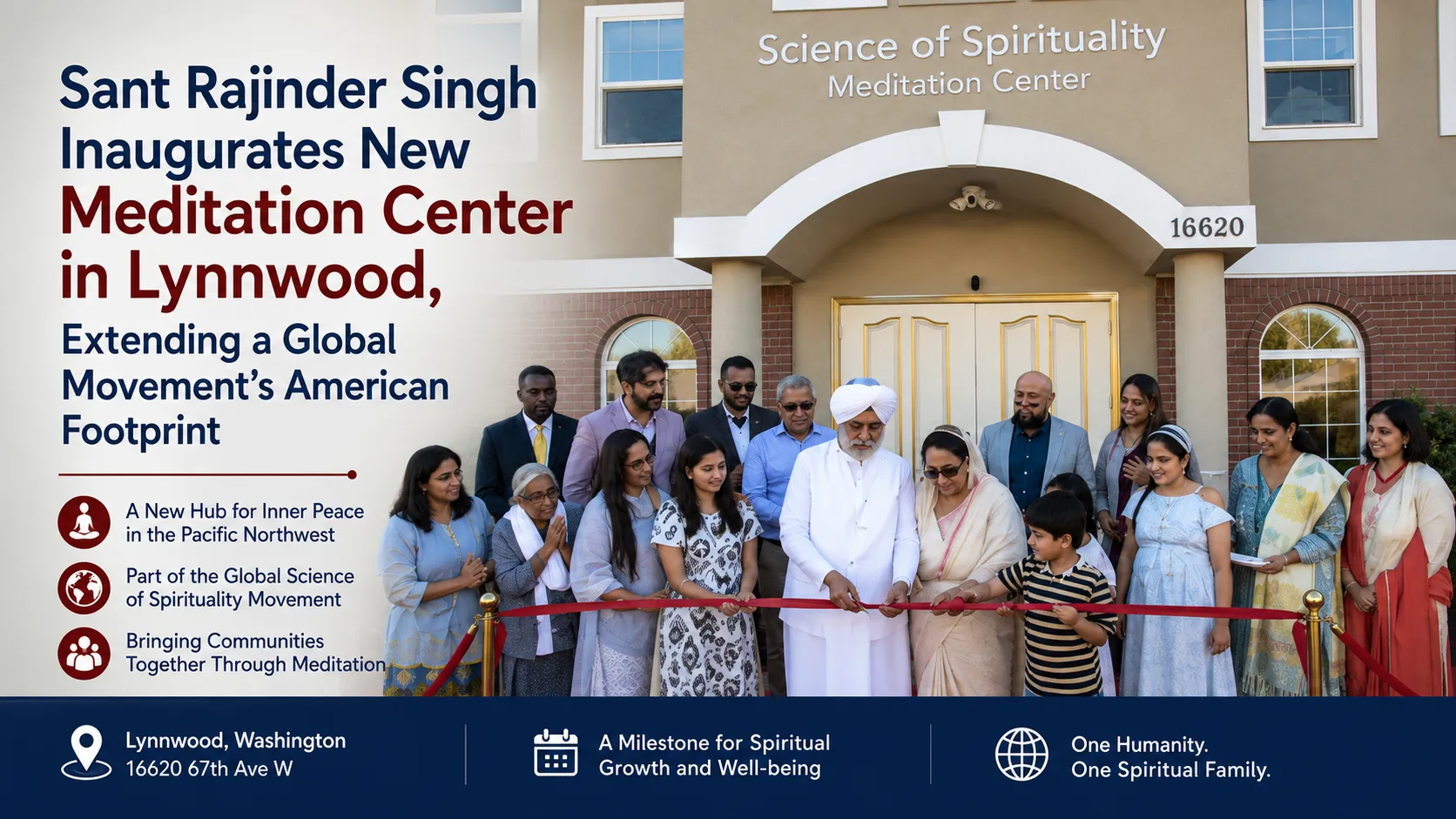
Sant Rajinder Singh Inaugurates New Meditation Center in Lynnwood, Extending a Global Movement's American Footprint

Spiritual teacher Sant Rajinder Singh has inaugurated a new meditation center in Lynnwood, Washington, expanding the Science of Spirituality organization's American presence and reflecting the steady growth of meditation and wellness institutions tied to the Indian diaspora across the Pacific Northwest.

By Nisha Omkumar · Author8 August 2026
Sant Rajinder Singh Inaugurates New Meditation Center in Lynnwood, Extending a Global Movement's American Footprint

A new meditation center has opened its doors in Lynnwood, Washington, following an inauguration led by Sant Rajinder Singh, the spiritual teacher and head of Science of Spirituality, an international meditation organisation with roots in India and a global following that spans more than fifty countries. The opening adds another node to an expanding American network of centers associated with the movement, and reflects a broader, longer-running pattern in which India-origin meditation and wellness institutions have steadily extended their footprint across the United States, increasingly reaching beyond the country's traditional coastal population centres into secondary metropolitan regions such as the Seattle-Tacoma corridor, of which Lynnwood forms a growing part.

Sant Rajinder Singh has led Science of Spirituality since 1990, following the passing of his predecessor and spiritual mentor, and has since built the organisation into one of the more recognisable global platforms teaching Surat Shabd Yoga, a meditation practice rooted in the broader Sant Mat tradition of North Indian spirituality that emphasises inner contemplative practice over external ritual. Under his leadership, the organisation has established meditation centers, retreat facilities and outreach programmes across North America, Europe, Latin America and Asia, while maintaining its institutional headquarters in India. His public engagements frequently combine meditation instruction with broader talks on themes of inner peace, ecological responsibility and interfaith dialogue, positioning the organisation's work within a wider global conversation about mental wellness and spiritual practice that has gained significant traction in Western countries over the past decade.

The choice of Lynnwood for the new center reflects a pattern that has become increasingly visible across the American wellness and spiritual institution landscape: the steady dispersal of India-origin meditation, yoga and spiritual organisations away from a small number of long-established hubs — historically concentrated around cities such as Los Angeles, New York and the San Francisco Bay Area — into a wider range of mid-sized American metropolitan areas where growing South Asian communities, alongside broader Western interest in contemplative practice, have created sufficient local demand to sustain dedicated physical facilities. The Seattle metropolitan region, which includes Lynnwood as one of its northern suburbs, has seen its South Asian population expand considerably over the past fifteen years, driven substantially by the region's technology sector employment base, and the opening of a dedicated meditation center in the area reflects both that demographic growth and a broader institutional maturation of diaspora community infrastructure beyond religious worship spaces into dedicated wellness and contemplative practice facilities.
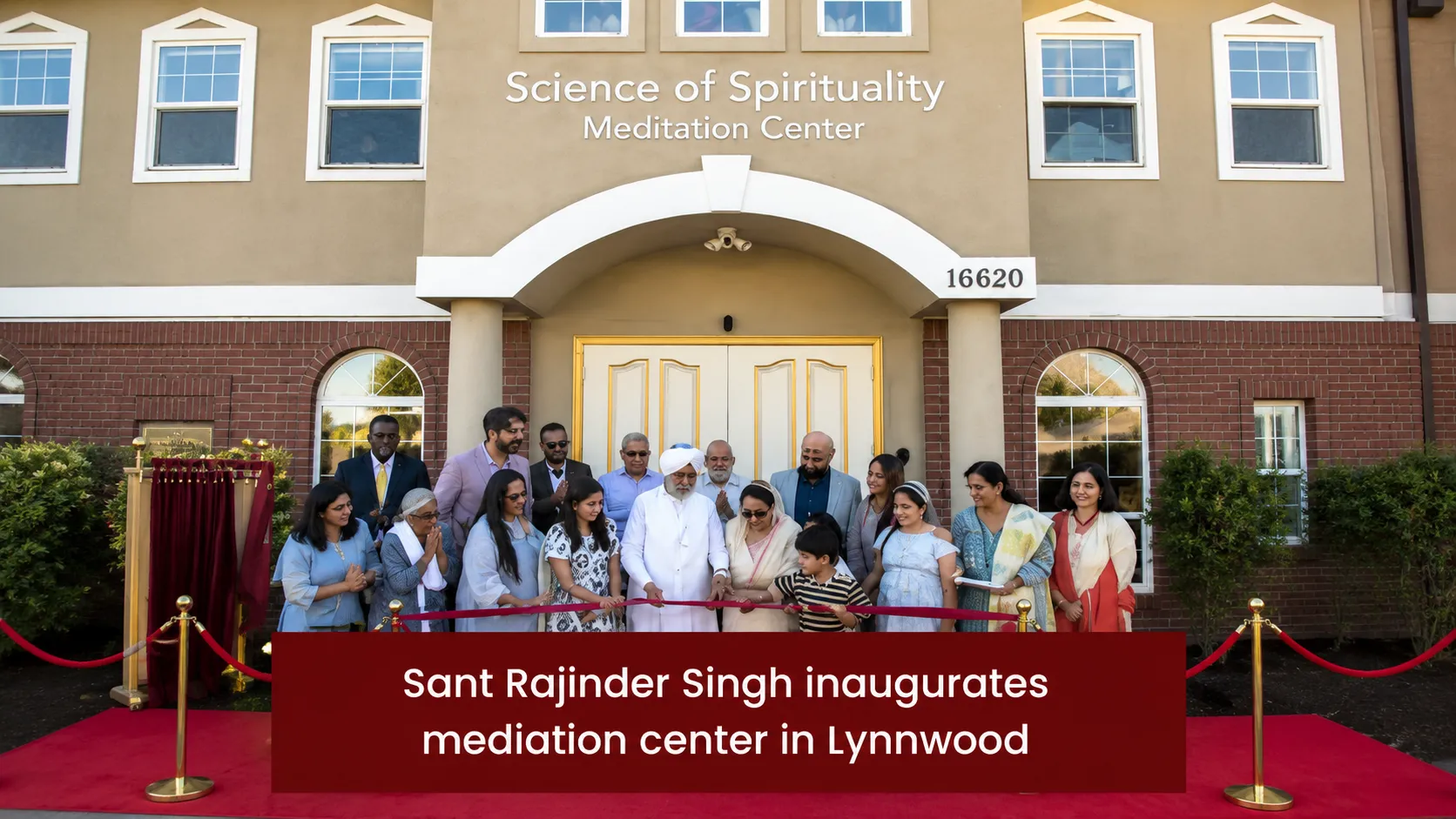
image.png

Meditation centers affiliated with Indian spiritual traditions have historically served a dual function within diaspora communities: providing a specifically religious or spiritual practice space for adherents of particular traditions, while also functioning as a broader point of cultural and community connection for diaspora members seeking spaces that reflect their heritage, regardless of the depth of their personal engagement with the underlying spiritual philosophy. Organisations such as Science of Spirituality have, over recent decades, increasingly positioned their outreach in universalist terms, framing meditation practice as accessible and beneficial across religious and cultural backgrounds rather than as an exclusively India-linked or diaspora-specific offering — a framing that has helped such organisations attract a broader, non-diaspora American membership even as their leadership, founding philosophy and institutional history remain deeply rooted in Indian spiritual tradition.

That broader positioning has coincided with, and arguably benefited from, a significant mainstreaming of meditation practice within American wellness culture more generally over the past decade. Clinical and workplace interest in meditation as a tool for stress reduction, mental health support and general wellbeing has expanded considerably, driven by a growing body of research on the measurable effects of contemplative practice and by a broader cultural conversation about burnout and mental health that intensified through the pandemic years and has continued to shape workplace wellness policies since. Institutions such as Science of Spirituality, which have spent decades building infrastructure and teaching methodology around meditation practice, find themselves increasingly well positioned within that broader cultural moment, even as their core teachings and organisational identity remain grounded in a specific spiritual lineage rather than the more secularised mindfulness programming that has become common in corporate wellness contexts.

For the Indian diaspora specifically, the steady growth of institutions such as the new Lynnwood center also reflects a maturing pattern of community infrastructure development that increasingly mirrors the trajectory of earlier immigrant communities in the United States — moving from an initial phase focused primarily on establishing places of worship and basic community gathering spaces, toward a subsequent phase in which more specialised institutions, including dedicated meditation centers, cultural academies, professional associations and philanthropic foundations, begin to emerge as community populations grow large enough, and economically established enough, to sustain more differentiated forms of institutional infrastructure. The Pacific Northwest's Indian community, concentrated heavily around the greater Seattle technology corridor, has followed a broadly similar arc over the past two decades, and the opening of a new meditation center in Lynnwood adds to a growing list of specialised community institutions — including cultural academies, professional networking organisations and philanthropic initiatives — that have taken root in the region alongside its more established places of worship.

Sant Rajinder Singh's own public profile has grown considerably over recent decades through a combination of published works, international speaking engagements and media appearances that have introduced Surat Shabd Yoga meditation to audiences well beyond the traditional adherent base of the Sant Mat lineage from which the practice originates. His teachings frequently emphasise practical, accessible entry points into meditation practice, an approach that organisers say has helped the movement attract newcomers who might otherwise find more esoteric spiritual traditions difficult to approach without significant prior grounding in Indian philosophical or religious frameworks. That accessibility-focused approach appears to have informed the programming plans for the new Lynnwood facility as well, with the center expected to offer a combination of guided meditation sessions, introductory workshops and periodic visiting teacher programmes designed to serve both committed practitioners and newcomers exploring meditation practice for the first time.

The inauguration itself drew community members from across the broader Puget Sound region, reflecting the center's intended role as a regional rather than purely local resource. As with many such openings, the event combined formal inauguration proceedings with community gathering elements, offering local diaspora members and interested newcomers alike an initial introduction to the facility and its planned programming. Organisers indicated that the center would begin regular programming in the weeks following the inauguration, joining an expanding network of Science of Spirituality centers across North America that together form one of the more geographically extensive India-origin meditation networks operating in the United States today.
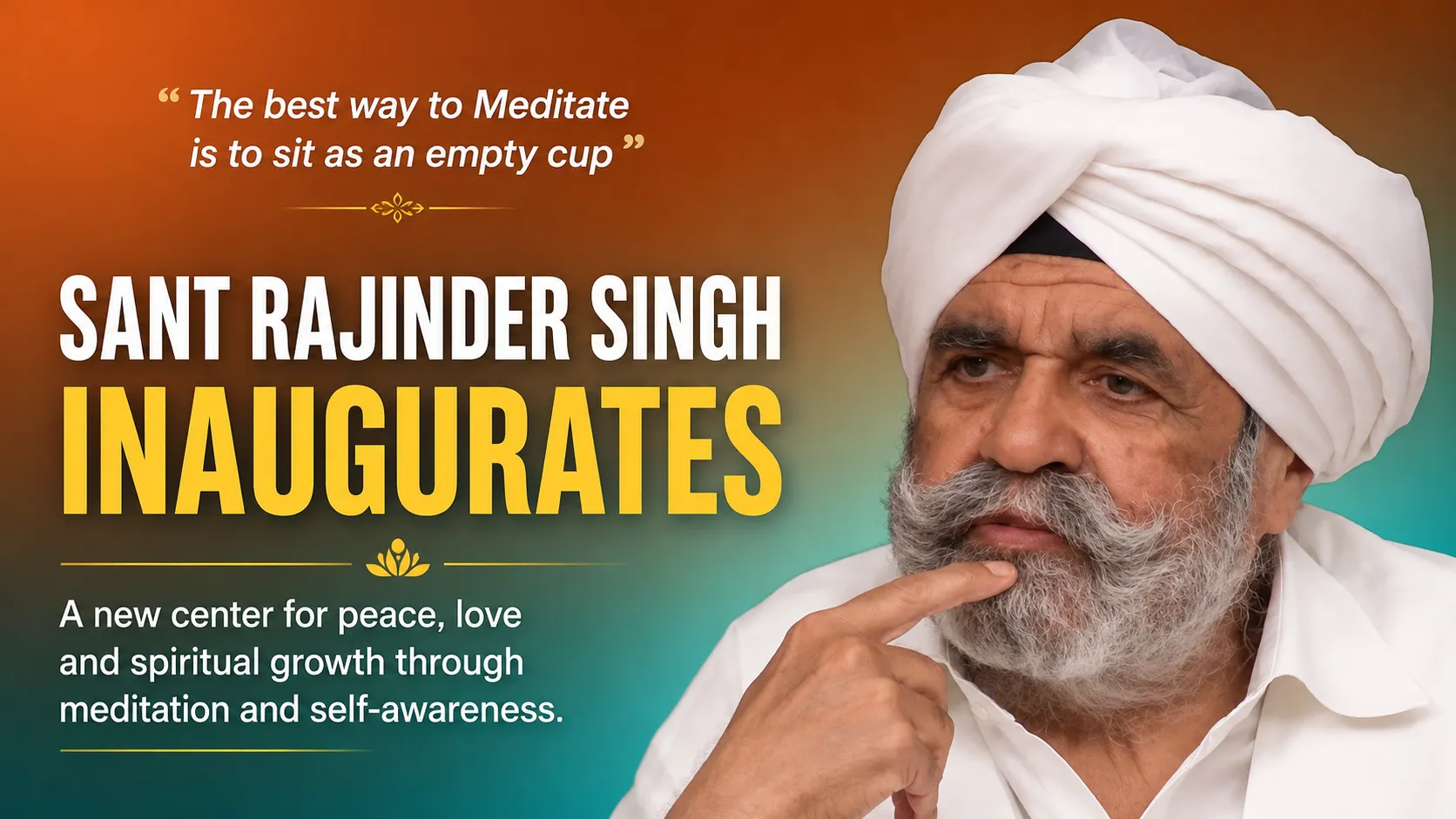

The Lynnwood center is the latest node in a decades-long expansion of meditation and spiritual wellness institutions carried westward by the Indian diaspora, now reaching well beyond the country's traditional coastal hubs.
TIGI Editorial Desk

Science of Spirituality's institutional structure itself offers an instructive case study in how India-origin spiritual organisations have adapted their operating models for a global, multi-generational membership base spread across dramatically different cultural and regulatory environments. The organisation typically operates through a combination of full-time dedicated centers, smaller satellite meeting groups that convene in rented or shared spaces, and a substantial programme of periodic visiting-teacher events in which senior figures within the movement, including Sant Rajinder Singh himself, travel extensively to lead meditation retreats and public talks in cities without permanent dedicated facilities. That hybrid model allows the organisation to maintain a meaningful presence across a far larger number of cities than would be feasible if every location required a fully staffed, permanently owned facility, while reserving capital-intensive dedicated centers, such as the new Lynnwood facility, for regions where sustained local demand justifies the investment.

The economics underlying such center openings typically depend heavily on a combination of member donations, volunteer labour and, in many cases, contributions from a relatively small number of committed long-term practitioners willing to provide substantial financial backing for facility acquisition and renovation costs. This funding model mirrors patterns common across many diaspora religious and spiritual institutions in the United States, where formal congregational membership dues of the kind common in mainstream American religious denominations are frequently less central than a more informal culture of voluntary giving tied to specific projects, anniversaries or facility expansion campaigns. The Lynnwood center's establishment likely followed a broadly similar trajectory, with local community members and the broader regional Science of Spirituality membership network contributing toward the costs of securing and preparing the facility ahead of this week's formal inauguration.

Academic researchers studying immigrant religious and spiritual institution-building in the United States have long noted that the specific sequencing of institutional development — moving from informal home-based gatherings, to rented shared spaces, to eventually owned dedicated facilities — tends to track fairly closely with a community's overall length of settlement and economic establishment in a given region. Applied to the Seattle metropolitan area's Indian community specifically, that framework helps explain why a dedicated meditation center of this kind is emerging now rather than a decade or two earlier: the region's Indian population, while present in smaller numbers for several decades, has only within the past ten to fifteen years reached the scale and economic stability associated with the technology sector's continued regional expansion that typically supports this later stage of dedicated institutional infrastructure development.

Regional interfaith and civic organisations in the greater Seattle area have historically maintained active relationships with the area's diverse religious and spiritual institutions, and new centers such as the Lynnwood facility frequently become participants in broader interfaith programming over time, including joint community service initiatives, interfaith dialogue events and civic engagement activities that connect India-origin spiritual institutions with the region's wider religious and civic landscape. Organisations such as Science of Spirituality have historically been active participants in this kind of interfaith engagement at a national level, given the movement's explicitly universalist framing of meditation practice as complementary to, rather than in competition with, adherents' existing religious commitments — a positioning that has made the organisation a comparatively easy interfaith partner relative to spiritual traditions with more exclusivist theological frameworks, and one that the new Lynnwood center is likely to build upon as it establishes its own local civic relationships in the months following its inauguration.

The broader trend toward mainstream acceptance of meditation practice within American institutional life has also created new categories of partnership opportunity for organisations such as Science of Spirituality, including engagement with local hospitals, corporate wellness programmes and, in some regions, public school systems seeking secular mindfulness curricula that draw on established contemplative practice traditions while remaining appropriately adapted for religiously diverse institutional settings. While Science of Spirituality's own centers, including the new Lynnwood facility, primarily serve the organisation's core membership and interested newcomers through its traditional teaching framework, organisers in other regions have increasingly explored these kinds of secular partnership models as an additional avenue for community engagement and, in some cases, as a modest source of supplementary funding to support the core charitable and spiritual mission of individual centers.

image.png

It is also worth noting the specific role that visiting-teacher and center-opening events of this kind play in sustaining the second-generation engagement of diaspora spiritual organisations more broadly. As first-generation immigrant founders and long-serving regional leaders within organisations such as Science of Spirituality gradually pass leadership responsibilities to younger, often American-born or American-raised successors, the ceremonial weight attached to milestone events such as a new center inauguration tends to increase, functioning simultaneously as a genuine spiritual and community occasion and as a deliberate opportunity to introduce younger community members to organisational leadership and practice traditions they might otherwise engage with only intermittently. Organisers of the Lynnwood opening are understood to have specifically incorporated programming aimed at younger attendees, reflecting a broader awareness across diaspora spiritual institutions that long-term institutional sustainability depends heavily on successfully engaging the American-raised children and grandchildren of the original immigrant generation that typically founds and initially sustains such organisations.

Taken in the context of the broader diaspora community-building patterns described above, the Lynnwood center's opening is unlikely to generate the kind of headline attention reserved for major business or political developments within diaspora coverage. But its significance lies precisely in that lower-profile, steady-state quality — the incremental, institution-by-institution construction of community infrastructure that, cumulatively, has allowed the Indian diaspora in the United States to build an increasingly comprehensive ecosystem of cultural, religious, educational and now contemplative-practice institutions across a widening geographic footprint. For residents of Lynnwood and the broader Seattle metropolitan region, the new center represents both a specific spiritual resource tied to a particular teaching lineage, and a small but meaningful addition to that broader, decades-long project of diaspora institution-building in the American Pacific Northwest.

TagsSant Rajinder SinghScience of SpiritualityMeditationLynnwood WashingtonIndian DiasporaWellnessImpact

Reader reviews

Sign in to rate and review this article.
Loading reviews…

