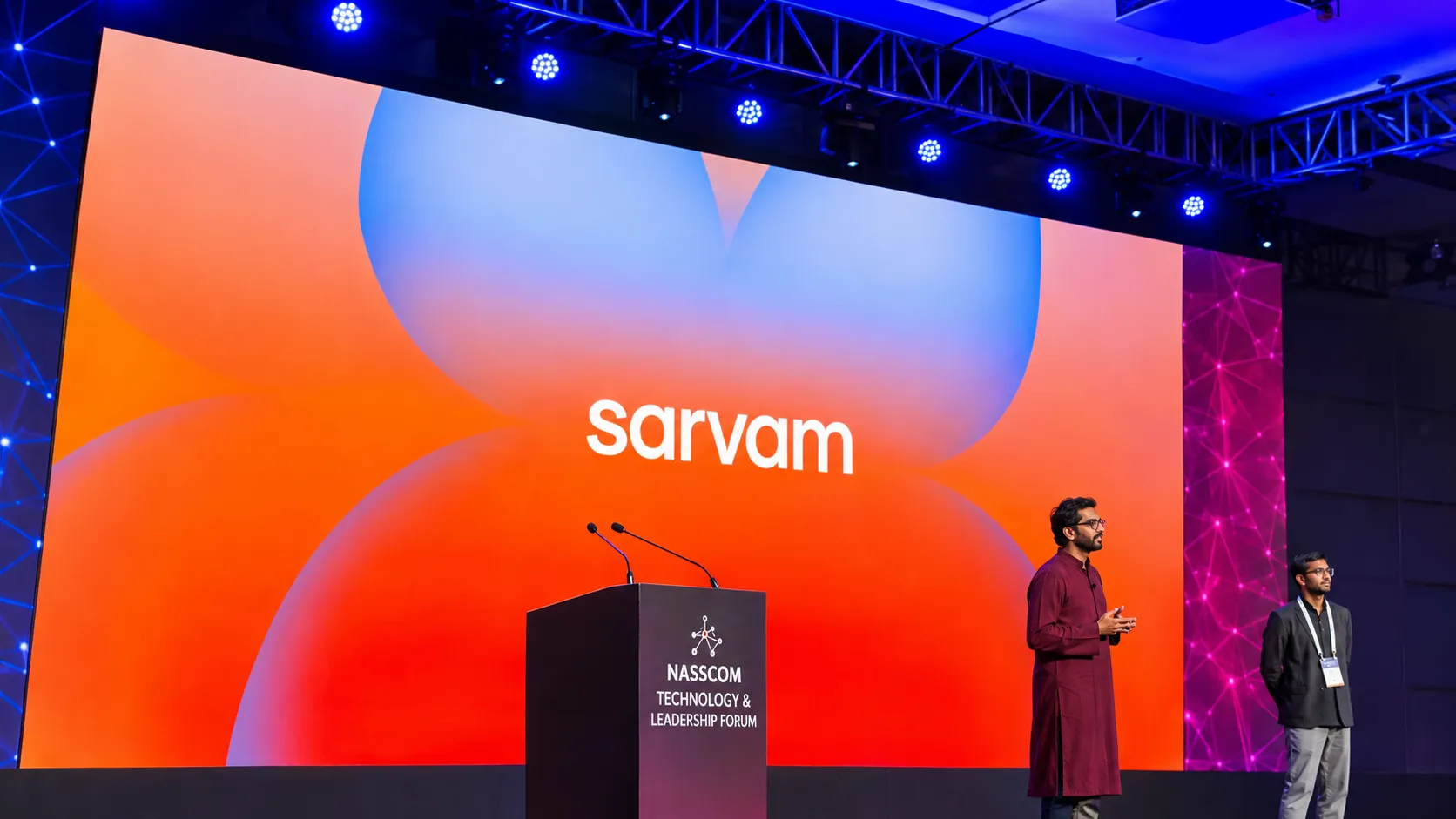
India's push to build its own artificial intelligence has run into an awkward question: what should a company backed by the state to create sovereign AI be selling to its customers?
Sarvam AI, the Bengaluru-based startup chosen to build one of India's flagship foundation models under the government's IndiaAI Mission, has come under fire for offering access to Chinese AI models on its Token Factory platform. On Monday, November 23, the company defended the service and said its own homegrown models remain at the centre of its strategy, Inc42 reported.
The controversy has reignited a broader debate about what "sovereign AI" should mean for India, and how far commercial pressures should shape the work of companies that receive public support.
What the Token Factory offers
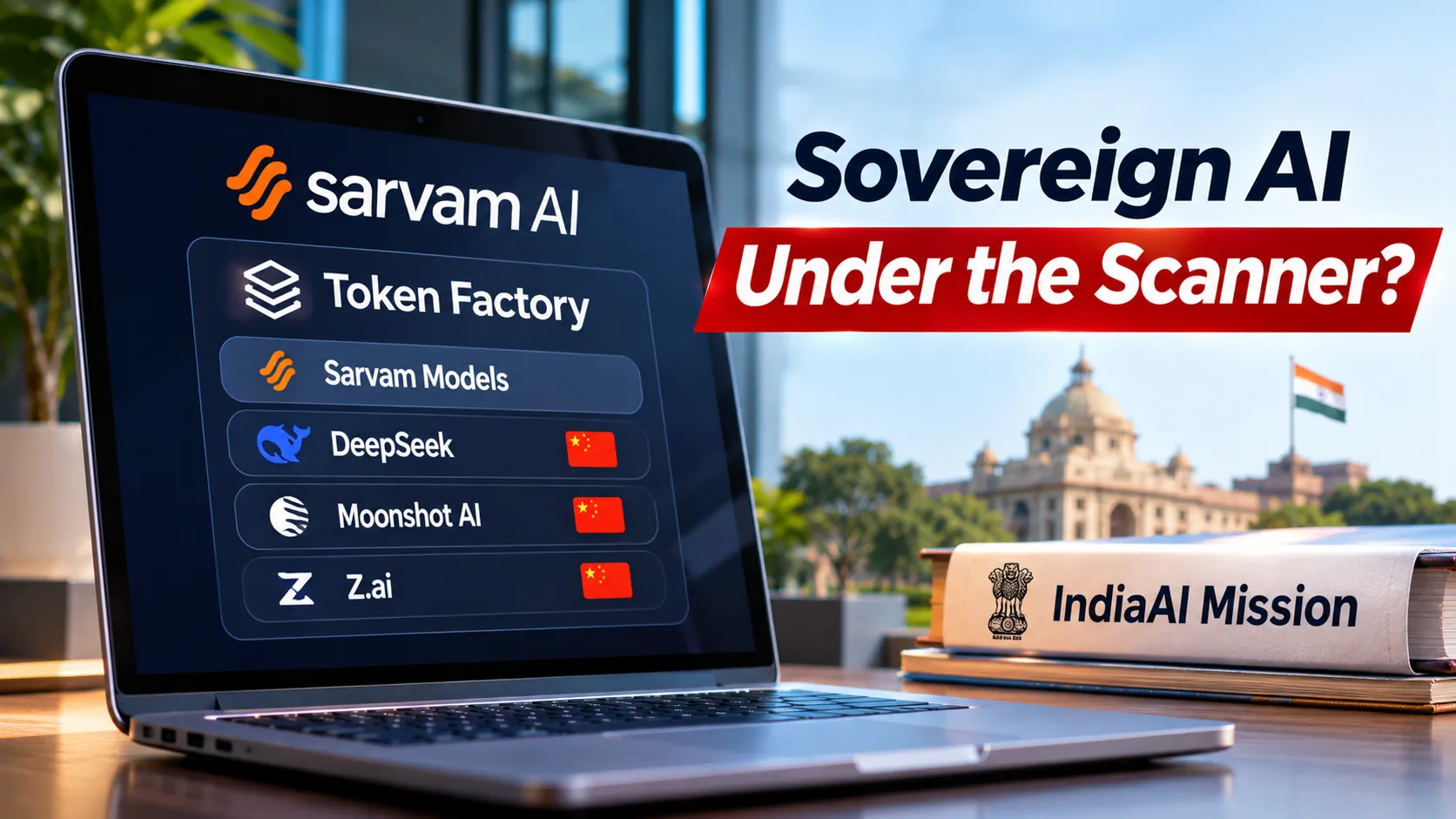
Token Factory is Sarvam's platform for AI inference, the process of running trained models to generate text, code or other outputs for customers. It allows businesses and developers to access a range of models through Sarvam's infrastructure in India and pay based on usage, measured in tokens.
Alongside Sarvam's own models and Google's Gemma, the platform offers models from Chinese developers DeepSeek, Moonshot AI and Z.ai, according to YourStory. Reports said about half of the models listed on the platform were developed by Chinese companies.
Sarvam's defence
"We host our own models, and the full range of best-in-class open-weight models, in India," Sarvam said in its response, according to YourStory. The company argued that enterprises benefit from more choice and "an AI stack they can own without lock-ins," and that its customised software and infrastructure allow it to compete on speed, reliability and cost.
Open-weight models are those whose parameters are publicly released, allowing anyone to download, run and customise them. Chinese developers have released several of the most capable open-weight models in the world, and they are widely used by companies globally because of their performance and low cost.
Sarvam's argument is that hosting these models in India, on Indian infrastructure, gives local businesses access to leading technology while keeping their data within the country, which itself serves a sovereignty objective.
The critics
Critics argued that the move falls short of what Sarvam was expected to deliver. Sanchit Monga, chief executive of Runanywhere AI, said Sarvam was meant to ship frontier research, and that hosting other companies' models after receiving significant capital and subsidised computing power was not what the ecosystem had hoped for, according to YourStory.
Technology commentators argued that hosting mostly Chinese models was not what India's sovereign AI ambitions should mean. Nischal Jain of Egma AI took a more nuanced view, saying the moves felt demotivating because Sarvam was supposed to be India's answer to the US and China, while acknowledging the company needs to generate revenue.
Atharva Ingle of JarvisLabs, a competing GPU cloud provider, claimed his company's tests showed equal or better speed and lower pricing on the same models.
The defenders
Others came to Sarvam's defence. Hemant Mohapatra, a partner at Lightspeed India, which has invested in Sarvam, noted that international cloud providers already earn money hosting foreign models in India and that demand is strong, according to YourStory. Technology entrepreneur Nikhil Pahwa said Sarvam is a business that must serve its shareholders.
The defenders' argument is that building frontier AI models is extremely expensive, and companies need revenue streams to sustain research. Inference services are one of the clearest ways for AI companies to make money today.
The public money question
Much of the criticism centres on the public support Sarvam has received. The IndiaAI Mission, approved in March 2024 with an outlay of about ₹10,372 crore, selected Sarvam in 2025 to build a sovereign large language model. The company received subsidised access to 4,096 Nvidia H100 GPUs, with a reported subsidy of about ₹98.68 crore, according to YourStory.
Sarvam has also raised more than $300 million from investors at a reported valuation of $1.5 billion. Critics argue that a company with such backing should prioritise building world-class Indian models rather than reselling foreign ones.
Sarvam's own models
Sarvam was founded in 2023 by Vivek Raghavan and Pratyush Kumar, both of whom previously worked on AI4Bharat, an initiative focused on Indian language AI. The company has released models designed for Indian languages, speech recognition and translation, as well as larger models intended to compete with global systems.
Raghavan has repeatedly warned against India becoming dependent on foreign AI, including at the Bengaluru Tech Summit on November 17, though he did not address the Token Factory directly in those remarks.
What sovereign AI means
The debate highlights the lack of a clear definition of sovereign AI. For some, it means building foundation models entirely in India, trained on Indian data, by Indian teams. For others, it means ensuring that AI infrastructure and data remain within the country, regardless of where the models originate. A third view emphasises strategic autonomy, ensuring India is not dependent on any single foreign country for critical technology.
Hosting Chinese models also raises specific concerns. India has restricted Chinese apps and investments since 2020 on security grounds, and some experts worry about potential biases, censorship or hidden vulnerabilities in models developed under Chinese regulations. Supporters of open-weight models counter that running them on local infrastructure, without connecting to servers in China, mitigates most data risks.
The commercial reality
The global AI industry is dominated by companies with access to vast amounts of capital and computing power. Even well-funded Indian startups operate at a fraction of the scale of OpenAI, Anthropic, Google or leading Chinese labs. Building models that match the frontier requires investments of billions of dollars.
For Indian AI companies, finding sustainable business models while pursuing ambitious research goals is a central challenge. Inference services, enterprise solutions and specialised applications offer revenue in the near term, while frontier research may take years to pay off.
Lessons from other countries
Other countries pursuing sovereign AI face similar tensions. In Europe, Mistral AI has combined its own models with commercial partnerships, while governments in the Middle East have invested heavily in domestic AI infrastructure that hosts a range of models. The common thread is that sovereignty often begins with infrastructure and data control before extending to fully homegrown models.
What it means for the IndiaAI Mission
The controversy may prompt policymakers to clarify their expectations for companies receiving support under the IndiaAI Mission. Questions include whether subsidised computing should be used only for developing Indian models, how success should be measured, and how to balance commercial viability with national objectives.
What comes next
Sarvam's next model releases will be closely watched as evidence of its progress on homegrown AI. The broader debate is likely to continue as India refines its AI strategy, decides how to allocate public resources and determines what role foreign models should play in its digital future.