FundingAnalysis5 MIN READ

Schneider Electric Bets $22.6 Billion on Industrial AI With Record Takeover of PTC, and Its Shares Pay the Price

France's Schneider Electric will buy Boston-based PTC for $205 a share in cash, its largest deal ever, to build an industrial software and AI powerhouse. Investors sent Schneider shares down nearly 10%.

By Nisha Omkumar · Author6 October 2026New
Schneider Electric Bets $22.6 Billion on Industrial AI With Record Takeover of PTC, and Its Shares Pay the Price

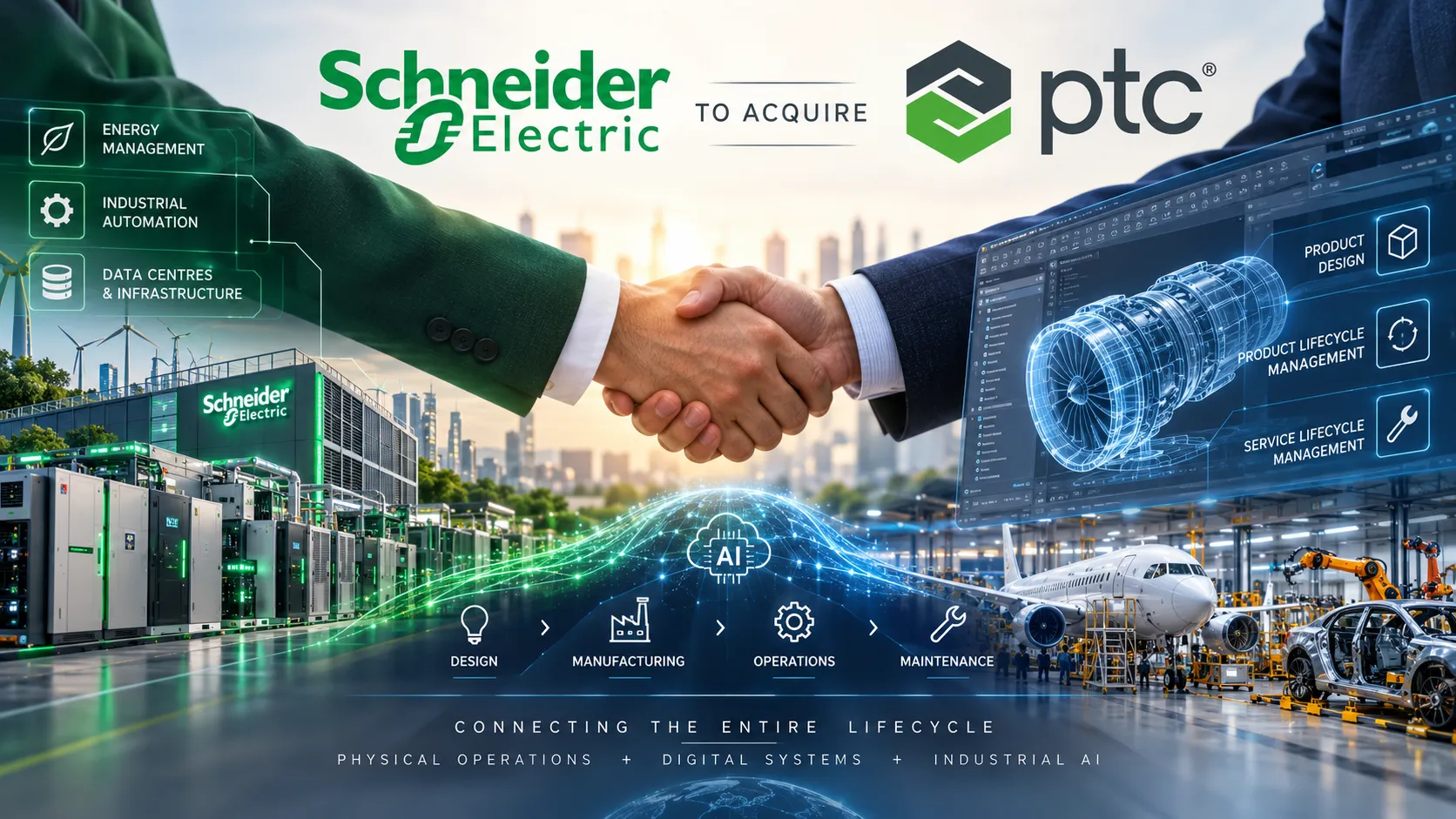
Schneider Electric has agreed to acquire PTC, the Boston-based maker of industrial design and product lifecycle software, in an all-cash transaction that values the American company at about $22.6 billion. The deal, announced on 5 October 2026, is the largest in the French group's history and one of the biggest software takeovers of the year.

Schneider will pay $205 per PTC share, a premium of 42.3% to PTC's closing price on the previous Friday and 46.1% to its volume-weighted average price over the prior 30 trading days. Including debt, the transaction implies an enterprise value of about $23.7 billion, or roughly €21 billion. PTC's board unanimously recommended that shareholders approve the offer, and closing is expected by the third quarter of 2027, subject to regulatory clearances.

Investors reacted in sharply contrasting ways. PTC's shares jumped by around a third in New York trading. Schneider's stock, by contrast, fell close to 10% in Paris, as shareholders weighed the size of the bill, the premium paid and the uncertain outlook for software valuations in an era of rapid advances in artificial intelligence.

The strategic logic

Schneider Electric is best known as a supplier of electrical equipment, energy management systems and industrial automation, and in recent years as a major beneficiary of the global data centre boom, which requires enormous quantities of power distribution and cooling infrastructure. Over the past decade it has also built a substantial software business, most notably through its acquisition of industrial software company Aveva, which it took full control of in 2023 in a deal valued at about $11 billion.

PTC would extend that software portfolio upstream, into the design and engineering of products themselves. The company's tools include computer-aided design, product lifecycle management and service lifecycle management software, used by more than 30,000 customers worldwide in sectors from automotive and aerospace to medical technology and industrial machinery. PTC reported revenue of about $2.74 billion for its fiscal year ended September 2025.

Chief executive Olivier Blum described the acquisition as the final building block in Schneider's portfolio strategy, connecting physical operations with digital systems across the entire lifecycle of an asset. Schneider said the combination would create the industry's most complete software and AI offering, linking data from product design through manufacturing to operation and maintenance.

Why data is the prize

The underlying bet is about data. Industrial artificial intelligence, the application of AI to factories, power plants, buildings and infrastructure, depends on detailed, structured information about how physical things are designed and how they behave. PTC's software holds precisely that kind of information: engineering models, bills of materials, configuration histories and service records for millions of products.

Schneider argues that pairing PTC's design and engineering data with its own operational data from energy and automation systems will allow it to deploy AI across customers' industrial operations more effectively than either company could alone. Blum told investors that PTC's data would strengthen Schneider's ability to bring AI into those operations, from optimising factory performance to predicting maintenance needs and improving energy efficiency.

After the deal closes, software and services are expected to account for about 24% of Schneider's total revenue. The company said the acquisition would roughly triple its accessible market in industrial software and broaden its exposure to sectors including automotive and aerospace, where it has historically had a smaller presence.

PTC chief executive Neil Barua said the combination gives PTC the scale and resources to expand into new markets and geographies, and argued that the company's software is becoming more valuable as product data becomes central to an AI-driven world.

“Schneider is wagering that the next decade of industrial value will be captured by those who own the data that describes how products are designed and run.”
— TIGI Analysis
41bc0ba4-9205-434c-a109-b0d5979272a4.png

A spending spree

The PTC deal caps an unusually acquisitive year for Schneider. Earlier in 2026 it agreed to buy Cognite, a privately held provider of industrial data and AI software, in a transaction valued at about $3.1 billion. Axios noted that PTC would be Schneider's third acquisition this year worth more than $1 billion.

To finance the purchase, Schneider plans to raise between €5 billion and €6 billion through an equity offering and between €16 billion and €17 billion in senior debt across multiple currencies. The equity component, which dilutes existing shareholders, was a significant factor in the share price reaction.

Why investors balked

Several concerns weighed on Schneider's shares. The first is price. A premium above 40% for a mature software company is generous, and it comes at a time when the valuations of many software businesses have fallen. PTC's own shares had dropped around 17% between the start of 2026 and the Friday before the announcement, as investors worried that advances in AI could erode the value of traditional software products, according to the Wall Street Journal.

The second concern is execution. Integrating large software acquisitions is difficult, and Schneider is still absorbing Cognite. Combining product data from PTC with operational data from Schneider's systems is technically ambitious, and the benefits may take years to materialise.

The third relates to Schneider's identity. The company has been a favoured investment for those seeking exposure to electrification and data centre construction, themes that have driven strong growth. Some shareholders question whether a large bet on design software dilutes that focus at a moment when demand for electrical infrastructure remains strong.

Software mega-mergers have been rare in 2026, as dealmaking in the sector has been held back by uncertainty over how AI will reshape business models. That rarity cuts both ways. Supporters see Schneider acting decisively while assets are relatively cheap; sceptics see it paying a full price at a time when the long-term value of software franchises is hard to judge.

Competitive implications

The transaction reshapes the competitive landscape in industrial software. Siemens, Schneider's long-standing European rival, has built a comprehensive industrial software portfolio including product lifecycle management and simulation tools, and has also made large software acquisitions. Dassault Systèmes remains a leader in design and simulation software. Schneider's purchase of PTC positions it to compete more directly with both, offering customers an integrated stack from design to operations.

For PTC's customers, the key questions will be whether Schneider maintains PTC's openness to work with hardware and automation systems from other vendors, and whether product roadmaps remain stable during integration.

What comes next

The deal requires approval from PTC shareholders and from competition and foreign investment regulators in several jurisdictions. Given the strategic importance of industrial software and the sensitivity of engineering data in sectors such as aerospace and defence, regulatory scrutiny could be substantial, particularly in the United States.

For Schneider, the coming months will be about persuading investors that the long-term opportunity justifies the near-term dilution and debt. Management will need to set out clear targets for revenue synergies, cost savings and the contribution of combined AI offerings.

The broader message is that the race to build industrial AI is accelerating, and that the leading players see control of design and operational data as the decisive advantage. Whether Schneider has paid the right price for that advantage is a question that only the next several years can answer.

TagsSchneider ElectricPTCMergers and AcquisitionsIndustrial AIIndustrial SoftwarePLMCADOlivier BlumData CentresDigital TwinGlobal MarketsDeal Analysis

Reader reviews

Sign in to rate and review this article.
Loading reviews…