With markets bracing for another interest-rate increase from the Federal Reserve, the US Treasury Secretary has offered a different reading of the economy. Scott Bessent urged policymakers to keep an "open mind" on rates, arguing that productivity gains from artificial intelligence and deregulation could help contain inflation, according to remarks reported by CNBC-TV18 on Monday. The comments struck a noticeably gentler tone than those of several Fed officials, and they come at a moment when the path of US monetary policy is more uncertain than at any time in the past three years.
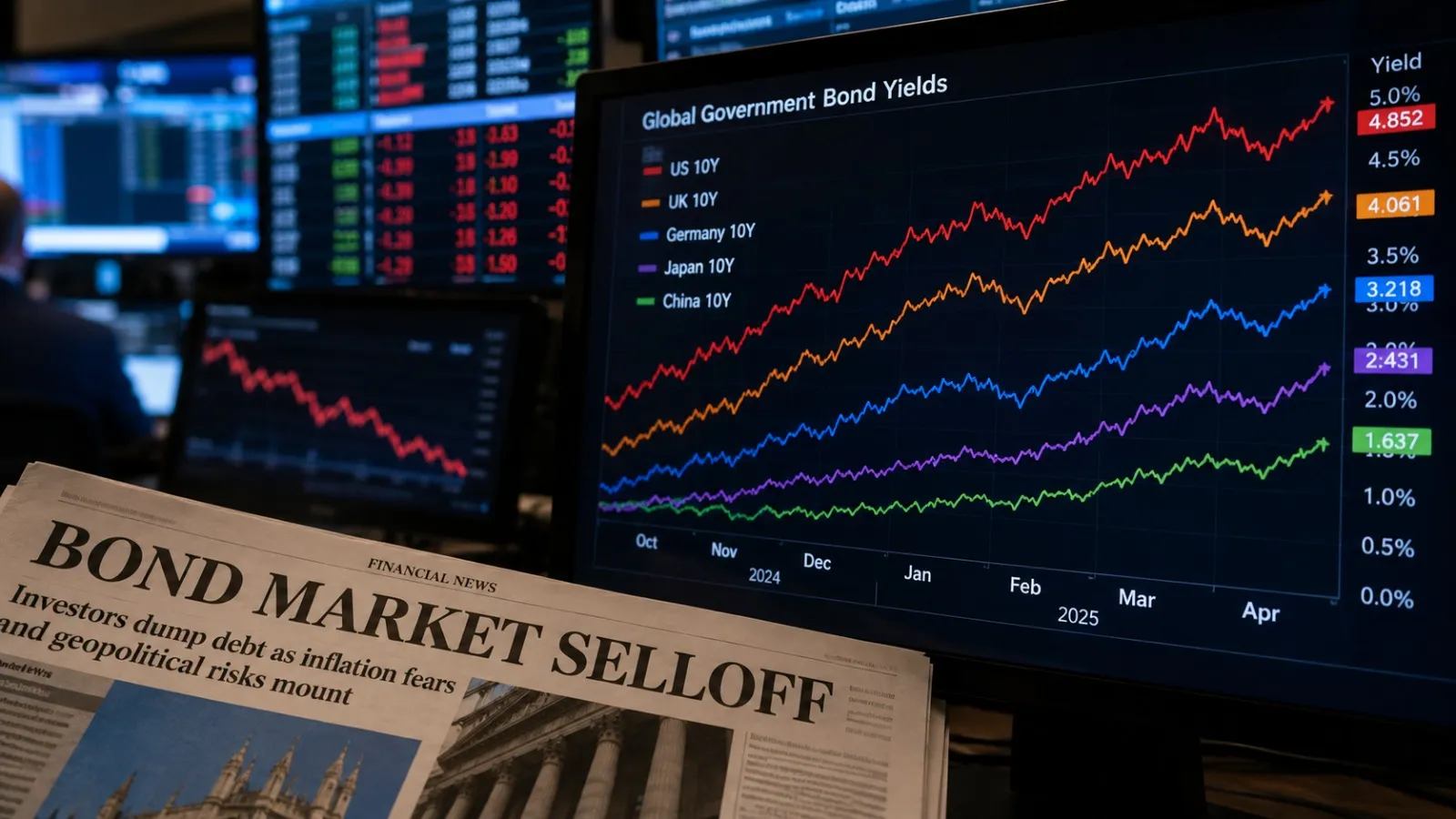
The Fed raised rates earlier this month for the first time since 2023, responding to inflation pressure driven largely by high energy prices linked to the conflict involving Iran and disruption in the Strait of Hormuz. Traders have fully priced in at least one more quarter-point increase before the end of the year. US 10-year Treasury yields have climbed above 5 per cent, levels not seen in nearly two decades.
The productivity argument
Bessent's case rests on a long-standing idea in economics: an economy can grow faster without generating inflation if productivity, the amount of output produced per hour of work, rises quickly enough. When workers and machines produce more, companies can raise wages and expand output without raising prices as much. In that scenario, a central bank that tightens aggressively in response to strong growth risks choking off a healthy expansion.
The argument has a famous precedent. In the mid-1990s, then Fed Chairman Alan Greenspan resisted pressure to raise rates pre-emptively, reasoning that the spread of personal computers and the internet was lifting productivity in ways that official statistics had not yet captured. Growth remained strong and inflation stayed low for much of the rest of the decade, an outcome that has since become a reference point for anyone arguing that technology can change the rules of the monetary game.
Proponents of the AI version of this thesis point to rapid adoption of generative AI tools across software development, customer service, legal research, finance and administration. Companies have reported efficiency gains in coding, document processing and support functions. If those gains spread across the economy, they could, in principle, offset some of the cost pressure from energy and wages.
The case for caution
The counter-argument is one of timing and measurement. Productivity gains from new technologies have historically taken years to show up in aggregate data, as businesses reorganise workflows and invest in complementary skills and systems. The inflation the Fed is fighting today is driven substantially by oil, which trades above $100 a barrel, and by inflation expectations, which have risen sharply among consumers. The University of Michigan's survey showed year-ahead inflation expectations at 4.6 per cent in September.
Fed officials who favour further tightening have pointed to the strength of the labour market. Cleveland Fed President Beth Hammack has cited resilient growth and a strong jobs market as justification for further rate increases. From that perspective, the risk of acting too little, and allowing higher inflation expectations to become entrenched, outweighs the risk of acting too much.
Deregulation, the second element of Bessent's case, is also slower-acting than monetary policy. Easing regulatory burdens can reduce costs and encourage investment, but the effects accumulate over years rather than quarters.
An unusual intervention
The Treasury Secretary's comments carry weight because of who is making them. By convention, US Treasury Secretaries avoid direct commentary on interest-rate decisions, respecting the Fed's operational independence. Bessent framed his remarks as a call for an open mind rather than a demand for a specific outcome, but markets read them as a signal that the administration would prefer the central bank to avoid further tightening, especially ahead of the November midterm elections.
That puts the Fed in a delicate position. If it continues to raise rates, it risks being seen as ignoring the administration's arguments; if it pauses, it risks being seen as responding to political pressure. Either way, the credibility of its decisions will depend on how clearly it grounds them in data.
Bessent has also weighed in on currency markets, backing a stronger Japanese yen. The yen has traded around 157 to 158 per dollar, and the Bank of Japan, which raised rates in September, could tighten again in October according to a Bloomberg report. A stronger yen would reduce some of the pressure on US manufacturers competing with Japanese exporters.
What markets make of it
Bond markets have so far sided with the hawks. Yields remain elevated, and futures markets continue to price another hike. Equity markets have been more receptive to the productivity narrative, at least in technology. The Nasdaq Composite and Nasdaq 100 closed at record highs on Friday, driven by companies at the centre of AI investment, from chipmakers to cloud providers.
That divergence is itself revealing. Equity investors are effectively betting that AI will deliver substantial productivity and earnings growth. Bond investors are demanding compensation for inflation risk and heavy government borrowing. If Bessent's thesis proves right, the two will converge as inflation eases and yields fall. If it proves premature, either equity valuations or bond yields will need to adjust.
Why it matters beyond the US
The direction of US interest rates affects the entire global economy. Higher US yields pull capital out of emerging markets, strengthen the dollar and raise borrowing costs for governments and companies worldwide. India has felt this directly: foreign investors have sold more than ₹2.41 lakh crore of Indian equities this year, and the Nifty 50 has fallen for seven consecutive weeks.
For Indian policymakers, a Fed that keeps an open mind would ease some of the pressure on the rupee and allow the Reserve Bank of India more room to support growth. For Indian technology companies, the AI productivity debate is also strategically relevant. India's IT services sector is both a potential beneficiary of AI adoption, through new consulting and implementation work, and a sector facing disruption, as AI automates parts of traditional outsourcing.
The data will decide
In the end, the Fed will be guided by numbers rather than arguments. This week's releases, including the personal consumption expenditures price index and the monthly jobs report, will shape expectations for the next meeting. Evidence of productivity growth, visible in strong output with moderating unit labour costs, would support Bessent's view. Hot inflation and wage data would support further tightening.
Bessent has placed a bet that technology will do some of the Fed's work. It is a plausible argument and one with historical precedent. The question is no longer whether AI will change the economy, but whether it will do so fast enough to matter for this year's inflation. For now, the Fed appears inclined to hedge its bets, keeping rates high until the evidence arrives.