India's equity benchmarks staged their sharpest single-day recovery in weeks on Monday, September 21, 2026, as the BSE Sensex climbed 564.03 points, or 0.76%, to close at 74,858.99, while the NSE Nifty 50 added 67.90 points, or 0.29%, to settle at 23,414.30. The rally arrived after six consecutive weeks of losses on Dalal Street — the longest weekly losing streak in roughly six years — and offered investors the clearest signal yet that the recent correction may be running out of steam.
The turnaround was driven by a familiar combination of easing global input costs and opportunistic domestic buying. Brent crude, which had traded above $104 a barrel late the previous week, slipped toward the $101–102 range as traders weighed improving Saudi supply flows and the possibility of renewed diplomatic movement on the broader Middle East standoff. For an economy that imports roughly 85% of its crude requirements, even a modest pullback in oil prices eases pressure on the current account, the rupee and corporate input costs simultaneously — a combination that historically pulls institutional money back into large-cap Indian equities.
Trading data painted a picture of selective conviction rather than broad-based euphoria. The Sensex's 30 constituents outperformed the wider market, while mid-cap and small-cap indices lagged, suggesting institutional desks were rotating back into index heavyweights rather than chasing risk further down the capitalisation curve. That distinction matters for money managers reading the tape: a durable recovery typically needs participation to widen beyond a handful of blue-chip names, and Monday's session had not yet delivered that breadth.
Foreign institutional investors, who had been net sellers of Indian equities for much of September — with total outflows for the month estimated at more than $2.2 billion — turned tentative buyers on the preceding Friday, picking up close to ₹600 crore of local shares. Domestic institutional investors continued to provide a steadier counterweight, buying more than ₹1,000 crore on the same session, a pattern that has repeatedly cushioned the market during bouts of foreign selling through 2026.

Historically, sessions that follow a prolonged losing streak tend to be treated by professional traders as tests rather than confirmations. Desk-level commentary through Monday centred on three specific watch items: whether the Reserve Bank of India's own liquidity operations would reinforce the domestic institutional bid, whether the rupee could hold its ground against the dollar as crude softened, and whether foreign investors would extend their tentative Friday buying into a second consecutive session. None of those questions were fully answered by a single day of trading, and strategists were broadly reluctant to describe the rebound as anything more than a necessary, if welcome, pause in a difficult month.
The session also unfolded against the backdrop of one of the year's most closely watched primary-market events: the National Stock Exchange's own initial public offering. The roughly ₹22,562 crore issue, among the largest in India's history, was in its final day of bidding, and market participants noted that the sheer scale of the primary-market activity this month has periodically diverted liquidity away from the secondary market, complicating the read on organic demand for listed shares.
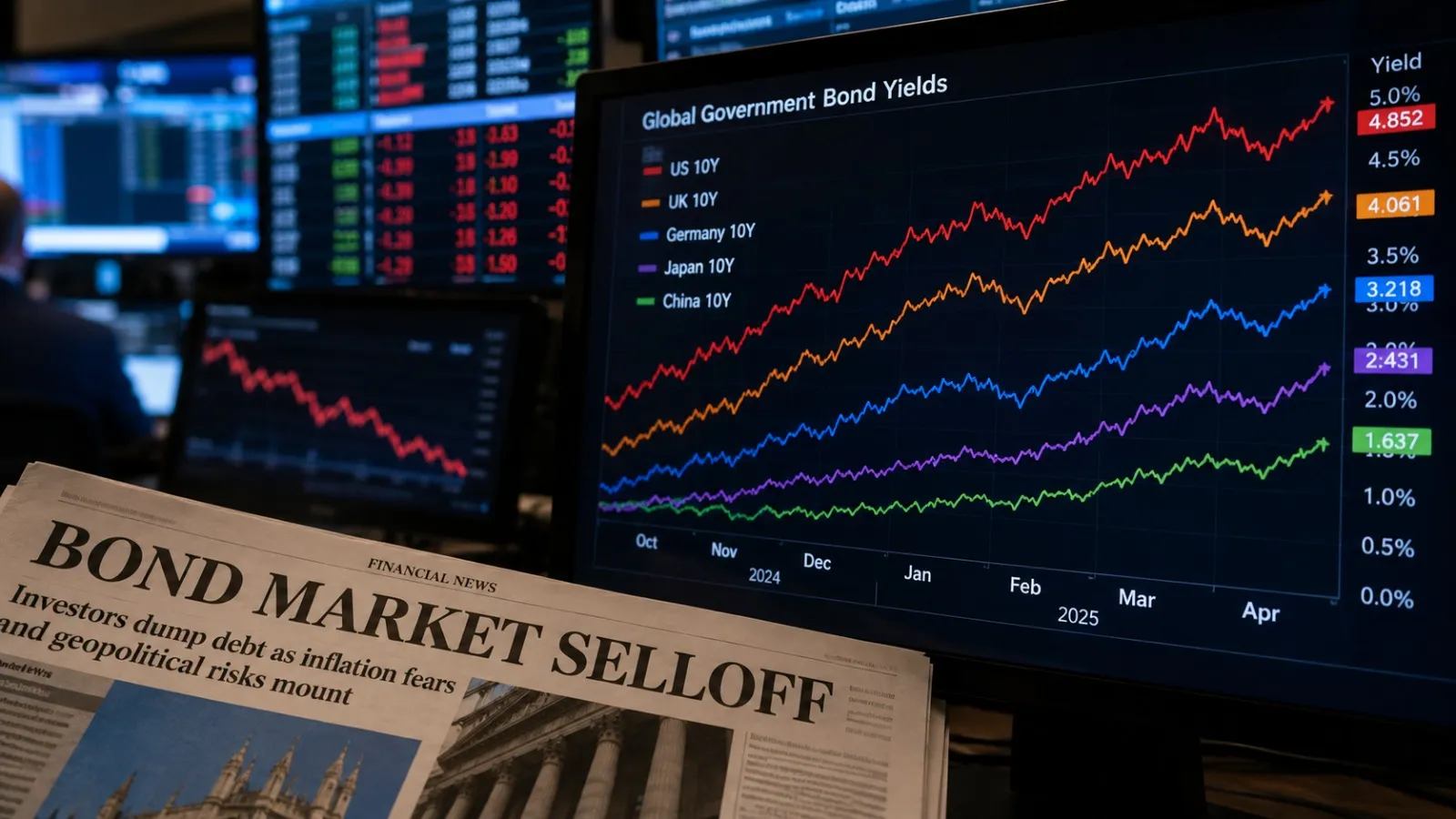
Sector-wise, pharmaceuticals, FMCG and realty counters were among the better performers through the session, while participants continued to monitor bond-yield trends in the United States and geopolitical developments for cues on the durability of the rebound. Persistent worries — elevated global interest rates, sustained foreign portfolio outflows for the year to date, and unresolved tensions in the Middle East — have not disappeared; Monday's gains simply provided temporary relief rather than a change in the underlying narrative.
The rupee itself has been a secondary but closely tracked variable throughout September's volatility. A softer crude bill helps narrow India's import bill and eases pressure on the currency, which in turn reduces imported inflation risk for a Reserve Bank of India already navigating a delicate balance between supporting growth and containing price pressures. Currency traders noted that the rupee's reaction to Monday's session was comparatively muted relative to the scale of the equity rally, suggesting that foreign exchange markets remained more cautious than equity desks about calling an end to September's broader risk-off tone.
For investors and corporates tracking India's capital markets, the message from September 21 is one of cautious relief rather than an all-clear signal. A single strong session after six weeks of declines is a data point, not a trend reversal, and market strategists will be watching whether foreign flows sustain their tentative return, whether crude oil continues to soften, and whether gains extend meaningfully into the broader market before calling an end to the correction. What is clear is that India's markets remain unusually sensitive this quarter to a narrow set of global variables — oil, yields and geopolitics — that have very little to do with domestic corporate fundamentals themselves.