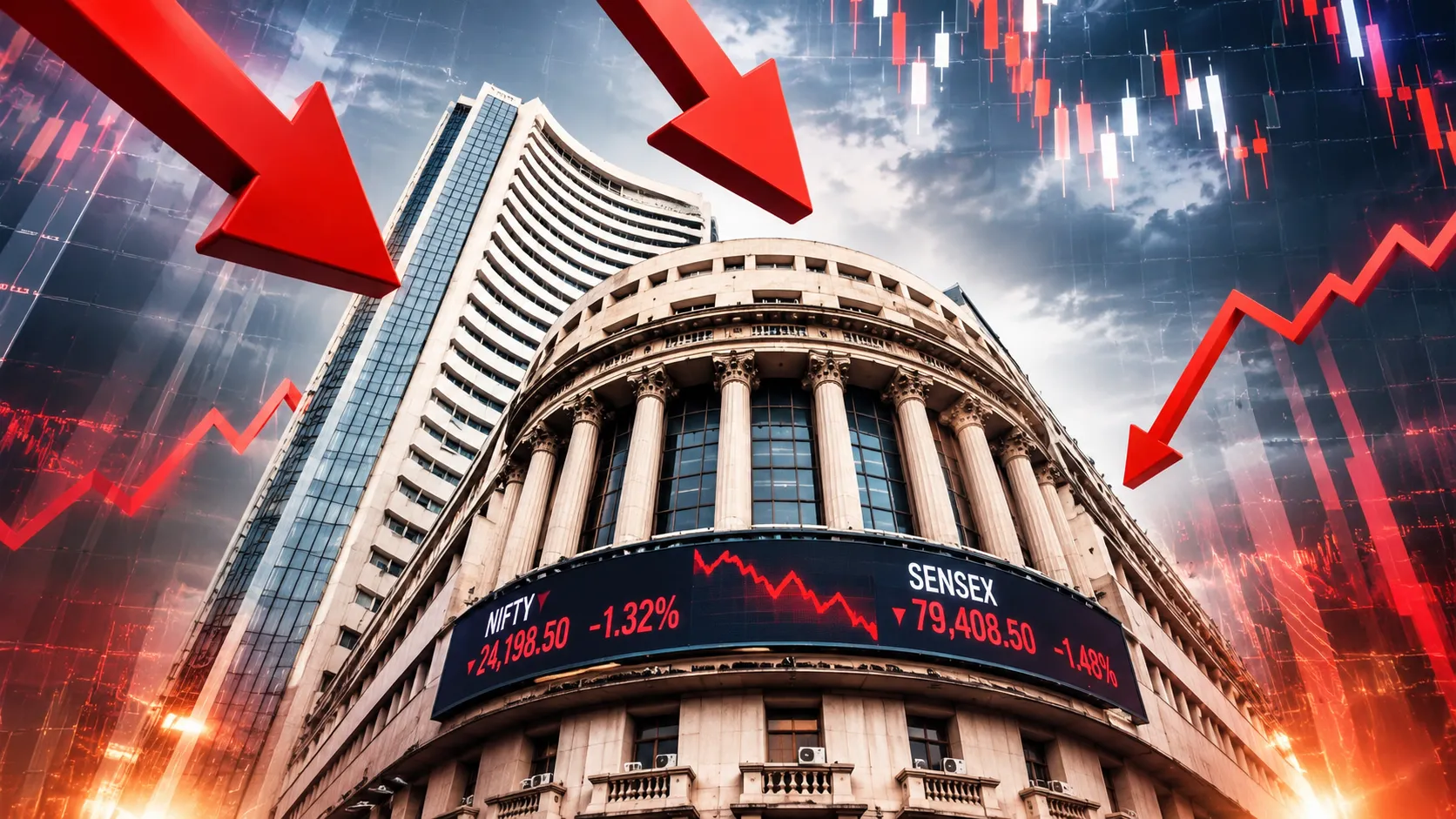
Indian equities ended a four-week winning run in dramatic fashion on Monday, as a broad sell-off led by the country's largest banks and metal producers pushed both benchmark indices down by close to 2% in a single session.
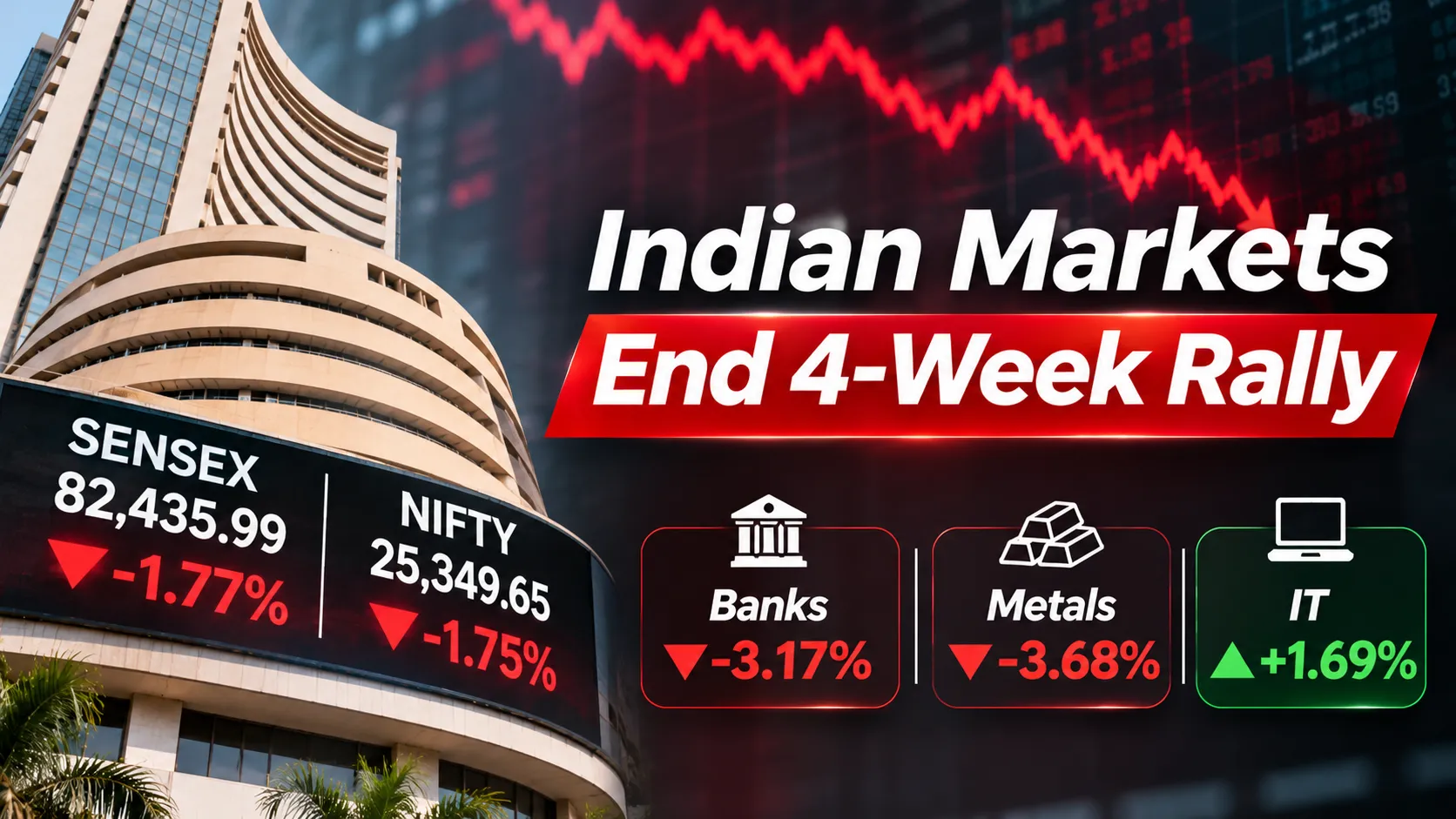
The S&P BSE Sensex fell 1,483.72 points, or 1.77%, to close at 82,435.99 on November 23. The NSE Nifty 50 lost 450.95 points, or 1.75%, to settle at 25,349.65, according to closing data compiled by Univest. More than ₹6 lakh crore of market value was wiped out across BSE-listed companies, Nation Path India reported.
The fall was all the more striking because of how the session began. The Sensex climbed as high as 84,662.96 in early trade and the Nifty touched 25,992.60, within sight of the 26,000 mark, before sellers took control. By the close, the Sensex had swung more than 2,200 points from its intraday peak.
Banks lead the decline
Banking stocks, which carry the heaviest weighting in both benchmarks, were at the centre of the sell-off. The Nifty Bank index fell 3.17% to 62,585.35. IndusInd Bank dropped 3.99%, Axis Bank fell 3.97% and HDFC Bank, the most valuable lender in the country, lost 3.33%. ICICI Bank also faced significant selling pressure.
The Nifty PSU Bank index slid 3.25% and the Nifty Private Bank index lost 3.19%. When large banks fall together, the effect on the indices is magnified, because financial services make up roughly a third of the Nifty 50 by weight.
Analysts said there was no single piece of negative news affecting the sector. Instead, banks had been among the strongest performers during the November rally, making them obvious candidates for profit-taking once sentiment turned.
Metals hit by the Tata Steel deal
The Nifty Metal index fell 3.68%, the worst performance of any major sector. Tata Steel dropped 8.43% to ₹163, among the biggest losers in the Nifty, while APL Apollo Tubes plunged 21.29% to ₹1,670 after the two companies announced a major transaction involving Tata Steel's tubes business and a stake in APL Apollo.
Hindalco Industries was also among the heavy decliners, adding to pressure on the metals pack.
Why the market turned
Several factors combined to drive the sell-off. The most important was profit-booking after a strong run. The Sensex and Nifty gained more than 11% during November, according to Univest, and the indices had hit nine-month highs on November 20. After such a rapid advance, many traders were looking to lock in gains.
The timing of the monthly derivatives expiry added to the volatility. Because Indian exchanges were closed on Tuesday, November 24, for Guru Nanak Jayanti, the November expiry was brought forward to Monday. Expiry days often see large position adjustments, which can amplify price swings. The India VIX, a measure of expected volatility, rose 4.04% to 18.02.
Global factors also played a role. Concerns about AI-related valuations had triggered a sell-off in technology stocks overseas in the preceding sessions, and uncertainty about US interest rates continued to weigh on emerging markets.
IT stocks buck the trend
The only major sector to rise was information technology. The Nifty IT index gained 1.69%, led by Tata Consultancy Services, which rose 3.53% to ₹2,460 and was the top gainer in the Nifty. Tech Mahindra climbed 1.79% to ₹1,777.50 and HCLTech also advanced. Shriram Finance was the only notable gainer outside the IT pack, rising 2.46%.
IT stocks had underperformed for much of 2026 amid concerns about the impact of artificial intelligence on traditional outsourcing work, and some investors used Monday's session to rotate money into the sector at lower valuations.