Indian equities enter the new week on their longest losing run in a quarter of a century, with foreign selling, crude oil above $100 a barrel and soaring US bond yields combining to push benchmark indices to multi-month lows.
The NSE Nifty 50 fell 718.55 points, or 3.11%, in the holiday-shortened week ended 1 October, closing at 22,421.95. The BSE Sensex lost 1,986.04 points, or 2.69%, to 71,909.70. The Bank Nifty dropped 2.03% to 54,450.75. Markets were closed on Friday, 2 October, for Gandhi Jayanti.
It was the eighth consecutive weekly decline for both benchmarks, the longest such streak since 2001. Over the eight weeks, the Nifty has lost about 8.7% and the Sensex about 8.4%.
How the week unfolded
Selling was heavy from the start. On Monday, 28 September, the Nifty fell 1.56% and the Sensex 1.52%, with all 16 major sectoral indices ending lower, as Brent crude jumped about 3.7% to around $108 a barrel amid stalled talks between the United States and Iran.
Losses were smaller on Tuesday and Wednesday, but the market could not find a footing. On Thursday, 1 October, the Nifty fell another 0.88% after touching an intraday low of 22,217, before recovering some ground in the final hour. India VIX, the market's gauge of expected volatility, rose 7.15% that day to 14.455.
The forces behind the fall
Four factors have dominated the sell-off.
The first is foreign selling. Foreign institutional investors sold a net ₹34,966 crore of Indian equities during the week, according to provisional exchange data, marking their seventh consecutive week of net outflows. Domestic institutional investors bought about ₹33,455 crore, absorbing almost all of that supply, but not enough to stop prices from falling.
The second is oil. Brent crude has stayed above $100 a barrel amid tensions in the Middle East. For India, which imports most of its oil, high crude prices widen the current account deficit, raise inflation and squeeze corporate margins. G7 governments announced a release of 100 million barrels of crude and diesel to ease supply concerns, but prices remain elevated.
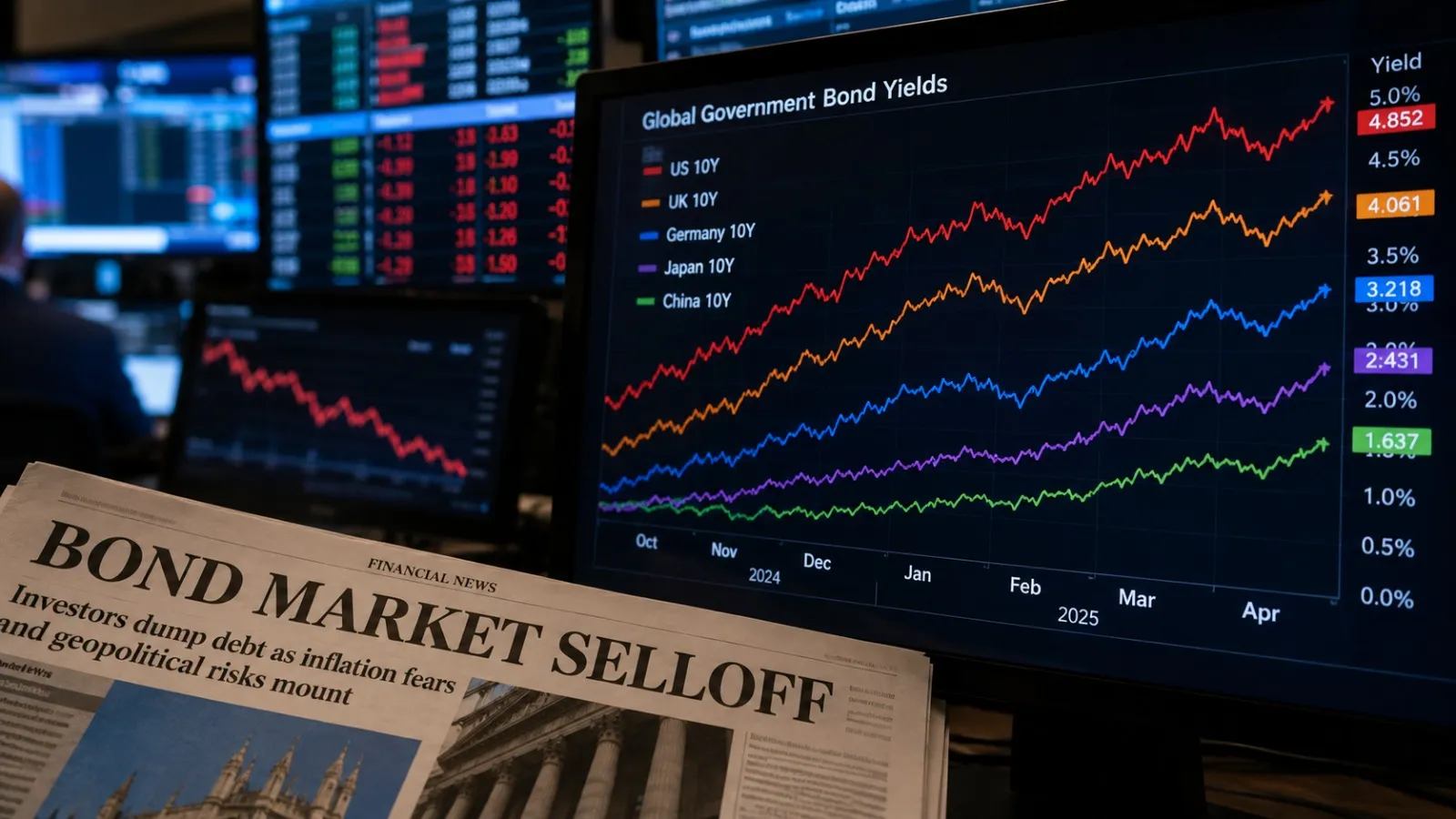
The third is global interest rates. The US 10-year Treasury yield climbed above 5.3% last week, its highest level since 2002. Higher yields in the US make emerging-market assets relatively less attractive and draw capital back to dollar assets.
The fourth is the rupee, which weakened to about 96.3 per US dollar on 1 October, its weakest level in two months. A softer currency reduces returns for foreign investors in dollar terms and can feed further selling.
Domestically, a southwest monsoon that ended with a shortfall of about 13% has added to concerns about farm output and food prices.
Winners and losers
Information technology was the only major sector to gain over the week, rising about 0.5%, helped by a weaker rupee, which raises the value of export earnings. Infosys rose about 3.5% and Kotak Mahindra Bank about 3.6%.
Automobile stocks were the worst performers, with the Nifty Auto index falling about 3.5%. Bajaj Auto dropped nearly 11% over the week, while Apollo Hospitals and Titan also fell sharply. Metals, consumer durables, FMCG and realty indices also ended lower.

The week ahead: three big tests
The coming days bring several events that could determine whether the market finds a floor.
The Reserve Bank of India's monetary policy committee is scheduled to announce its decision on 7 October. A Reuters poll cited by brokerages found that about 60% of economists expect a 25 basis point increase in the repo rate to 5.50%, as the central bank weighs higher oil prices and a weaker rupee against slowing growth. The tone of the governor's commentary on inflation and the currency will be closely watched.
The September-quarter earnings season also begins, led by Tata Consultancy Services and other IT majors. Analysts expect the IT sector to deliver one of its weakest quarterly performances in about three years, reflecting cautious client spending and pricing pressure linked to AI-driven automation. Monthly automobile sales data for September will also be in focus after the sharp fall in auto stocks. ## Echoes of 2001
The last time Indian equities suffered such a prolonged run of weekly losses was in 2001, a year defined by the bursting of the global technology bubble, a domestic stock market scandal and the economic shock that followed the 11 September attacks in the United States. The parallels are limited: India's economy, corporate balance sheets and investor base are far stronger today, and domestic investors now provide a level of support that did not exist then.
The comparison is nonetheless a reminder that long losing streaks tend to end only when the underlying drivers change, rather than simply because valuations look cheaper. In 2001, recovery took time. This time, the speed of any rebound will depend largely on oil prices, global yields and the resumption of foreign buying.
Global factors will remain important too, including US economic data, movements in Treasury yields and developments in the Middle East that affect oil prices.
The technical picture
Analysts see the Nifty's immediate support around 22,200 to 22,250, a zone that held during last week's intraday low. Below that, 22,000 is a psychological level, and some analysts point to 21,800 as a major support.
"A decisive break below 22,250 could intensify selling pressure," said Dr Ravi Singh, chief research officer at Master Capital Services, who recommends a "sell-on-rise" approach until resistance levels are decisively cleared. On the upside, resistance is seen around 22,600 to 22,700, followed by 23,000.
Some analysts note that the Nifty is close to its 200-week exponential moving average, around 22,378, a long-term trend measure that has historically attracted buying. With momentum indicators in oversold territory, a relief rally is possible. But most market participants expect volatility to remain high until foreign selling slows.
The bigger picture
For long-term investors, including members of the Indian diaspora who invest in Indian markets, the current sell-off has reduced valuations from the elevated levels seen earlier in the year. The steady flow of domestic savings into equities has prevented a deeper decline, and it continues to fund a busy primary market.
Whether that support is enough depends largely on factors outside India's control: the path of oil prices, the direction of US yields and the appetite of global investors for emerging markets. Until at least one of those turns, the market's recovery is likely to be gradual and uneven. </content> </invoke>