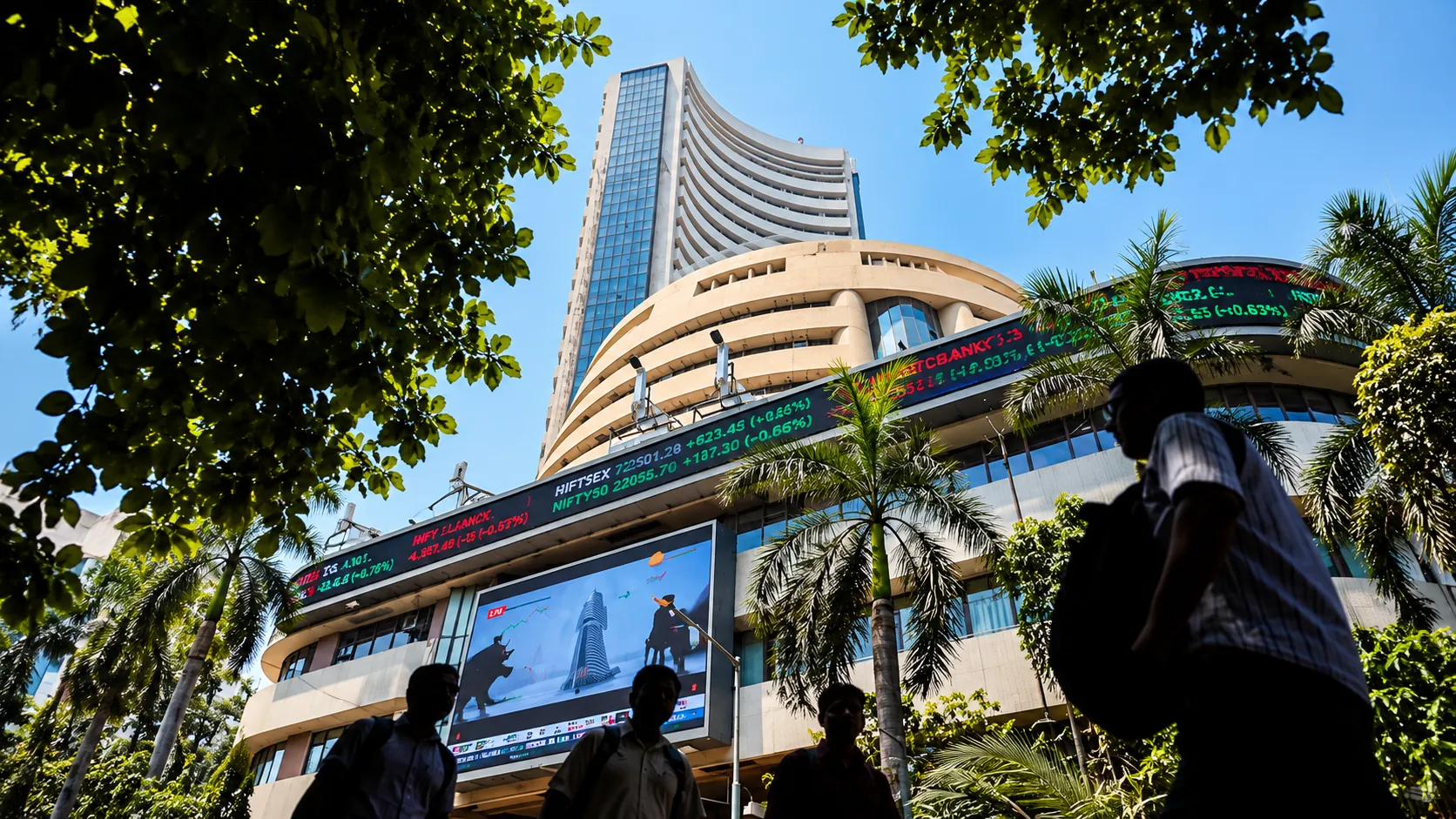
Indian equities opened the week on a weak note on Monday, October 19, as private sector banks came under selling pressure after reporting their September-quarter results. By 11 am, the BSE Sensex was down 321.10 points, or 0.43%, at 74,408.17, while the NSE Nifty 50 had slipped 84.85 points, or 0.37%, to 23,061.30.
The fall extended losses seen at the open. At 10 am, the Sensex had been down 240.16 points at 74,489.11 and the Nifty down 90 points at 23,056.15. Broader markets held up slightly better, with the Nifty MidCap index down 0.13% and the Nifty SmallCap index down 0.19% at the 11 am mark.
The morning's trading was dominated by stock-specific moves as investors reacted to a flood of quarterly earnings released over the weekend. The Nifty Private Bank index was the worst-performing sector, while the Nifty PSU Bank index was the best, highlighting a sharp divergence in how investors are treating the country's lenders.
Private banks under pressure
Axis Bank was among the biggest drags on the market, falling around 5% despite reporting a 39% rise in quarterly net profit. Investors appeared to look past the headline profit figure to concerns about margins and asset quality. Indian banks have faced pressure on net interest margins this year after heavy inflows of foreign currency non-resident deposits raised their funding costs, and analysts have said margins may recover only gradually over the second half of the financial year.
HDFC Bank, the country's largest private lender, fell about 1.5% after its results. Some analysts said the worst was over for the bank, which has spent the past two years digesting its merger with parent HDFC Ltd, and investors are watching the leadership transition as the bank prepares for a new chief executive. ICICI Bank bucked the trend, rising about 1% after its results, with brokerages remaining positive on the stock.
Axis Bank, HDFC Bank and Infosys were the top losers on the Nifty 50 by late morning, according to market updates. Because banks carry a heavy weight in both the Sensex and the Nifty, weakness in the sector has an outsized effect on the benchmarks.
Karur Vysya hits a record; PSU banks gain
Not all lenders struggled. Karur Vysya Bank surged 8% to a record high of ₹375 on heavy trading volume after its quarterly results impressed investors. The Tamil Nadu-based lender has been one of the best-performing mid-sized bank stocks over the past two years, benefiting from steady loan growth and improving asset quality.
Public sector banks also attracted buying. State-owned lenders have reported strong profits in recent quarters, helped by lower bad loans and improved recoveries, and investors have been drawn by their relatively low valuations compared with private sector peers.
Bajaj Housing Finance moved the other way, falling more than 2% despite reporting about 18% year-on-year growth in net profit, suggesting investors had expected more.

Urban Company slides, ixigo soars
Among new-age technology stocks, the contrast was stark. Urban Company, the home services platform that listed on Indian exchanges in 2025, fell as much as 9.4% to ₹143.32 after reporting a sharply wider loss. The company's net loss for the September quarter widened to about ₹182 crore from ₹59 crore a year earlier. The results, released late last week, raised questions among investors about the pace of its path to profitability as it invests in new categories.
Travel platform ixigo, operated by Le Travenues Technology, jumped 13% after posting a record quarterly profit. The company reported a net profit of ₹63 crore for the September quarter, helped by gains from its exit from bus operator FreshBus and higher other income, while revenue rose 13% year on year.
Jindal Saw, the pipe manufacturer, fell 7.6% to a day's low of ₹278.70 on the NSE after its quarterly net profit fell 69.1% year on year.
Rupee firms, results calendar busy
The rupee strengthened 9 paise to 94.80 against the US dollar in early trade, supported by a dip in crude oil prices after US President Donald Trump moved to ease sanctions on Russian energy exports. A weaker oil price is positive for India, which imports more than 85% of its crude oil needs.
Investors also had a busy results calendar to digest. Companies scheduled to report September-quarter numbers on Monday included Bajaj Finance, Hindustan Zinc, UltraTech Cement, Union Bank of India, L&T Technology Services, IREDA, HFCL and Just Dial. Bajaj Finance and UltraTech, in particular, are bellwethers for consumer credit and infrastructure demand respectively.
The global backdrop
Global cues were mixed. Wall Street had fallen sharply on Friday, with the Nasdaq Composite dropping 2.1% to 26,140 as technology stocks extended a sell-off driven by concerns over the cost of building AI infrastructure. The Philadelphia Semiconductor Index lost 11.4% over the week. Asian markets opened sharply lower on Monday before trimming losses, while US stock futures recovered some ground.
Foreign investors remain a key concern for Indian equities. Foreign portfolio investors have withdrawn about ₹52,100 crore from Indian shares so far in October and roughly ₹3.12 lakh crore in 2026, although they turned marginal buyers on October 16. High US bond yields, a strong dollar and elevated oil prices have drawn money away from emerging markets, while an AI-driven rally in North Asian markets earlier in the year pulled funds towards South Korea and Taiwan.
Results season sets the tone
The September-quarter earnings season has become the main driver of individual stock moves. Banks, which reported first, have shown strong profit growth in many cases, but investors have focused on margins, deposit costs and asset quality rather than headline profits. Consumer companies, cement makers and financial services firms reporting this week will give further clues about the health of domestic demand.
Analysts say valuations have become more reasonable after months of foreign selling, which could attract investors if earnings hold up. But high oil prices, elevated bond yields and global volatility mean the market remains sensitive to negative surprises.
What to watch
For the rest of the session and the week ahead, market participants will focus on earnings, oil prices and foreign flows. The ongoing results season will give investors a clearer view of how Indian companies are coping with high input costs and slower demand in some sectors. A sustained fall in crude prices would ease pressure on inflation and the rupee, while a return of foreign buying could lift the benchmarks.
For now, the market is rewarding companies that deliver clean numbers and punishing those whose results raise questions about margins or profitability. With the Sensex trading well below its peak and earnings season in full swing, stock-specific moves are likely to dominate trading in the days ahead.
Note: Market figures in this report reflect intraday levels as of late morning on October 19 and may differ from closing levels.