FundingMarket Data Women5 MIN READ

Sensex and Nifty Break a Historic Losing Run, but the RBI's Rate Decision Now Holds the Key

Indian equities rose for a second session on 6 October after a 5 October rebound ended a record losing run, helped by softer US jobs data and cooler crude, as traders brace for the RBI's policy decision.

By Prathista Lazar · Author6 October 2026New
Sensex and Nifty Break a Historic Losing Run, but the RBI's Rate Decision Now Holds the Key

Indian equities extended their recovery on Tuesday, 6 October 2026, a day after the benchmark indices snapped a losing run that had taken the market through its longest stretch of weekly declines in a quarter of a century. Yet the mood on Dalal Street remained cautious, with investors focused on the Reserve Bank of India's monetary policy decision, due on Wednesday, and on a crude oil market that has kept inflation risks firmly in view.

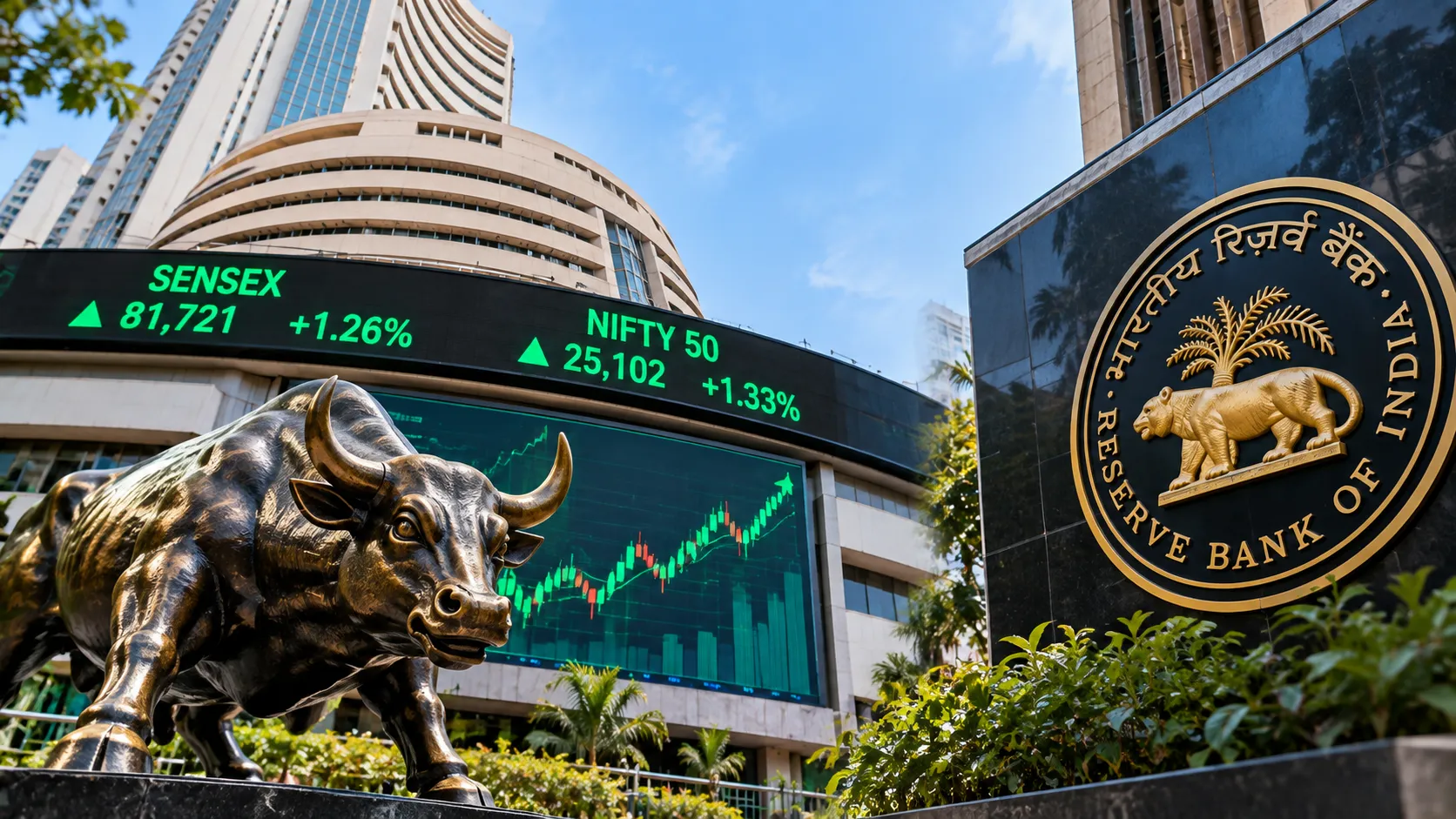
On Monday, 5 October, the BSE Sensex closed at 72,382.47, up 0.66%, while the NSE Nifty 50 ended at 22,555.75, a gain of 0.60%. The session snapped a run of declines and came after the Nifty had fallen 3.1% in the preceding week to log its eighth consecutive weekly loss, the longest such streak in 25 years.

Momentum carried into Tuesday's open. The Sensex opened at 72,508.05, up about 126 points, and the Nifty at 22,603.25, as private-sector banks led gains in early trade. GIFT Nifty futures had signalled a firmer start, trading near 22,660 before the bell.

What changed on Monday

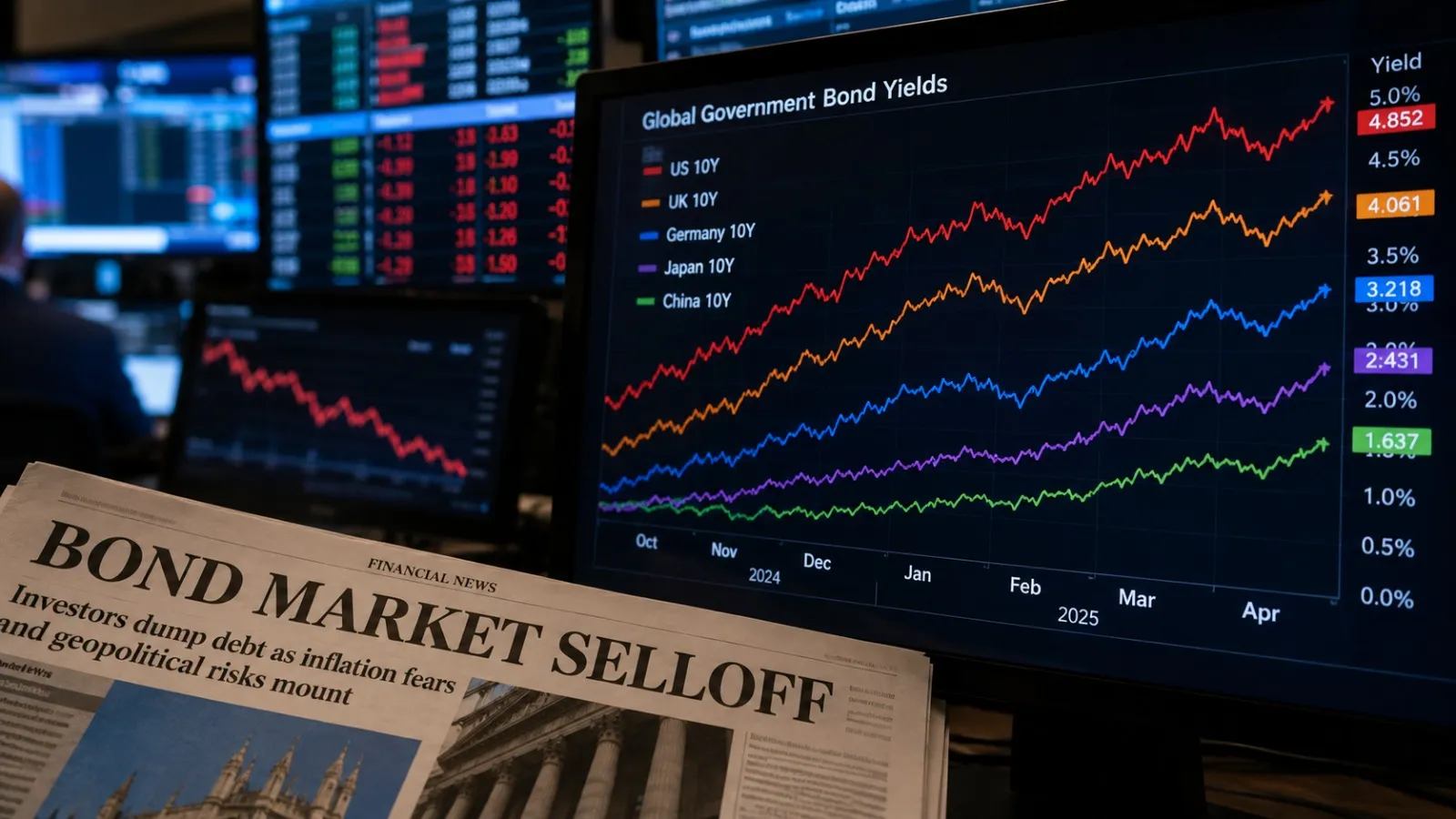
The rebound was driven largely by events outside India. Crude oil prices pulled back from recent highs, easing concerns about India's import bill, inflation and the rupee. At the same time, softer-than-expected US employment data reduced expectations of an imminent interest rate increase by the Federal Reserve, a scenario that had pushed US Treasury yields to multi-year highs and drawn capital away from emerging markets.

The Nifty gained nearly 1% at its intraday peak on Monday before profit-taking trimmed the advance, a pattern that suggests investors remain willing to sell into strength. Gains were broad, with the Nifty Midcap 100 and Nifty Smallcap 100 each rising a little over half a percentage point. Fast-moving consumer goods, consumer durables, media and public sector banks finished higher, while pharmaceutical and chemical stocks lagged.

95b5bb28-6481-4d3b-a9db-d96f7946d07b.png

Tuesday's early leaders

In Tuesday's early session, the Nifty Private Bank index rose about 0.75%, reflecting renewed interest in large lenders after weeks of foreign selling. Tata group retailer Trent was the standout among individual stocks, surging 10% to its upper circuit after reporting a 23% rise in second-quarter revenue and confirming that its Zudio chain had passed 1,000 stores. Kotak Mahindra Bank and exchange operator BSE were also among the top gainers in the Nifty 50.

Global cues were supportive. In the United States, the Nasdaq Composite closed at a record high on Monday as technology and artificial intelligence stocks rallied, and Asian markets traded higher on Tuesday morning. However, oil prices edged up again in early Asian trade, a reminder of how quickly sentiment can reverse.

The RBI's difficult choice

The central question for the market is what the RBI's Monetary Policy Committee will decide when it announces its policy on 7 October. Market commentary heading into the meeting indicates that a section of the Street expects a rate increase, a striking shift for an economy where, until recently, the debate centred on how far rates could fall.

The pressures on the central bank are considerable. Crude oil has traded above $100 a barrel for much of the recent period, raising the risk of imported inflation through fuel, transport and input costs. US bond yields have climbed above 5%, widening the gap with Indian yields and encouraging foreign portfolio investors to pull money out of Indian assets. A weaker rupee, in turn, makes imports more expensive and adds to inflationary pressure.


“A relief rally built on lower oil and a softer Fed is only as durable as the next oil price spike or the next central bank surprise.”
— TIGI Analysis

Against that, growth considerations argue for caution. Higher borrowing costs would weigh on corporate investment, housing demand and consumer credit at a time when urban consumption is already uneven. The RBI must weigh whether a pre-emptive move to defend price stability and the currency is worth the cost to activity.

How different outcomes could play out

Market participants broadly see three scenarios. A rate increase accompanied by guidance that it is a one-off, precautionary step could be absorbed without severe disruption, particularly if it is read as strengthening the rupee and restoring foreign investor confidence. Banks could benefit from wider lending spreads in the short term, though rate-sensitive sectors such as real estate, autos and consumer finance would likely come under pressure.

A decision to hold rates while signalling vigilance on inflation would probably be welcomed by equity investors in the short term, but it could leave the rupee more exposed if global yields continue to rise. A more aggressive tightening, or hawkish language pointing to further increases, would be the most challenging outcome for equities and could revive the selling pressure of recent weeks.

The tone of the governor's statement and the committee's assessment of inflation and growth will matter as much as the decision itself. Investors will also look for any measures on liquidity and the currency, areas where the RBI has historically used tools beyond the policy rate.

Earnings season approaches

Beyond monetary policy, the market's direction in the coming weeks will depend on second-quarter corporate earnings. Early business updates, including those from Trent and FMCG companies such as Marico, have offered encouraging signals on revenue. Analysts will be looking for evidence that margins have held up despite higher input and borrowing costs.

The scale of the recent correction means that valuations have become less stretched in several sectors, which some long-term investors view as an opportunity. Domestic institutional investors, supported by steady inflows into mutual funds through systematic investment plans, have continued to absorb much of the foreign selling.

For the global Indian diaspora, which sends large remittances home and increasingly invests in Indian equities and mutual funds, the RBI's decision carries practical consequences. A stronger rupee would reduce the value of money sent home, while higher deposit rates could make Indian fixed-income products more attractive. Non-resident investors in Indian equities will be watching both the rate decision and the currency's response closely.

A cautious recovery

The rebound of the past two sessions is a welcome reprieve after an exceptionally difficult stretch for Indian equities. But the factors that drove the losing run have not disappeared. Oil remains elevated, global yields remain high, and foreign investors remain cautious about emerging markets.

For now, the market has shown that it can respond positively when external pressures ease, even briefly. Whether the recovery becomes a sustained turn will depend on the RBI's decision on 7 October, the path of crude prices and the quality of the earnings season ahead. Investors, businesses and policymakers alike will be watching Mint Road closely on Wednesday morning.

TagsSensexNifty 50RBIMonetary PolicyMPCInterest RatesCrude OilFPIStock MarketIndian EquitiesMarket DataBank Stocks

Reader reviews

Sign in to rate and review this article.
Loading reviews…