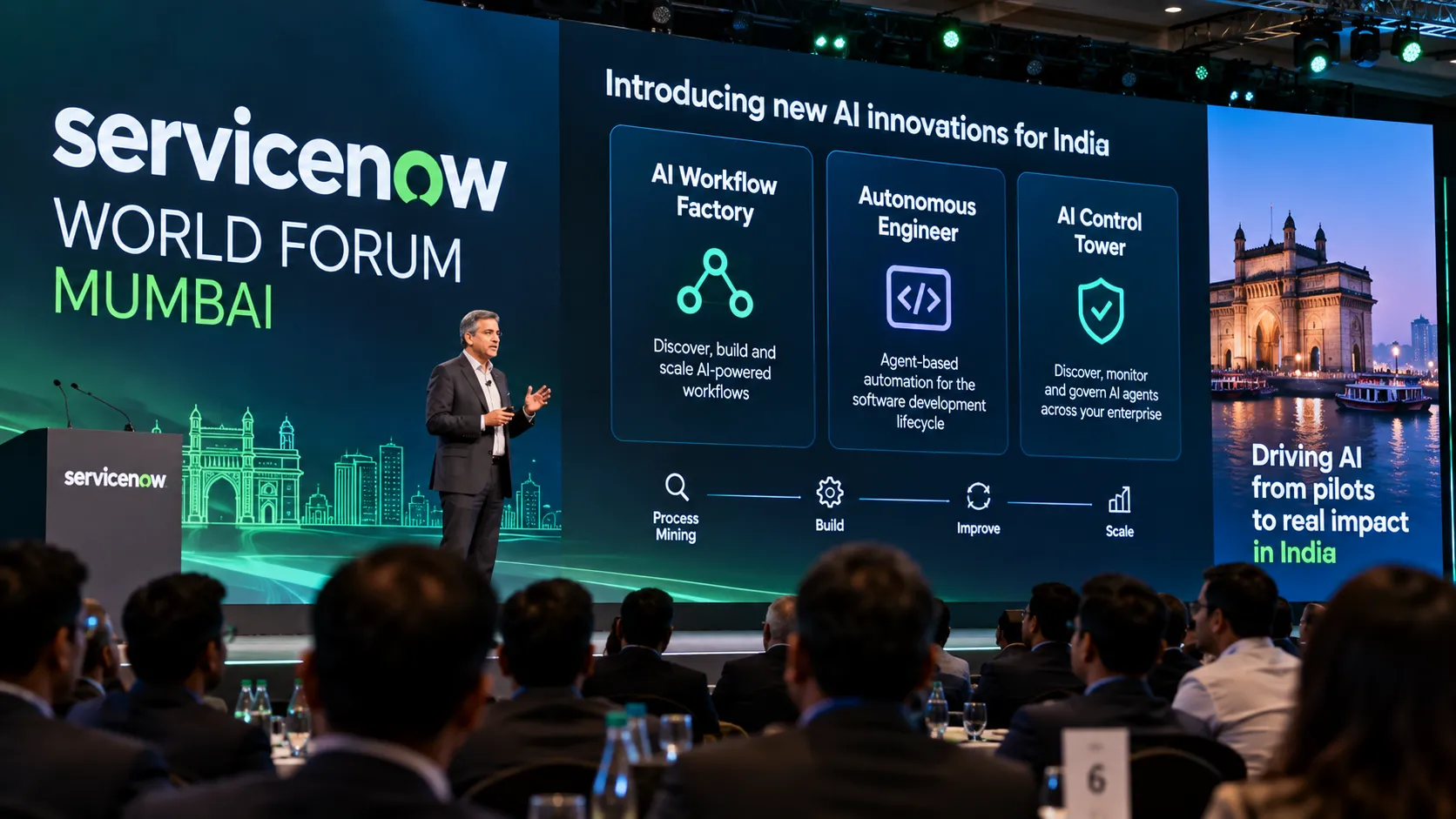
ServiceNow has launched two new products in India aimed at helping large companies move artificial intelligence out of pilot projects and into day-to-day operations, as the US enterprise software group deepens its bet on one of its fastest-growing markets.
Announced at the company's World Forum in Mumbai, AI Workflow Factory combines process mining, autonomous engineering and application development into what ServiceNow describes as a continuous loop for finding, building and improving AI-powered workflows. A second product, Autonomous Engineer, brings agent-based automation to the software development cycle itself, from planning through to building and testing.
Both sit alongside AI Control Tower, an existing ServiceNow offering that gives enterprises a central place to discover, monitor and govern the AI agents and workflows running across their technology estate. AI Workflow Factory is available globally, while Autonomous Engineer is in early access.
The pilot problem
The launches are aimed squarely at a problem that has become familiar in boardrooms worldwide: enterprises have run hundreds of generative AI experiments, but relatively few have turned into systems that change how work is done at scale. Fragmented legacy infrastructure, unclear ownership and concerns about risk often stall projects after the proof-of-concept stage.
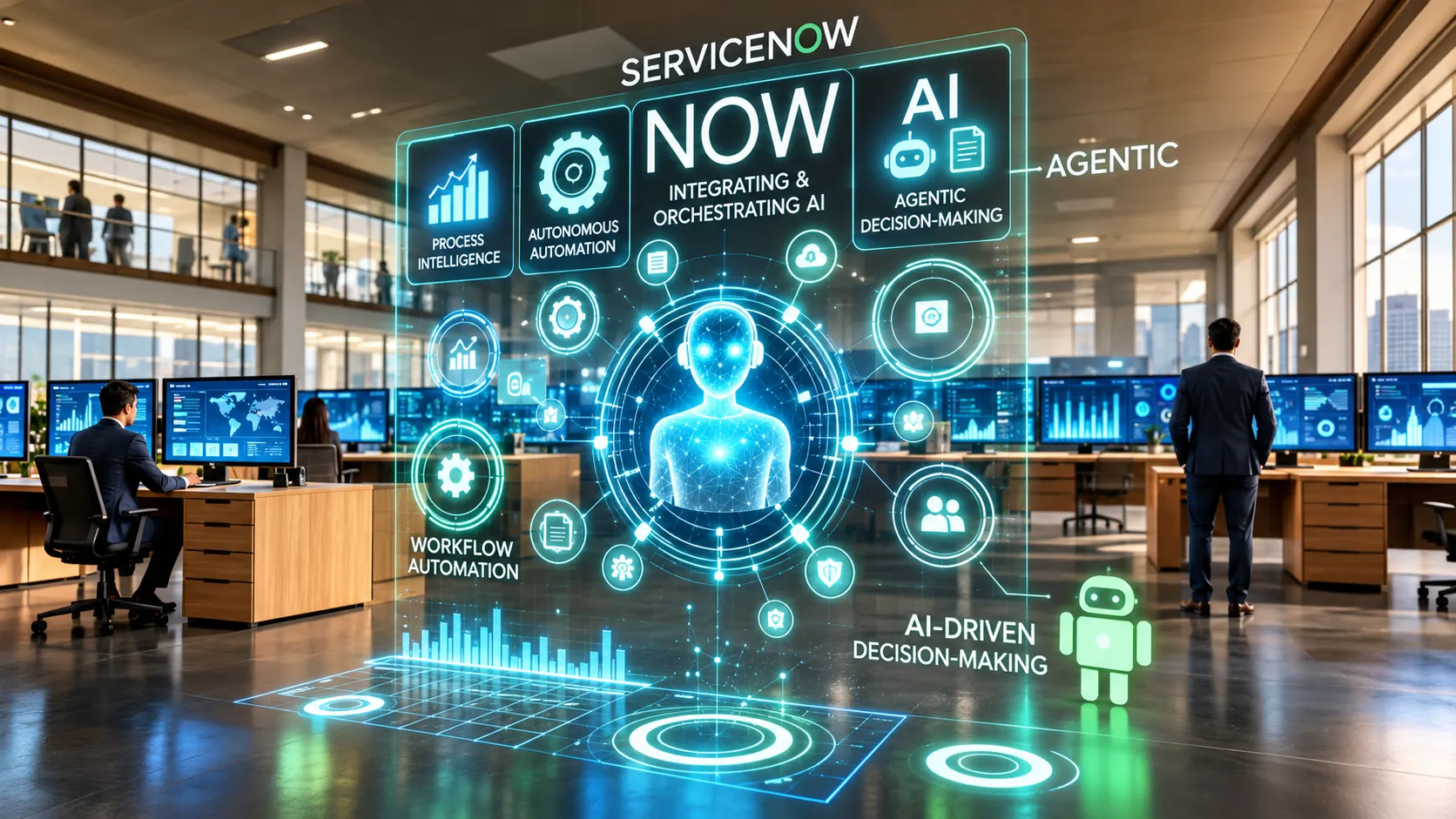
ServiceNow's pitch is that the bottleneck lies less in AI models than in the process and governance layers around them. Process mining identifies where work actually flows and where it gets stuck; the Workflow Factory then helps teams design and deploy AI-driven fixes; and the Control Tower provides oversight of what the resulting agents are doing. The company says the approach can help enterprises scale operations in days rather than months.
Indian data from the company suggests the governance gap is real. Only 22 per cent of Indian enterprises have AI testing, auditing and risk-assessment processes in place, according to a ServiceNow AI maturity assessment, even as enterprise AI investment in the country grew 119 per cent in a year, according to its 2026 Enterprise AI Maturity Index.
Autonomous Engineer addresses a related bottleneck. Many AI projects stall not because the idea is weak but because the engineering work of integrating with old systems, writing tests and deploying changes takes too long. By applying agents to the planning, building and testing steps of software development, ServiceNow aims to shorten the time between identifying an improvement and putting it into production, while keeping a record of what the agents changed and why.
That combination, rapidly rising spending alongside immature controls, is precisely the environment in which vendors that sell governance and orchestration see an opening. It is also one that regulators are watching, as financial-services and healthcare supervisors in several countries have begun to set expectations for how companies test and monitor AI systems.
Why India matters to ServiceNow
India plays a dual role for ServiceNow: it is both a growing market and a large part of its engineering base. Sumeet Mathur leads the company's India technology and business centre, which contributes to product development for its global platform.
The country is also home to more than 2,100 global capability centres (GCCs) employing about 2.35 million people, according to industry estimates cited by the company. These captive technology and operations hubs, run by multinational banks, retailers, pharmaceutical groups and manufacturers, are among the heaviest users of enterprise workflow software and are increasingly being asked by their parent companies to lead AI adoption.