For much of the past decade, last-mile delivery in India was seen as a low-margin, high-volume business where companies raced to grow while burning cash. The latest results from Shadowfax suggest that, for the best-run operators, that era is giving way to sustained profitability.
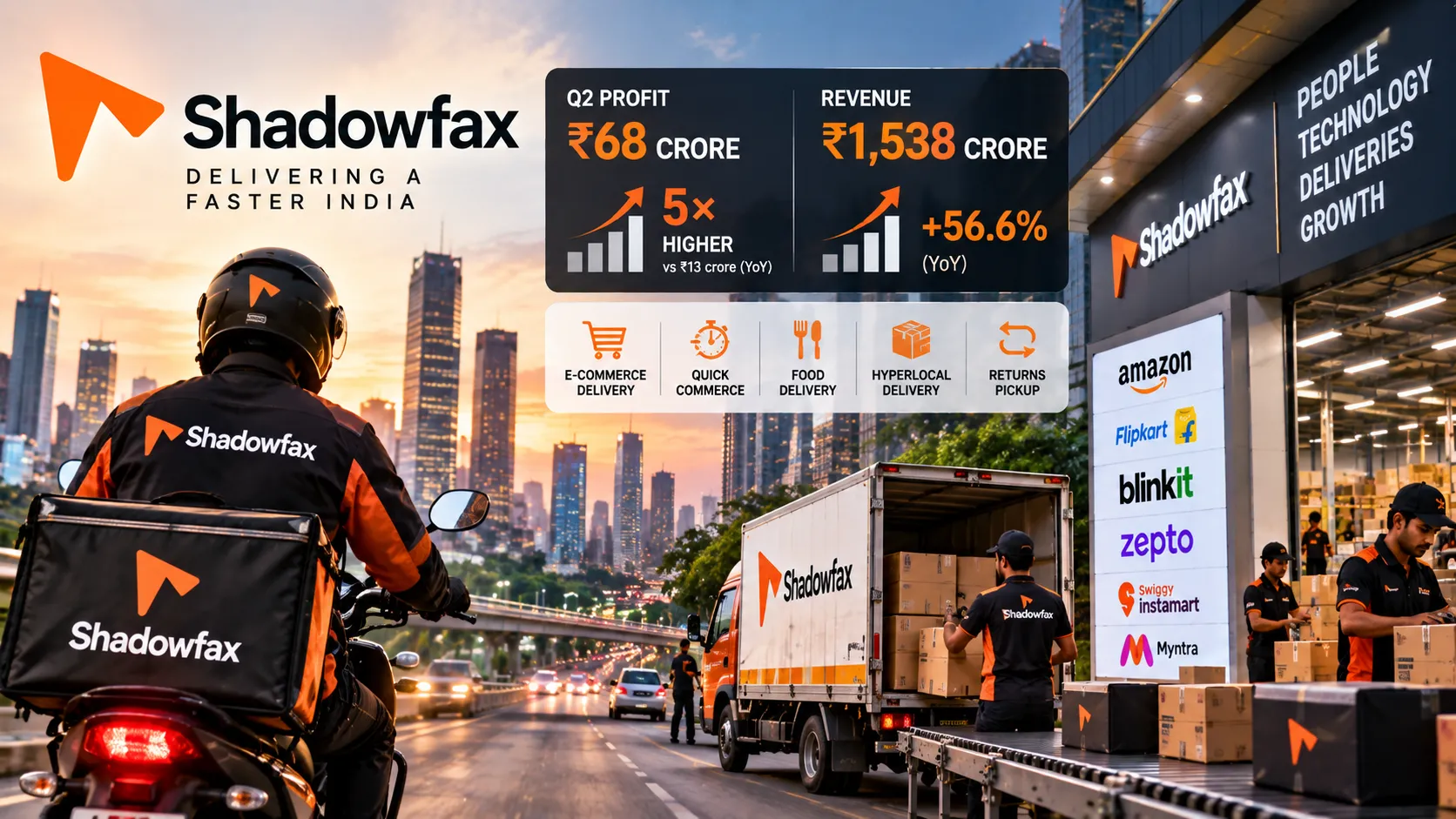
The Bengaluru-based logistics company reported profit of ₹68 crore for the July-September quarter, up more than fivefold from ₹13 crore a year earlier and higher than the ₹65 crore it earned in the April-June quarter, according to StartupTalky on Thursday, October 29. Revenue from operations rose 56.6% to ₹1,538 crore.
The listed company had a market value of about ₹17,112 crore, according to the report.
Growth and profit together
The combination of rapid revenue growth and rising profit is notable in logistics, where companies often have to choose between expanding quickly and protecting margins. Shadowfax's revenue grew by more than half in a year, while profit rose sharply, indicating that the company is spreading its fixed costs over a larger volume of deliveries.
Sequential growth in profit, from ₹65 crore to ₹68 crore, also suggests that the improvement is not a one-off. Profitability has been sustained across consecutive quarters, which is important for investors assessing whether the business model can support continued earnings growth.
What Shadowfax does
Founded in 2015 by Abhishek Bansal and Vaibhav Khandelwal, Shadowfax provides last-mile and hyperlocal delivery services for e-commerce companies, quick commerce platforms, food delivery services and other businesses. It operates a large network of delivery partners, many of whom are gig workers who use their own two-wheelers, and has built technology to allocate orders, optimise routes and manage its fleet.
The company handles a range of deliveries, from parcels ordered on e-commerce marketplaces to groceries delivered within minutes and returns collected from customers' homes. This diversity of services allows it to use its network more efficiently throughout the day, as different types of orders peak at different times.
Riding the quick commerce wave
One of the biggest drivers of demand for delivery services in India has been the explosive growth of quick commerce, in which groceries and everyday items are delivered within 10 to 30 minutes from small warehouses known as dark stores. Platforms such as Blinkit, Swiggy Instamart, Zepto, Flipkart Minutes and Amazon's rapid delivery service have expanded rapidly across Indian cities.
Quick commerce companies often rely on third-party logistics providers to supplement their own delivery fleets, particularly during peak hours and in new cities. This has created a large and growing source of demand for companies such as Shadowfax.
E-commerce growth has also continued, with platforms such as Flipkart, Meesho and Amazon reaching hundreds of millions of shoppers, many in smaller towns. Meesho, which relies heavily on third-party logistics partners, reported this week that it had 28.4 crore annual transacting users.
The festive season boost
The September quarter included the start of India's festive shopping season, when e-commerce platforms run major sales events and order volumes surge. While the biggest festive sales typically fall in late September and October, preparation and early sales lift volumes in the second quarter. The October-December quarter is likely to see even stronger festive demand, which could further support Shadowfax's results.
Competition in logistics
India's logistics sector is highly competitive. Shadowfax competes with Delhivery, India's largest listed logistics company, as well as Ecom Express, Xpressbees, Ekart (Flipkart's logistics arm), Amazon's in-house logistics network and numerous smaller players. Large e-commerce and quick commerce platforms have also built their own delivery fleets, reducing their reliance on third parties.