SiMa.ai, a Silicon Valley company building chips and software for what the industry now calls "physical AI", has raised $150 million in a Series C round co-led by Fidelity Management & Research Company and Amplify Partners, valuing the company at $1.45 billion.
The round, announced on 29 September 2026, also drew participation from Alter Venture Partners, Dell Technologies Capital, StepStone Group, AllianceBernstein, Baron Capital and J.P. Morgan. It takes SiMa.ai's total funding to $500 million.
Founded in 2018 by Krishna Rangasayee, an Indian-origin semiconductor executive, SiMa.ai develops machine learning hardware and software designed to run AI directly on devices such as robots, vehicles and drones rather than in distant data centres. Its latest raise comes as investors pour money into robotics and autonomous systems, betting that the next wave of AI will move from screens into the physical world.
What physical AI means
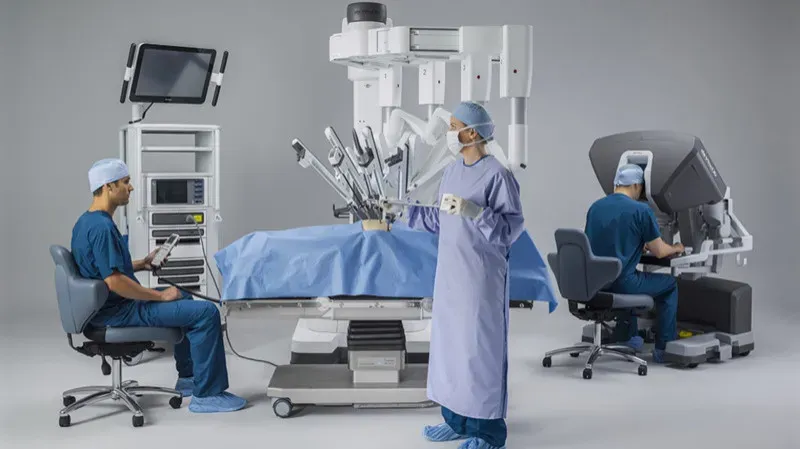
Most of the attention in artificial intelligence over the past three years has focused on large language models running in the cloud. Physical AI refers to systems that perceive, reason and act in the real world: humanoid robots that work in factories and warehouses, vehicles that drive themselves, drones that inspect infrastructure, and machines that operate in environments where decisions must be made in milliseconds.
These applications have demanding technical requirements. They need to process large volumes of sensor data from cameras, lidar and radar in real time. They often operate on battery power, making energy efficiency critical. And they cannot always rely on a network connection, meaning AI must run locally on the device, at the "edge".
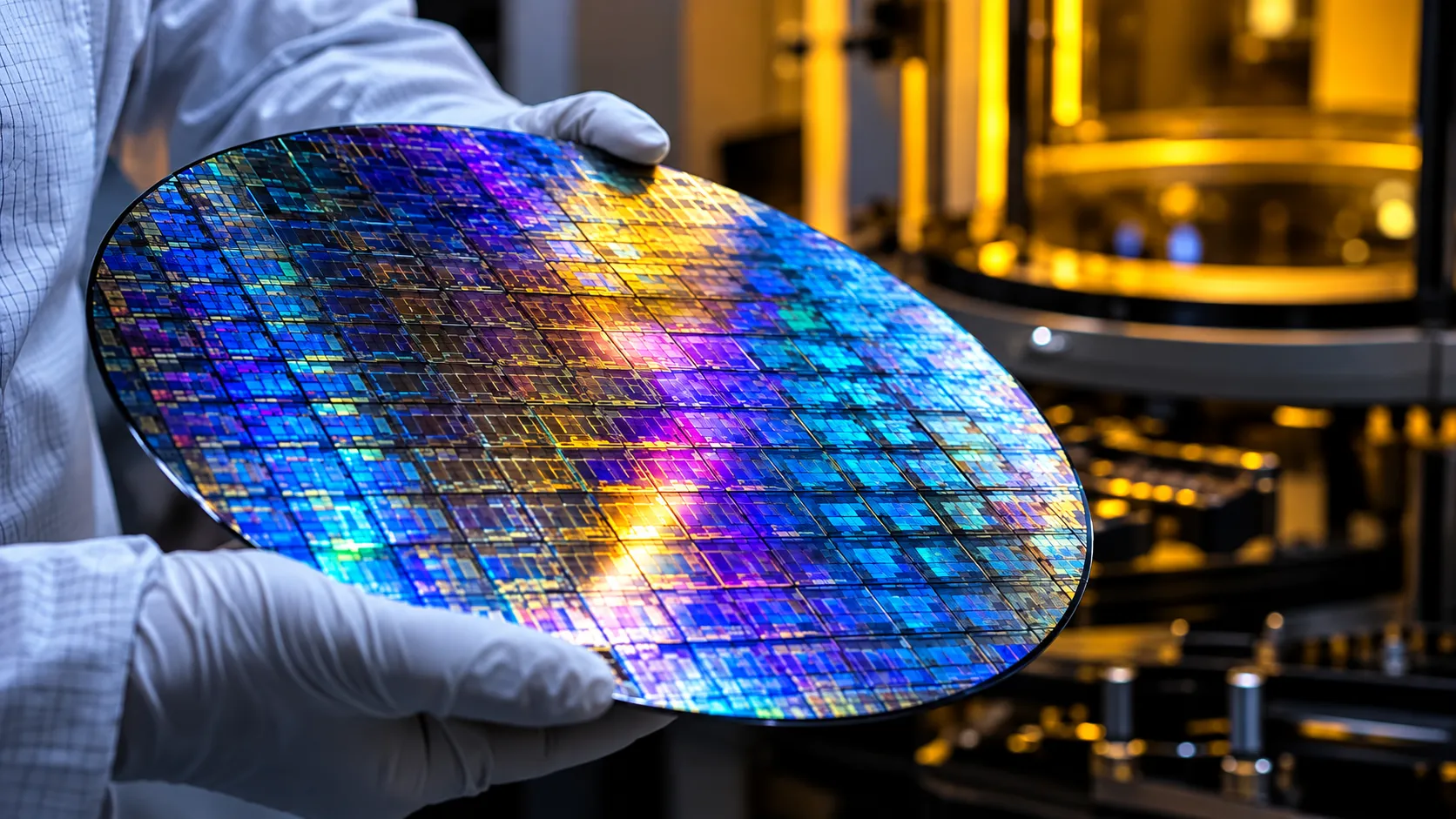
SiMa.ai's products are designed for that environment. The company builds machine learning intellectual property, chiplets and systems-on-chip, known as SoCs, that combine AI processing with other computing functions in a compact, efficient package. It pairs the hardware with software intended to make it easier for developers to deploy AI models on its chips.
"Physical AI in humanoids, automotive, and drones is the gateway to a $50 trillion market that has remained largely untouched," Rangasayee said.
From software to agentic platform
A central part of the company's strategy is Palette Neat, which it describes as an agentic software platform for physical AI. The new funding will be used to scale that platform alongside the development of new hardware products.
The emphasis on software reflects a lesson from the semiconductor industry's recent history. Nvidia's dominance in AI has been built not only on its chips but on CUDA, the software ecosystem that makes it easier for developers to program them. Challengers have found that even excellent hardware struggles to gain adoption without tools that fit into developers' existing workflows. By investing in software that automates the deployment and optimisation of AI models, SiMa.ai aims to lower the barrier for customers moving from prototypes to products.
Growth and investor confidence
SiMa.ai says it grew revenue fourfold between 2024 and 2025 and has continued to build momentum in 2026. The company has not disclosed its customers, but it is targeting applications in humanoid robots, automotive systems, drones and other autonomous machines.
The quality of the investor syndicate is notable. Fidelity and AllianceBernstein are large public-market investors whose participation in late-stage private rounds often signals expectations of an eventual public listing. Dell Technologies Capital brings strategic relevance, given Dell's role in supplying computing hardware to enterprises building AI systems.
"SiMa.ai has consistently proven its ability to out-innovate and out-execute the rest of the market," said Mike Dauber of Amplify Partners, an existing investor.
A crowded, fast-moving market
SiMa.ai operates in one of the most competitive corners of the semiconductor industry. Nvidia offers its Jetson and Thor platforms for robotics and autonomous vehicles. Qualcomm, Intel, AMD and a host of other chipmakers are targeting edge AI. Automakers and technology companies are also designing their own chips. Well-funded startups in the United States, Europe, China and Israel are developing specialised processors for robotics and vision.
The surge in interest in humanoid robots has intensified that competition. Companies developing general-purpose humanoids have raised billions of dollars over the past two years, and each needs powerful, efficient onboard computing. Automakers, meanwhile, continue to push toward higher levels of driver assistance and autonomy, demanding more AI processing in every vehicle.
For SiMa.ai, the challenge is to win design slots with manufacturers, whose product cycles can be long and whose switching costs, once a chip is designed into a product, are high. That dynamic can make early wins valuable but also means revenue growth can take time to materialise.
## Why the edge matters
Running AI on devices rather than in the cloud offers several advantages beyond speed. It reduces the amount of data that must be transmitted, lowering bandwidth costs and improving privacy, since video and sensor data can be processed locally rather than sent to remote servers. It also improves resilience, allowing machines to keep working when connectivity is poor, an essential requirement for vehicles, drones and industrial equipment operating in the field.
Those advantages come with engineering trade-offs. Edge chips must deliver high performance within strict limits on power consumption, heat and cost. Designers must balance flexibility, so that chips can run new AI models as they emerge, against efficiency, which often favours specialised hardware. Companies that strike the right balance, and make it easy for developers to port their models, stand to capture a large share of a market that analysts expect to grow rapidly as robots and autonomous systems move into mainstream use.
The shift toward agentic AI adds another layer. Machines that plan and act on their own need to run more complex models locally, which increases demand for capable edge processors and for software that can manage those workloads safely.
The founder and the diaspora story
Krishna Rangasayee brings decades of semiconductor experience to SiMa.ai, including senior leadership roles at Xilinx, the programmable chip pioneer later acquired by AMD. His journey from engineering to founding one of the most closely watched edge AI companies is part of a long tradition of Indian-origin leaders shaping the global semiconductor industry.
That tradition is increasingly relevant to India itself. The country is investing heavily to build a domestic semiconductor ecosystem, with government incentives supporting fabrication, assembly and testing facilities, and a growing number of chip design startups. India already hosts large design centres for many of the world's leading chip companies, and its engineers play central roles in global chip development.
As physical AI spreads across factories, logistics networks, vehicles and infrastructure, companies like SiMa.ai will shape how machines see and act. With fresh capital and a unicorn valuation, the company now has the resources to compete for that future. Its success will depend on converting technical promise into large-scale deployments, and on proving that a focused challenger can carve out a durable position in a market where the largest chipmakers are also racing ahead.