TechFuture Tech5 MIN READ

SK Hynix Pledges $1 Billion to Strengthen Korea's Chip Suppliers and Opens a Shared Test Fab as the AI Memory Race Intensifies

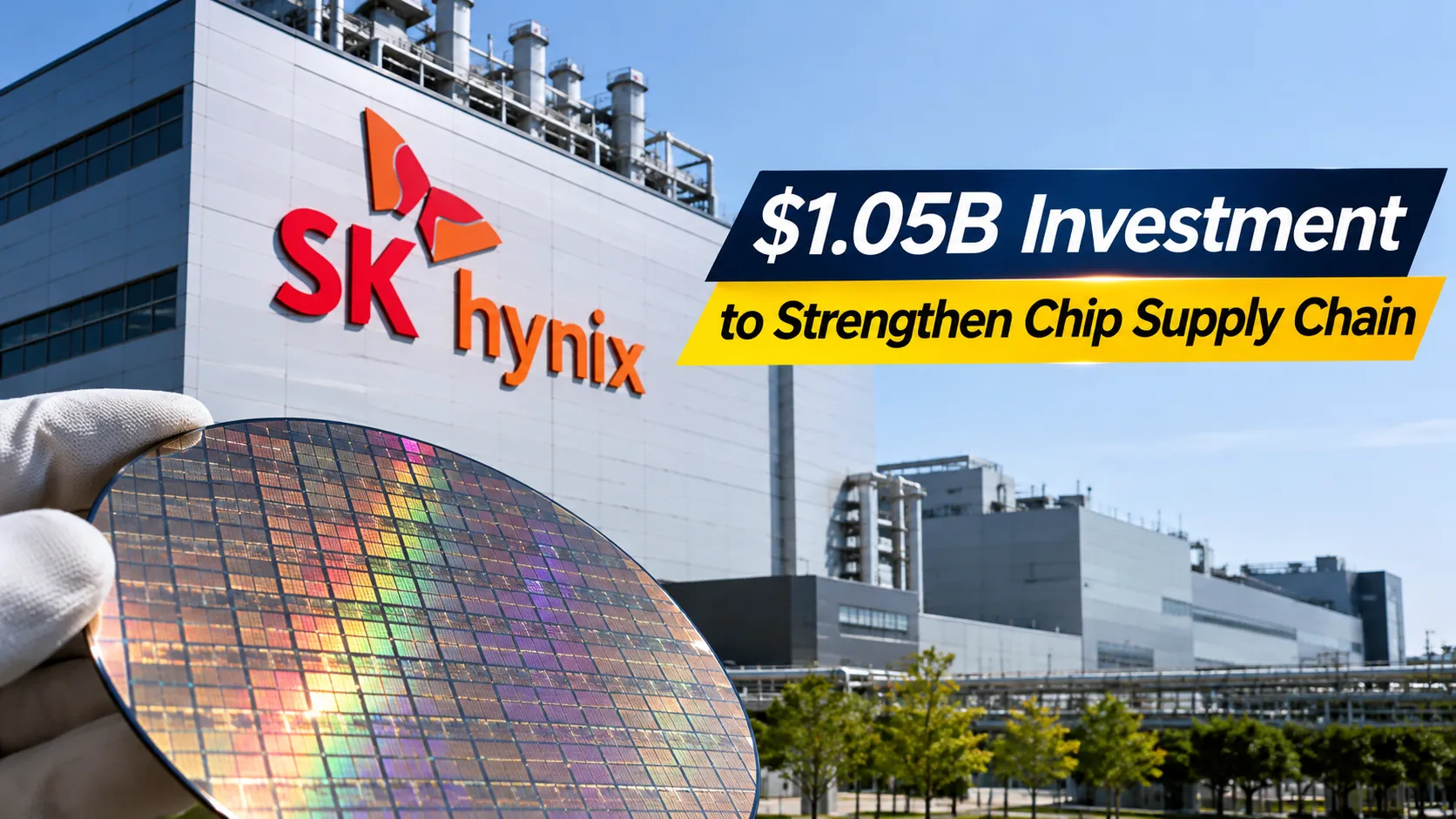
SK Hynix said on November 16 it will spend 1.4 trillion won (about $1.05 billion) over five years to support South Korean makers of semiconductor materials, parts and equipment. The centrepiece is an 874.6 billion won shared testing facility called Trinity Fab at its Yongin cluster, opening in May 2027, where suppliers can test products on 12-inch wafers.

By Aravind Kumar · Author16 November 2026New
SK Hynix Pledges $1 Billion to Strengthen Korea's Chip Suppliers and Opens a Shared Test Fab as the AI Memory Race Intensifies

The world's leading supplier of memory chips for artificial intelligence is investing in the companies that supply it.

SK Hynix said on Monday, November 16, that it will spend 1.4 trillion won, or about $1.05 billion, over five years to support South Korean makers of semiconductor materials, parts and equipment, according to Reuters, as reported by The Star. The company said the aim is to strengthen its supply chain as competition intensifies in the AI chip market.

The programme covers four stages, research and development, testing, mass production and sales, and is designed to address financing and technology barriers faced by smaller companies.

The Trinity Fab

The centrepiece of the plan is a shared testing facility called Trinity Fab, which will cost 874.6 billion won and be located in the first chip plant of SK Hynix's Yongin semiconductor cluster, about 40 kilometres south of Seoul. It is scheduled to open in May 2027.

SK Hynix will contribute 443.2 billion won, the central government 373.6 billion won and local governments 57.7 billion won, according to Reuters.

The facility will include a cleanroom of 3,305 square metres with equipment for lithography, etching, deposition and inspection, allowing suppliers to test their materials and equipment on 12-inch wafers in conditions similar to mass production. The Seoul Economic Daily reported that the facility will give suppliers access to extreme ultraviolet (EUV) lithography equipment, among the most advanced and expensive tools in chipmaking.

To protect intellectual property and commercially sensitive information, the facility will be run by an independent non-profit foundation.

Funding and research support

SK Hynix will advance up to 50% of the initial development costs for supplier projects and pay suppliers for work done even if a project misses its targets, according to Reuters. The company will also offer low-interest loans and technical consulting, including for smaller subcontractors.

In addition, 2 trillion won of financing backed by the Korea Trade Insurance Corporation will be provided by SK Hynix and financial institutions.

Why suppliers matter

Making advanced chips requires thousands of specialised materials, chemicals, gases, components and machines. Many of these are supplied by a small number of companies in Japan, the United States, the Netherlands and Europe. South Korea, despite being home to two of the world's largest memory chipmakers, SK Hynix and Samsung Electronics, has relied heavily on foreign suppliers for key materials and equipment.

That dependence became a concern in 2019, when Japan restricted exports of several chemicals critical to chipmaking to South Korea during a diplomatic dispute. The episode prompted Seoul to invest in building domestic suppliers, and SK Hynix's new plan extends that effort.

Testing is a major barrier for smaller suppliers. Before a chipmaker will adopt a new material or tool, it must be tested extensively in real production conditions. Without access to advanced fabs, small companies struggle to prove their products work, creating a chicken-and-egg problem. The Trinity Fab aims to solve this.

The AI memory boom

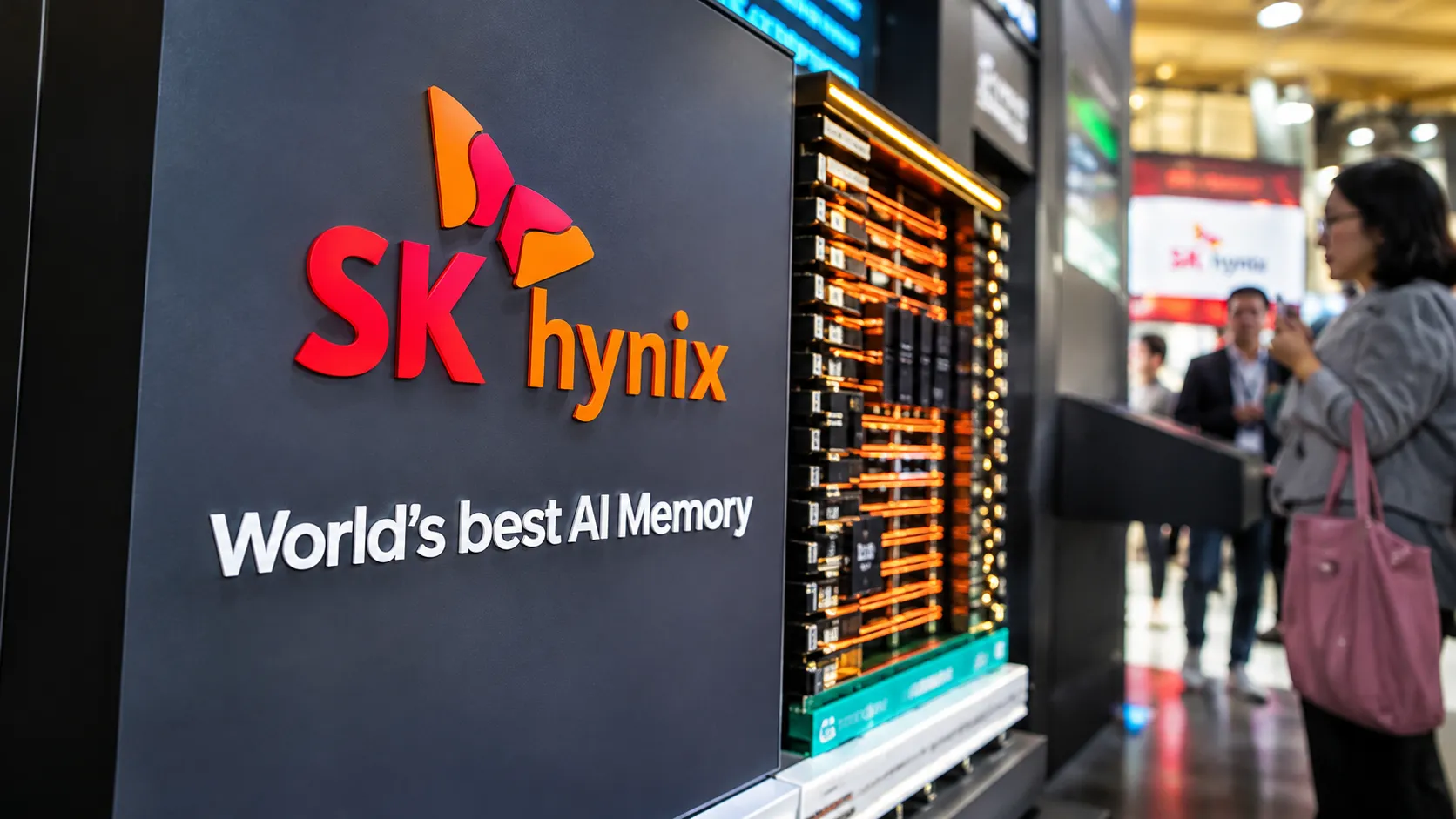
SK Hynix has been one of the biggest beneficiaries of the AI boom. It is a leading supplier of high-bandwidth memory (HBM), a type of memory chip stacked in layers and used alongside AI accelerators such as those made by Nvidia. Demand for HBM has surged as technology companies build data centres to train and run AI models.

“In the AI era, a chipmaker is only as strong as the suppliers standing behind it.”
— TIGI Technology Desk

Competition is intensifying. Samsung has been working to catch up in HBM, and US-based Micron has also expanded its presence. Securing reliable, high-quality supplies of materials and equipment is critical to maintaining SK Hynix's lead.

The Yongin cluster

The Yongin semiconductor cluster is one of the world's most ambitious chip manufacturing projects. SK Hynix plans to invest 600 trillion won to build four chip fabrication plants there, according to Reuters. The South Korean government has supported the project with infrastructure, including power and water supply, as part of its strategy to maintain the country's position in the global chip industry.

d83fa290-e5d7-4080-bc88-2c0b57450580.png

Industrial policy in action

The plan reflects a broader trend of governments and companies working together to strengthen semiconductor supply chains. The United States, Japan, Europe, China, Taiwan and India have all introduced large subsidy programmes to attract chip manufacturing and build domestic ecosystems.

The co-funding of the Trinity Fab by SK Hynix and central and local governments is a model of public-private partnership aimed at strengthening an entire ecosystem rather than a single company.

Lessons for India

India's semiconductor ambitions face a similar challenge. As the country builds its first chip fabrication and packaging plants under the India Semiconductor Mission, developing a domestic base of materials, chemicals, gases and equipment suppliers will be critical to long-term competitiveness. Shared testing facilities and support for small suppliers could help Indian companies enter the global semiconductor supply chain.

Indian companies already supply some specialty chemicals and components to global chipmakers, and the government has sought to attract equipment and materials suppliers alongside chip manufacturers.

What it means for investors

For investors, the plan underlines SK Hynix's long-term commitment to its domestic ecosystem and its strategy to secure supply as AI demand grows. Korean suppliers of chip materials and equipment could benefit from increased support and access to testing facilities.

Why ecosystems win

Semiconductor leadership increasingly depends on whole ecosystems rather than individual companies. Taiwan's strength rests not only on TSMC but on hundreds of suppliers clustered around its fabs. By investing in domestic suppliers, SK Hynix aims to build a similar network in South Korea, reducing logistics costs and supply risks and accelerating innovation through close collaboration.

Analysts say the success of such programmes depends on whether suppliers can move from testing to volume orders. A shared fab lowers the barrier to entry, but suppliers must still meet demanding standards for quality, consistency and cost to win long-term contracts from SK Hynix and other chipmakers.

South Korea's government has also announced broader support for the chip industry, including tax incentives and infrastructure investment, as it seeks to compete with subsidy programmes in the United States, Japan and China.

What comes next

The Trinity Fab is due to open in May 2027. SK Hynix's progress in HBM, the construction of its Yongin plants and the response of Korean suppliers will be key indicators of whether the strategy strengthens South Korea's position in the AI chip race.

TagsSK Hynixsemiconductorsmemory chipsHBMAI chipsTrinity FabYongin clusterSouth Koreachip supplierssupply chainmaterials parts equipmentSamsungNvidiaKorea Trade Insurance CorporationcleanroomEUVindustrial policyIndia semiconductorstechnologyinvestors

Reader reviews

Sign in to rate and review this article.
Loading reviews…

