TechArtificial Intelligence5 MIN READ

SK hynix Becomes Kioxia's Largest Shareholder, Tightening Its Grip on the Global Memory Chip Market

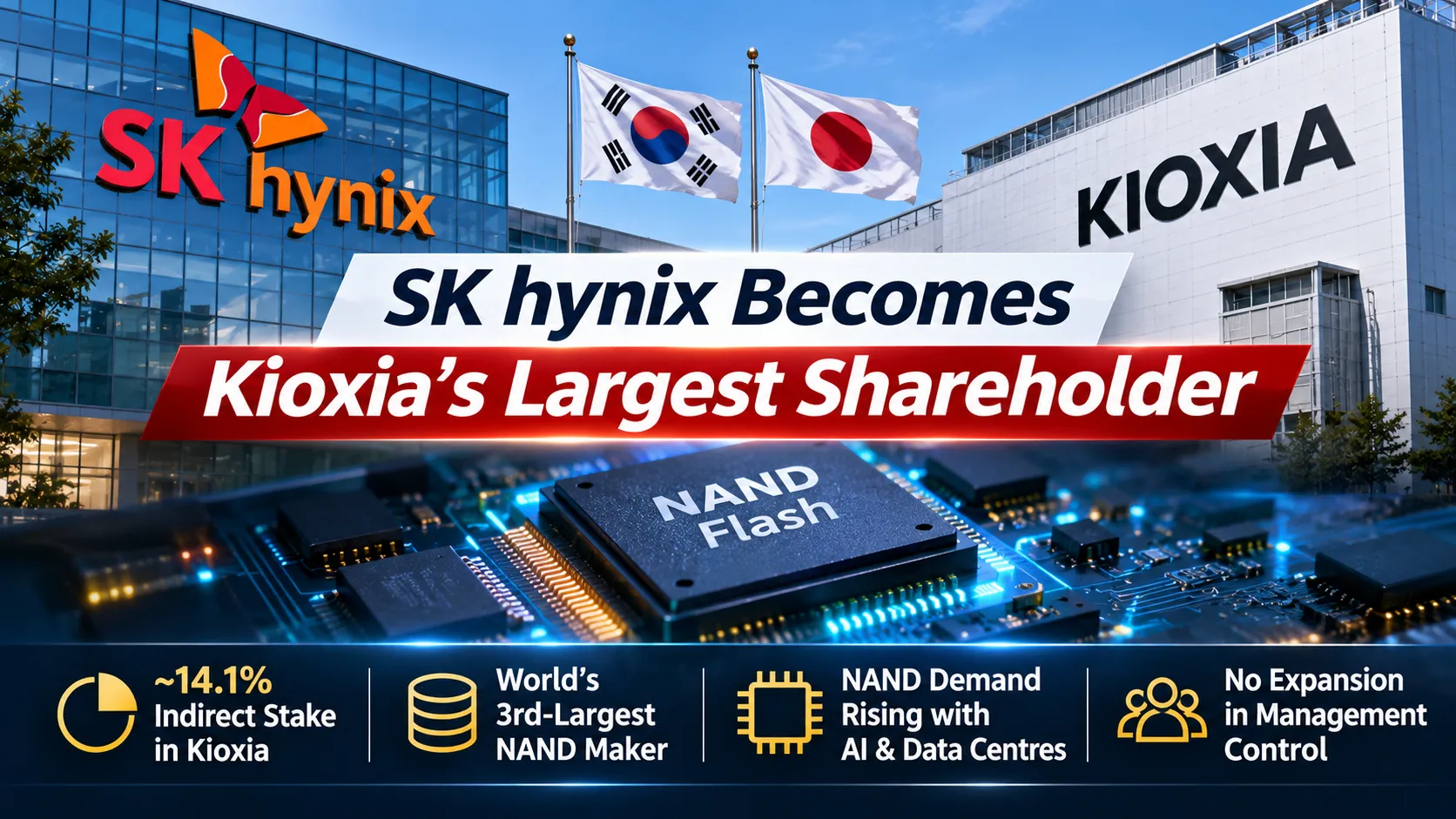
SK hynix is set to become Kioxia's largest shareholder after converting bonds and acquiring additional shares in an investment vehicle, giving it an indirect stake of about 14.1% in the Japanese NAND maker.

By Nisha Omkumar · Author23 November 2026New
SK hynix Becomes Kioxia's Largest Shareholder, Tightening Its Grip on the Global Memory Chip Market

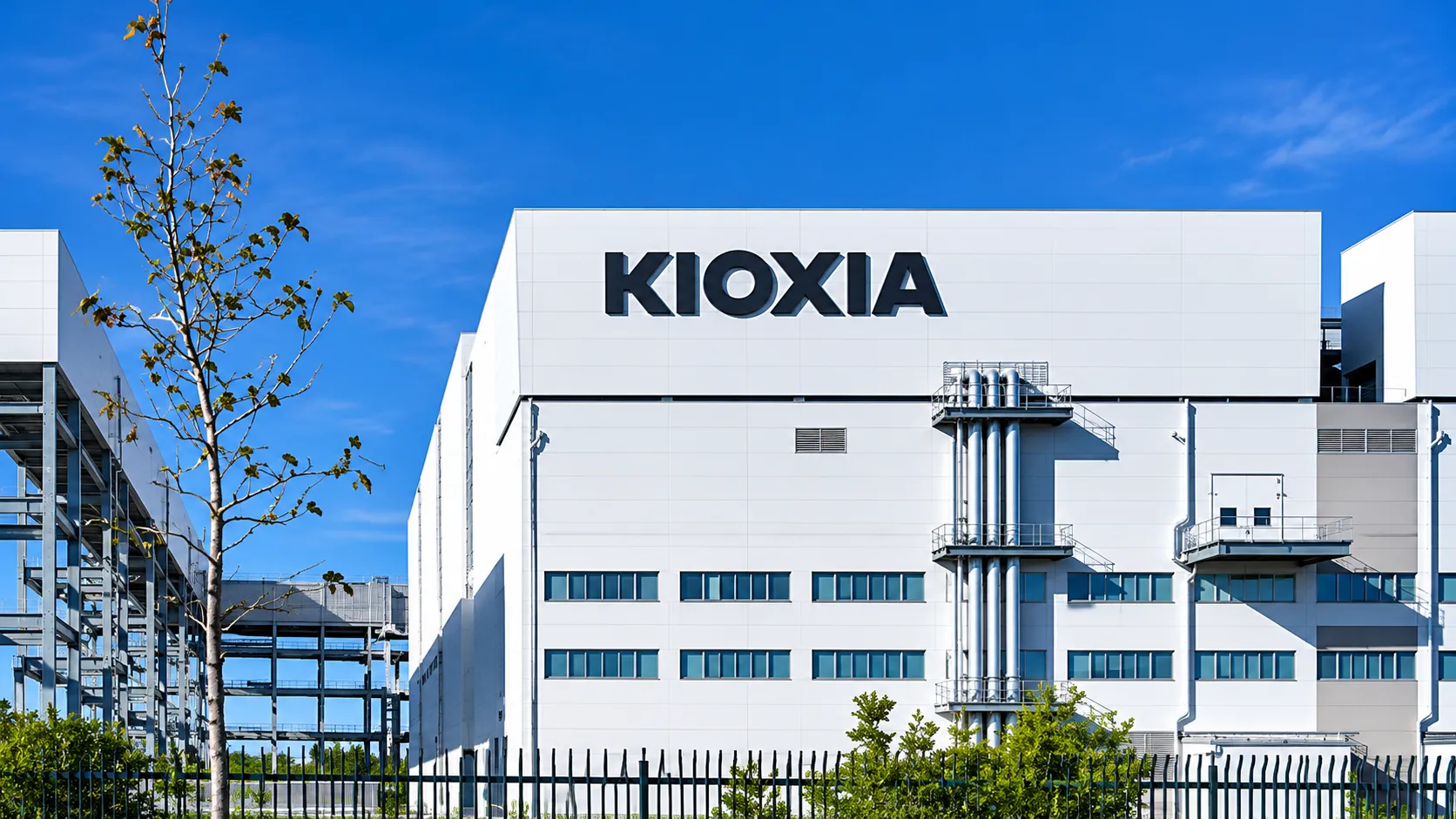
South Korea's SK hynix, one of the world's largest memory chip makers, is set to become the largest shareholder in Japan's Kioxia Holdings. It converted bonds and acquired additional shares in an investment vehicle, according to a report published on November 22.

The move gives SK hynix an indirect stake of about 14.1% in Kioxia, the world's third-largest maker of NAND flash memory, the type of chip used for data storage in smartphones, computers and data centres.

SK hynix sought to play down the significance of the move for Kioxia's governance. "This acquisition of shares does not signify an expansion of our involvement in Kioxia's management," the company said.

A stake rooted in the Toshiba Memory deal

SK hynix's position in Kioxia dates back to 2018, when a consortium led by Bain Capital acquired Toshiba's memory chip business, which was later renamed Kioxia. SK hynix joined the consortium and invested a total of about 395 billion yen, or roughly $2.48 billion, in the acquisition.

Much of SK hynix's investment was structured through a special purpose company established by Bain Capital, known as BCPE Pangea Cayman 2 (SPC2). SK hynix held convertible bonds in that vehicle rather than direct shares in Kioxia. This structure was partly designed to address regulatory concerns about a South Korean competitor holding voting rights in a strategically important Japanese chipmaker.

According to the report, SK hynix has already recovered its entire investment through the separate investment vehicle, making its Kioxia position highly profitable.

How the shareholding evolved

Kioxia listed on the Tokyo Stock Exchange in December 2024. Since then, its major shareholders have gradually changed. Bain Capital sold a large part of its stake in 2026, generating one of the highest returns on record for a private equity deal in Japan. Toshiba also reduced its holding.

In August 2026, after Toshiba trimmed its stake to about 14.12%, SPC2, with about 14.19%, became Kioxia's largest shareholder on paper. Because SK hynix held bonds convertible into substantially all of SPC2's voting rights, it was widely described as Kioxia's de facto largest shareholder.

The latest step, converting bonds and acquiring additional shares in the investment vehicle, makes that position more formal.

Limits on control

Despite becoming the largest shareholder, SK hynix's ability to influence Kioxia's management remains limited. The company previously pledged not to hold more than 15% of Kioxia's voting rights. Securing voting rights through conversion requires approvals, including from the Japanese government, given the strategic importance of the semiconductor industry. Antitrust regulators in various countries may also need to approve.

SK hynix's statement that the move does not expand its management involvement appears designed to reassure Japanese authorities and Kioxia's other stakeholders.

Kioxia itself has identified potential conflicts of interest as a risk factor, since SK hynix is also a major competitor in the NAND market.

Why NAND matters in the AI era

The memory chip industry has been transformed by artificial intelligence. Demand for high-bandwidth memory (HBM), used alongside AI processors in data centres, has soared, and SK hynix has been the leading supplier of HBM to Nvidia. That position has made SK hynix one of the biggest winners of the AI boom.

“This acquisition of shares does not signify an expansion of our involvement in Kioxia's management.”
— SK hynix, company statement

NAND flash memory, Kioxia's core business, is also benefiting from AI. Data centres need vast amounts of storage for training data, models and AI-generated content. High-capacity enterprise solid-state drives built on NAND are in strong demand. Industry participants have said that HBM and DRAM supply is sold out for years, and NAND markets have also tightened.

For SK hynix, a closer relationship with Kioxia could provide strategic options in NAND, where it competes with Samsung, Micron, Western Digital's former flash business and others.

The Korea-Japan chip relationship

The move also reflects the complex relationship between South Korea and Japan in semiconductors. Japan was once the dominant force in memory chips before being overtaken by South Korean companies. Today, Japan remains crucial in semiconductor materials and equipment, while South Korea leads in memory manufacturing.

Japanese policymakers have been keen to maintain a domestic presence in advanced chip manufacturing, supporting Kioxia and other companies with subsidies. Any perception that a foreign competitor is gaining control of Kioxia would be politically sensitive.

e3ccd7ea-b5ef-4ccc-a5c8-38bd4cca083a.png

Implications for investors

For SK hynix investors, the move consolidates a highly profitable investment and strengthens the company's strategic position in NAND. SK hynix has been one of the best-performing large chip companies in recent years, raising more than $26 billion in a US listing in 2026.

For Kioxia shareholders, the change in ownership structure could raise questions about the company's long-term independence and strategic direction. Kioxia previously explored a merger with Western Digital's flash business, which did not proceed.

What it means for India

India is building its own semiconductor industry, with government incentives supporting fabrication, assembly and testing facilities. Memory chips are a critical component of electronics manufacturing, and global supply shortages have affected Indian smartphone and electronics makers.

Consolidation among memory chip makers could affect pricing and supply availability for Indian manufacturers. India's efforts to attract memory chip assembly and testing investments, such as Micron's facility in Gujarat, are part of a broader push to secure supply chains.

For The Impactful Global Indian's readers, the SK hynix-Kioxia development is a reminder of how the AI boom is reshaping the global semiconductor industry, concentrating power among a small number of companies that control critical technologies.

The competitive landscape in NAND

The NAND flash market is dominated by a handful of companies. Samsung is the largest producer, followed by SK hynix and its subsidiary Solidigm, which acquired Intel's NAND business, Kioxia, Micron and others. The market has been highly cyclical, with periods of oversupply driving down prices and squeezing profits. The AI boom has tightened supply and improved pricing. Some analysts have long argued that consolidation in NAND could help stabilise the market, and closer ties between SK hynix and Kioxia have periodically been discussed as a possibility. Any deeper combination would face significant regulatory and political hurdles, particularly in Japan. Industry observers will watch closely for any sign that SK hynix intends to seek a larger role at Kioxia over time.

TagsSK hynixKioxiaNAND FlashMemory ChipsHBMSemiconductorsToshiba MemoryBain CapitalAI ChipsJapanSouth KoreaData CentresChip IndustryStorageSamsung

Reader reviews

Sign in to rate and review this article.
Loading reviews…