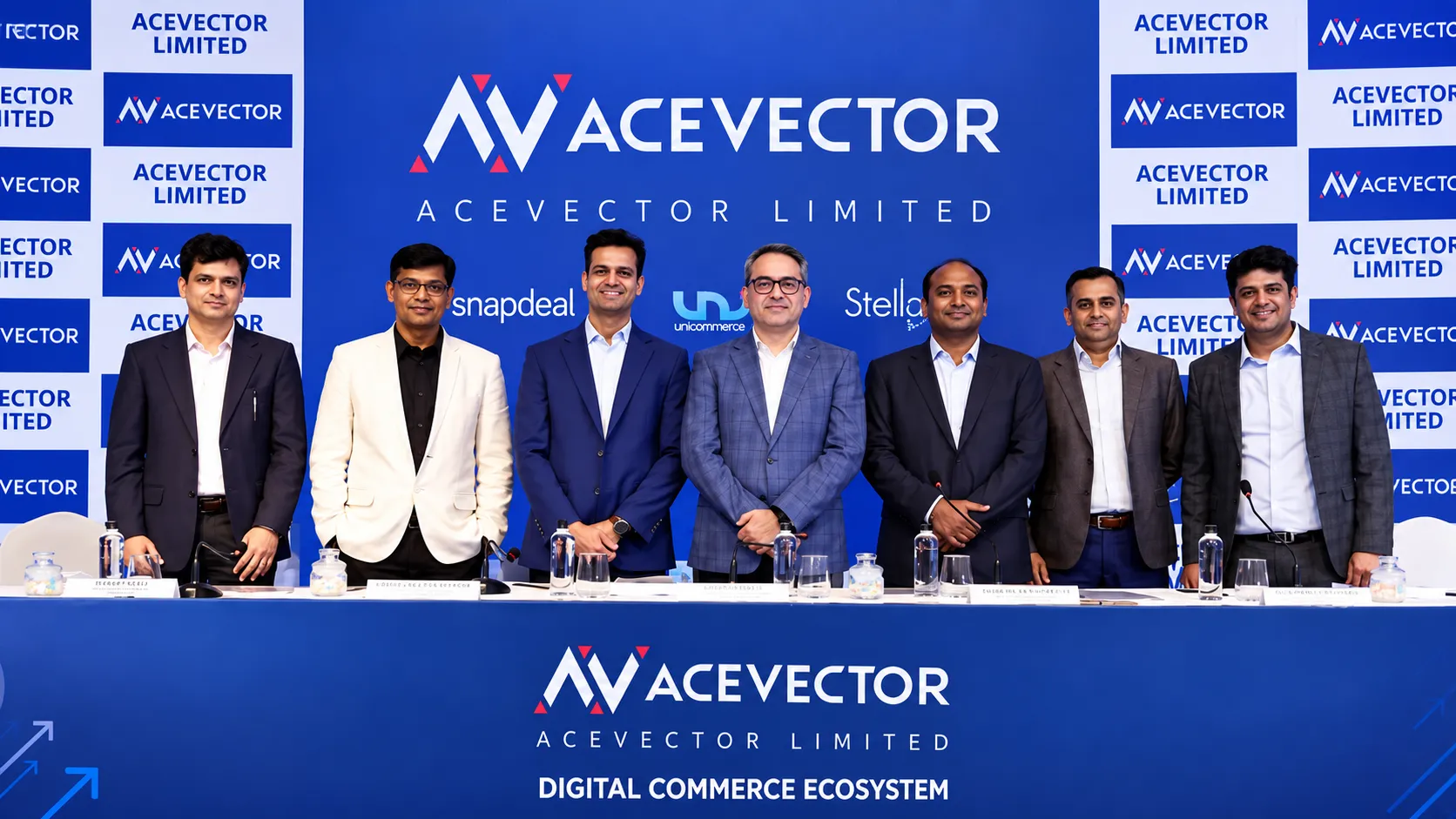
More than a decade after it was one of India's most highly valued internet companies, Snapdeal is heading to the stock market.
AceVector Limited, the Gurugram-headquartered parent of the Snapdeal marketplace, opened its initial public offering for subscription on Friday, September 25. The issue, priced at ₹30 to ₹32 per share, closes on Tuesday, September 29. Anchor investors were able to bid a day earlier, on September 24.
At the upper end of the band, the IPO is worth about ₹420 crore. It comprises a fresh issue of shares worth ₹287 crore and an offer for sale of up to 4.16 crore shares, worth about ₹133 crore, by existing shareholders. AceVector would have a post-issue market capitalisation of about ₹1,741 crore at the top of the price band.
Investors can bid for a minimum of 468 shares, which means a retail investor needs ₹14,976 to apply at the upper price. The shares are proposed to be listed on both BSE and the National Stock Exchange, with NSE as the designated exchange. Seventy-five per cent of the offer is reserved for qualified institutional buyers, 15% for non-institutional investors and 10% for retail investors.
One company, three businesses
AceVector is not simply Snapdeal. The company brings together three distinct businesses under one holding structure, created in 2022.
The first is Snapdeal, a marketplace focused on value-conscious shoppers, many of them outside India's largest cities. The second is Unicommerce eSolutions, a software-as-a-service company that helps online sellers and brands manage orders, inventory and warehouses. Unicommerce listed on the stock exchanges in 2024 and remains a subsidiary of AceVector. The third is Stellaro Brands, which builds and operates consumer brands.
The IPO documents show how important the software business has become. In FY26, Snapdeal's marketplace contributed ₹293.7 crore, or about 57.5% of AceVector's operating revenue. The SaaS business contributed ₹204.3 crore, or roughly 40%, while Stellaro accounted for ₹12.8 crore.
The difference in profitability is even starker. According to figures reported by Inc42, the SaaS business earned an adjusted EBITDA profit of ₹41.3 crore in FY26, up from ₹25.3 crore a year earlier, and grew its client base by 17.9% to 8,261. The marketplace, by contrast, reported an adjusted EBITDA loss of ₹50.2 crore.
A sharply narrower loss
AceVector's overall numbers show a company that has cut its losses significantly while returning to growth.
Operating revenue rose 29.2% to ₹510.3 crore in FY26, from ₹395 crore a year earlier. Net loss fell 64% to ₹45.5 crore from ₹126.3 crore, and the adjusted EBITDA loss narrowed by 59.3% to ₹15.9 crore.
Snapdeal's marketplace recorded net merchandise value of ₹1,093.1 crore in the year, delivered 2.6 crore units and served about 1.2 crore annual transacting users.
Costs, however, remain a watch point. Total expenses rose 26.8% to ₹575.2 crore. Logistics costs climbed 56.8% to ₹240.4 crore, employee benefit expenses increased 13.2% to ₹168.9 crore and marketing spending rose 26.2% to ₹91.3 crore.
Where the money will go
Of the net proceeds from the fresh issue, AceVector plans to use ₹132 crore for marketing and business promotion of its marketplace, and ₹50 crore for technology infrastructure for the marketplace. The remainder will go towards inorganic growth through acquisitions and general corporate purposes. The company had already raised ₹13 crore in a pre-IPO placement, which is being adjusted against the fresh issue.