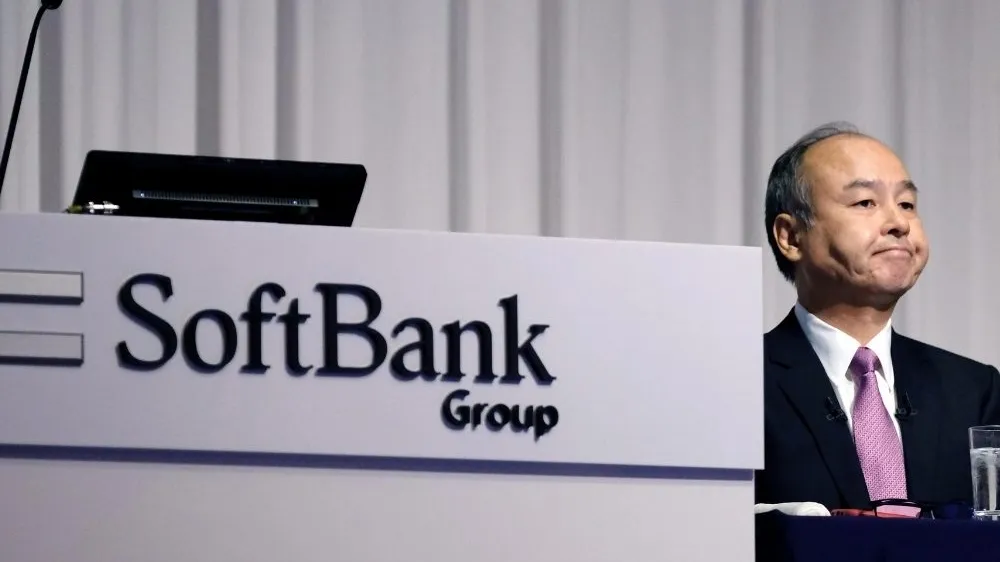
SoftBank Group Corp. is preparing to issue approximately ¥1 trillion ($6.26 billion) in corporate bonds targeted at individual investors in Japan, according to people familiar with the matter cited by Nikkei — a deal that would mark the largest retail bond offering ever by a Japanese company and the latest step in Masayoshi Son's increasingly debt-funded push into artificial intelligence.
The planned bonds carry a seven-year maturity, with yields expected in the high 4 percent range and final terms due to be set in early September. SoftBank has said proceeds will go toward paying down existing bonds and funding new investments, including acquisitions related to “physical AI” — robotics and embodied-AI hardware, an area the company has signalled as a strategic priority alongside its continued expansion in AI software and infrastructure. It would be SoftBank's third retail bond sale of the year, following offerings in April and June, and would push its cumulative 2026 retail bond issuance to roughly ¥2.8 trillion.
The previous record for a Japanese retail bond offering — ¥600 billion — was itself set by SoftBank in 2025, meaning the company would be nearly doubling its own prior benchmark. SoftBank is tapping Japan's famously deep pool of household savings at a moment when its overall bond issuance to retail investors is closing in on ¥10 trillion (roughly $64 billion) cumulatively, according to earlier reporting, cementing the group's position as the dominant issuer in Japan's consumer bond market even as institutional investors globally grow more cautious about AI-linked credit.

The bond sale is only one layer of a rapidly stacking financing structure. Earlier in August, SoftBank secured a $10 billion loan against its own stake in OpenAI — pledging one of its most valuable AI assets as collateral while simultaneously courting individual savers for fresh capital, a combination that has prompted some analysts to question whether the group's appetite for capital is beginning to outstrip what its own balance sheet can comfortably support. SoftBank carries a speculative-grade BB+ rating from S&P, making a retail bond issuance of this scale unusual for a company of its credit profile.
Markets reacted sharply to the reports: SoftBank shares swung as much as 10 percent intraday before closing down 4.6 percent on the day the news broke, a far steeper decline than the broader Nikkei 225's roughly 3 percent fall in the same session, with chip-adjacent names such as Kioxia also suffering double-digit losses. SoftBank's first-quarter net income for fiscal 2026, reported August 6, fell 18 percent year-on-year to ¥347.33 billion, cushioned in part by a ¥1.3 trillion valuation gain on its Intel stake — a reminder of how much of the group's reported profitability now depends on paper gains in its AI-adjacent equity holdings rather than operating cash flow.
For Son, the bond sale continues a decades-long pattern of using aggressive leverage to fund transformative, high-conviction bets — from the original Vision Fund to SoftBank's escalating commitments to OpenAI and the broader Stargate AI infrastructure initiative. The open question, as SoftBank's cumulative retail and institutional debt load climbs alongside its AI holdings, is whether Japanese retail investors will keep supplying the capital at the scale and pace Son's ambitions require, or whether this latest record-breaking issuance marks the point at which the market begins to price the accumulating risk more cautiously.