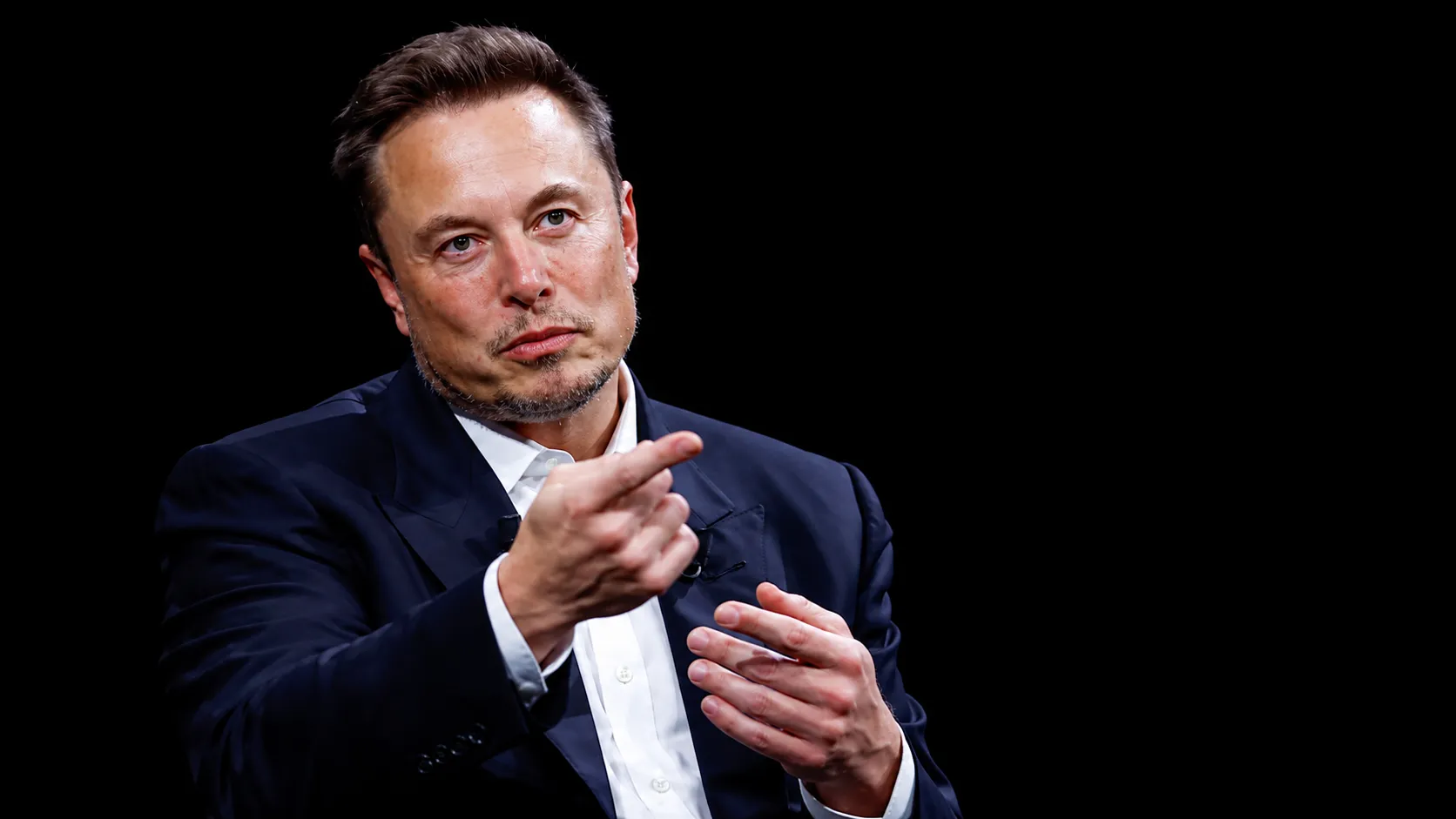
SpaceX has raised one of the largest debt packages ever assembled for artificial intelligence hardware, and Elon Musk used the moment to deliver a stark warning to the wave of smaller companies racing to build AI computing capacity.
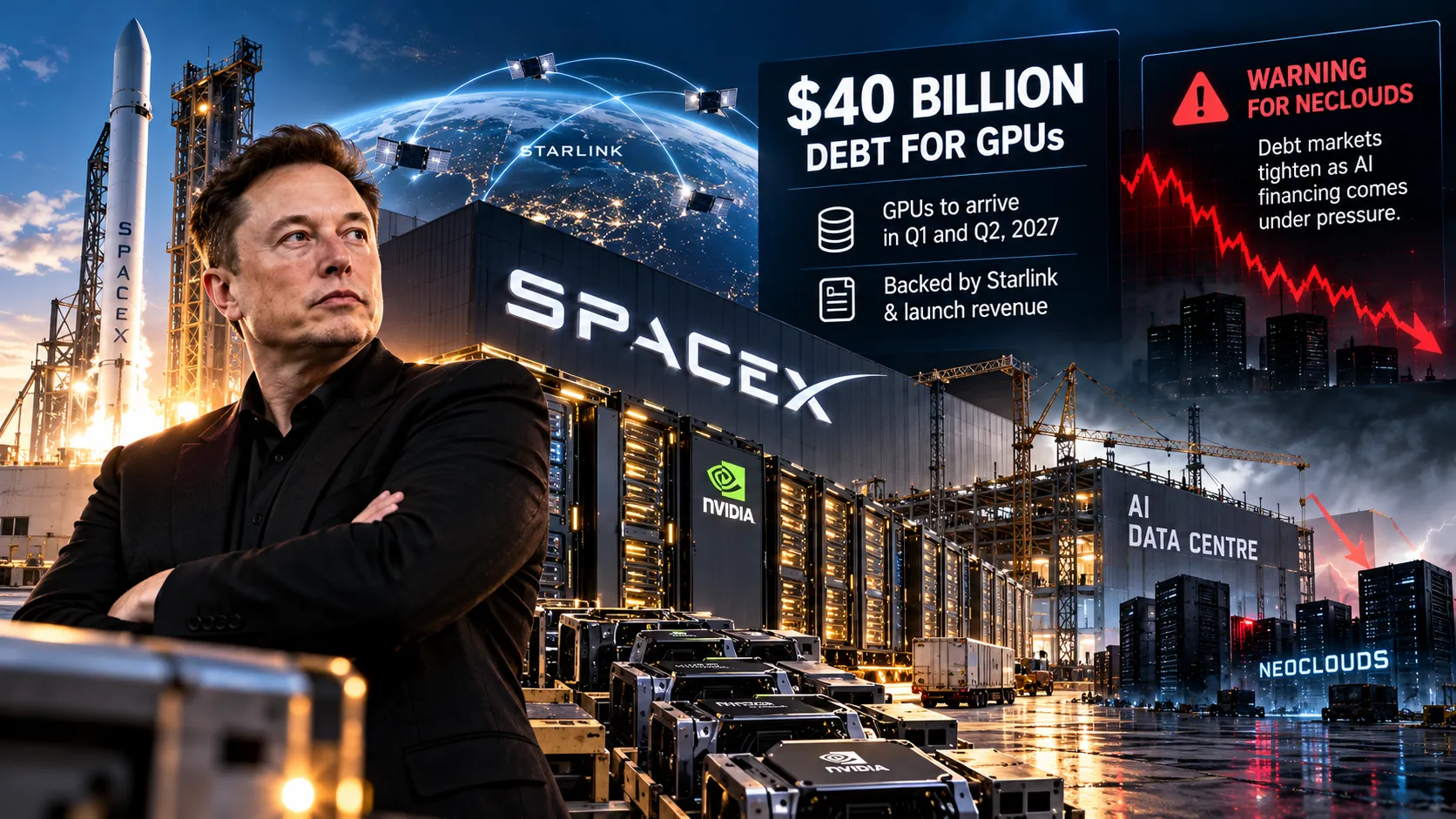
Musk said on Sunday, October 25, in a post on X, that SpaceX had closed $40 billion of debt to buy graphics processing units (GPUs). He described it as "primarily callable debt for GPU purchases that will arrive in Q1 and Q2," referring to the first half of 2027.
"SpaceX closed $40B of debt for GPUs, but we're investment grade and have Starlink & launch revenue," Musk wrote, emphasising that the company's satellite internet and rocket launch businesses give it access to capital that many AI-focused firms lack.
A warning for neoclouds
Musk said debt markets had "almost entirely shut off access to money for any company that doesn't have substantial revenue" independent of AI data centres. He predicted "guppy-level death and consolidation" among the more than 200 so-called neoclouds, specialised cloud providers that rent out GPU computing capacity to AI developers.
"Some will make it through, but not many," he said. Musk also ruled out SpaceX acquiring any of them, writing that SpaceX "is not buying any neoclouds. Pointless."
Neoclouds such as CoreWeave and Nebius have grown rapidly by buying large quantities of Nvidia GPUs, often financed with debt secured against the chips, and renting the capacity to AI companies. Their business models depend on continued access to financing and sustained demand for AI computing.
How the deal was structured
Bloomberg reported that bankers led by Goldman Sachs discussed an off-balance-sheet structure for Nvidia chip purchases with investors led by Apollo Global Management, with Atlas SP slated to manage the entity and PIMCO having considered investing. Such structures allow companies to finance large hardware purchases without adding the full debt to their own balance sheets.
Callable debt gives the borrower the right to repay early, offering flexibility if financing conditions improve or the company's needs change.
SpaceX's AI ambitions
SpaceX's growing role in AI reflects Musk's integration of his businesses. The company reported revenue of $14.58 billion for the quarter ended September 30, up 161% from a year earlier, with AI revenue rising nearly tenfold to $7.56 billion, according to Analytics India Magazine. Chief financial officer Bret Johnsen expects capital expenditure of $35-40 billion in the fourth quarter.
SpaceX also plans to manufacture its own GPUs, and is working with Tesla on Terafab, a chip manufacturing joint venture in Austin, Texas. The first test chip is expected around mid-2027, with volume production targeted for the third quarter of 2028.
Musk said that "the constraint on deployment of superintelligence is more in power and cooling and infrastructure than it is in chips."
The compute arms race
Wedbush analyst Dan Ives described the competition for AI computing capacity in dramatic terms. "This will be a Game of Thrones battle in the tech world to secure compute power," he said. He estimated that 800 to 1,000 new data centres would be built in the United States over the next few years.
SpaceX shares, which trade under the ticker SPCX, rose nearly 1% in late Sunday trading after closing Friday at $147.49. Up to 328.4 million additional shares became eligible for trading on Monday after a lockup period expired.
Signs of strain in AI financing
Musk's warning adds to growing concerns about the financing of the AI boom. Apollo's chief economist, Torsten Slok, argued in a note reported on October 25 that AI has delivered "zero financial payoff" to companies outside the technology sector. South Korean chip stocks have fallen sharply amid doubts about the returns on AI spending, and Goldman Sachs cited rising financing costs among the reasons for cutting its Kospi target.
If lenders become more cautious about financing GPU purchases, smaller players may struggle to raise money, while large companies with diversified revenue, such as SpaceX, Microsoft, Alphabet and Amazon, could consolidate their advantages.
What it means for India
India's data centre and AI infrastructure industry is growing rapidly, with global and domestic companies investing billions of dollars. Indian firms building GPU cloud capacity under the government's IndiaAI Mission and for enterprise customers could face similar financing questions if global credit conditions for AI infrastructure tighten.
Musk's point that power and cooling are bigger constraints than chips is also relevant for India, where reliable electricity supply and water availability are critical considerations for data centre development.
The risk of an AI bust
Musk's prediction of a neocloud shake-out echoes past technology cycles, in which waves of investment produced overcapacity followed by consolidation. The telecom boom of the late 1990s, when companies borrowed heavily to build fibre networks, ended in widespread bankruptcies, although the infrastructure built eventually supported the internet's growth.
Whether the AI infrastructure boom follows a similar pattern will depend on how quickly demand for AI services grows relative to the capacity being built.
Who the neoclouds are
Neoclouds emerged as a distinct category during the AI boom, offering GPU capacity to AI developers that could not get enough from the established cloud giants. Companies such as CoreWeave grew rapidly by securing large allocations of Nvidia chips and signing long-term contracts with AI labs and technology companies. Their financing often relied on loans backed by the GPUs themselves and by customer contracts.
Critics have warned that this model carries risks. GPUs lose value as newer generations are released, contracts may be concentrated among a few customers, and high debt levels leave companies vulnerable if demand or financing conditions change.
What comes next
SpaceX will take delivery of the GPUs in the first half of 2027. Investors will watch whether other neoclouds can secure financing and whether consolidation accelerates.
The coming weeks will also bring earnings from Microsoft, Alphabet and Amazon, the biggest spenders on AI infrastructure, which will offer further clues about the sustainability of AI investment and the strength of demand for computing power. The scale of the financing also reflects how capital-intensive the AI race has become. Each new generation of Nvidia chips costs more, and large AI clusters require hundreds of thousands of processors, along with power plants, cooling systems and networking equipment. Only companies with deep pockets or access to cheap capital can compete at the frontier.