The two biggest technology listings of 2026 did not follow Wall Street's usual script. SpaceX and Anthropic both ran their initial public offerings with an unusual degree of control over their banks, frustrating some bankers while securing favourable terms, according to a Reuters report published on November 22.
The report, based on interviews with people involved in the deals, offers a rare look at how the most sought-after companies in the world can rewrite the rules of capital markets.
SpaceX: Musk dictated terms
SpaceX listed in June 2026 in one of the largest IPOs in history. According to Reuters, people close to the process said Elon Musk's team dictated terms at every stage.
Musk's team told the largest and most powerful US banks, including Goldman Sachs and Morgan Stanley, how to market SpaceX's stock and to whom. It told some banks the specific order sizes they needed to "fill," in some cases amounting to a few billion dollars, and gave them instructions on what types of investors to bring.
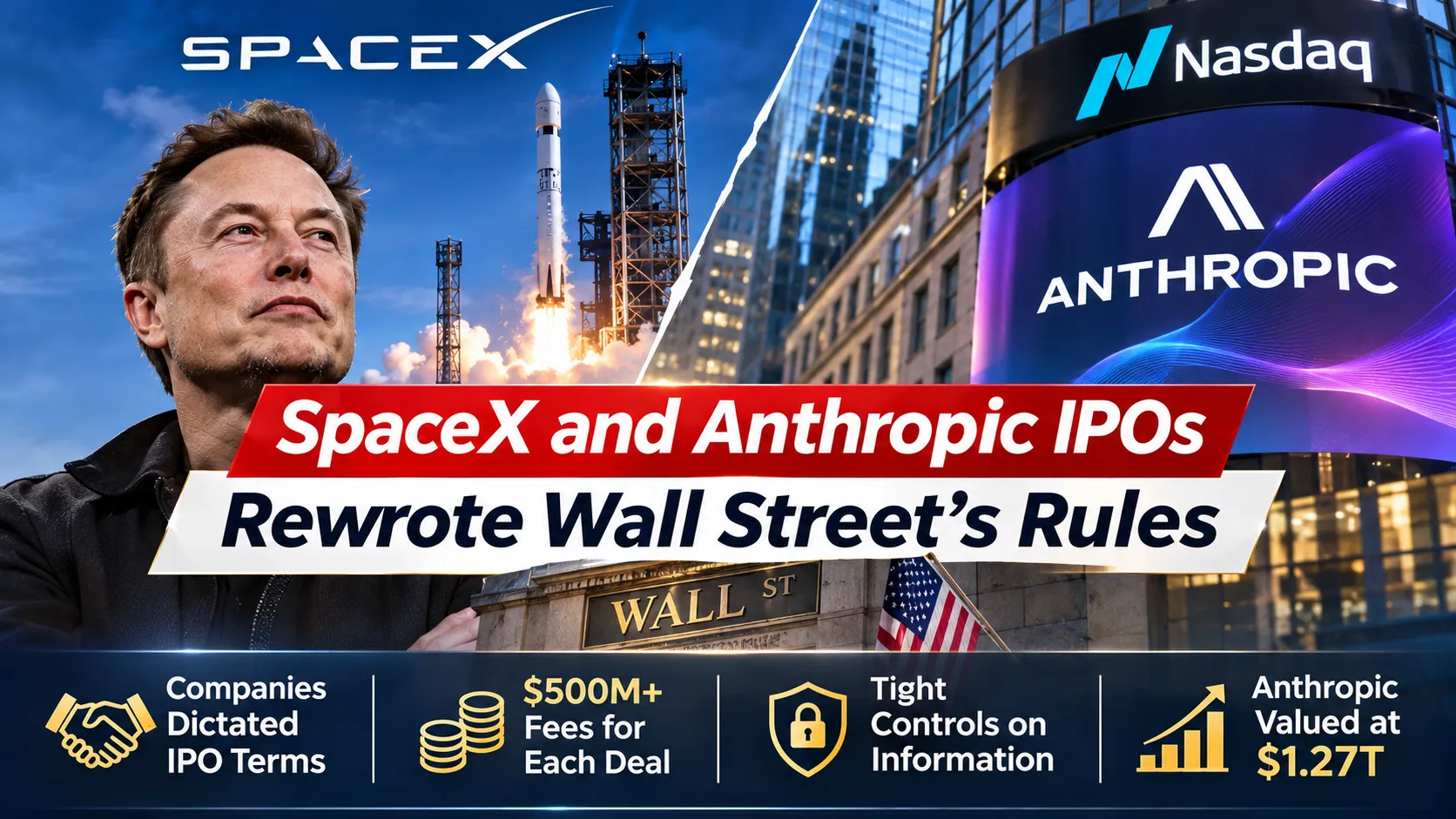
Banks also agreed to underwrite the offering without being told how much they would be paid. In total, banks earned about half a billion dollars in fees from the deal.
SpaceX shares were priced at $135 in the IPO, peaked at $201.80 on June 16, and fell below the IPO price in mid-July for the first time.
Anthropic: "Project Lantern"
Anthropic, the AI company behind the Claude models, listed on Nasdaq on November 19, 2026, in a deal known internally as "Project Lantern." Goldman Sachs and Morgan Stanley were the lead underwriters among 22 banks on the deal. Bankers took home more than half a billion dollars in fees.
The underlying current running through the process, according to several of the people who spoke to Reuters, was a sense of extreme caution.
Anthropic limited the number of bankers working on the deal to four senior staff per firm, although banks reportedly found ways around the limit. Senior bank officers were asked to sign agreements barring core deal team members from working with rivals, including OpenAI, Cursor, DeepSeek and Hugging Face, for six months after the listing. Bankers described this exclusivity as unusually broad.
Documents were shared through a platform called NetRoadshow rather than as PDF files. The platform logged access, watermarked documents with bankers' names and blocked saving copies.
Despite those precautions, Reuters reported details from the draft registration statement nearly four weeks before it was publicly filed.
The process also had moments of strain. An updated registration document was planned for November 10, but a flawed PDF went out the night before. A corrected version arrived around 2 a.m. New York time, giving banks only several hours to sign off.
How the shares have performed
Anthropic's shares rose 17% on their first day of trading, closing at a valuation of about $1.27 trillion. However, the stock then closed down 8.5% on Friday, November 20, amid a broader selloff in AI-related stocks.
The early trading reflects the volatile environment in which both companies listed. AI stocks have swung sharply in recent weeks, as concerns about valuations and the financing of AI infrastructure have weighed on sentiment.
Zero greenshoe fees
One of the most striking details in the report concerned fees on greenshoe shares. In a typical IPO, underwriters have an option to sell additional shares, known as the greenshoe or over-allotment option, and earn fees on those shares.
According to Jay Ritter, a leading IPO expert, both SpaceX and Anthropic negotiated zero fees on greenshoe shares. Ritter said he doubts most companies could secure such terms.
Why companies can dictate terms
The ability of SpaceX and Anthropic to impose such terms reflects their enormous bargaining power. Both were among the most anticipated listings in years, and banks competed intensely for roles. Being part of these deals brings prestige, fees and relationships that can lead to future business.
When a company is in such high demand, it can negotiate lower fees, demand more control and limit what banks can do. Smaller or less popular companies typically have far less leverage.
The trend could influence other large companies considering IPOs. If the most valuable companies can secure better terms, others may push for similar concessions.
Information security in the AI era
Anthropic's emphasis on confidentiality reflects both the competitive nature of the AI industry and the sensitivity of its business information. The restrictions on bankers working with rival AI companies were particularly unusual and suggest how closely AI companies guard their strategies and data.
The leak of draft documents despite those precautions shows the difficulty of keeping information confidential in a process involving many banks, lawyers and advisers.
What it means for India
India has experienced its own wave of technology IPOs, with companies such as Lenskart, PhysicsWallah, Groww and others listing in recent years. Indian companies generally have less bargaining power than SpaceX or Anthropic, but the most sought-after issuers have also negotiated competitive fees and terms.
Large Indian companies considering listings, including potential overseas listings, will be watching how global capital markets evolve. The trend towards issuer power could benefit high-quality Indian companies with strong demand.
For The Impactful Global Indian's readers, the Reuters account offers a glimpse into the mechanics behind headline IPOs. It shows how the balance of power between companies and banks can shift dramatically when a company becomes one of the most coveted assets in global markets.
The fee question
Investment banking fees for IPOs in the United States have historically been higher than in many other markets. For large deals, fees are typically a smaller percentage, but the absolute sums remain substantial. The fact that SpaceX and Anthropic still paid more than half a billion dollars each in fees, even while negotiating favourable terms, shows how lucrative mega-IPOs remain for banks. That helps explain why banks were willing to accept unusual conditions, from instructions on order sizes to restrictions on working with rivals, in order to participate. For other issuers, the lesson is that bargaining power, not convention, ultimately determines the terms of a listing, and the most sought-after companies can rewrite the playbook.


