TechFuture Tech5 MIN READ

SpaceX Posts Its First Profit as a Public Company on AI Data Centre Boom as Musk Calls a Tesla Merger 'a Good Idea'

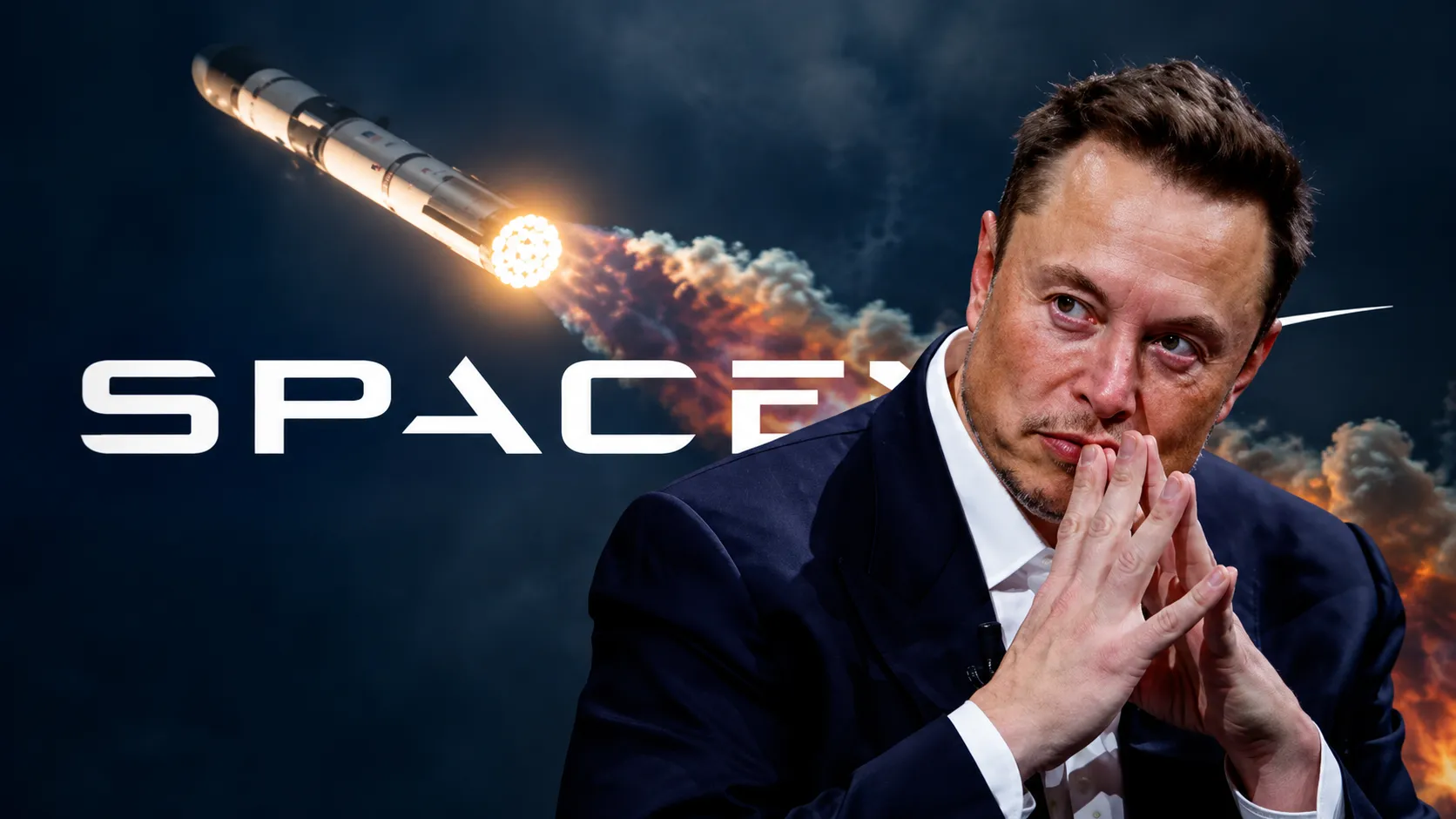
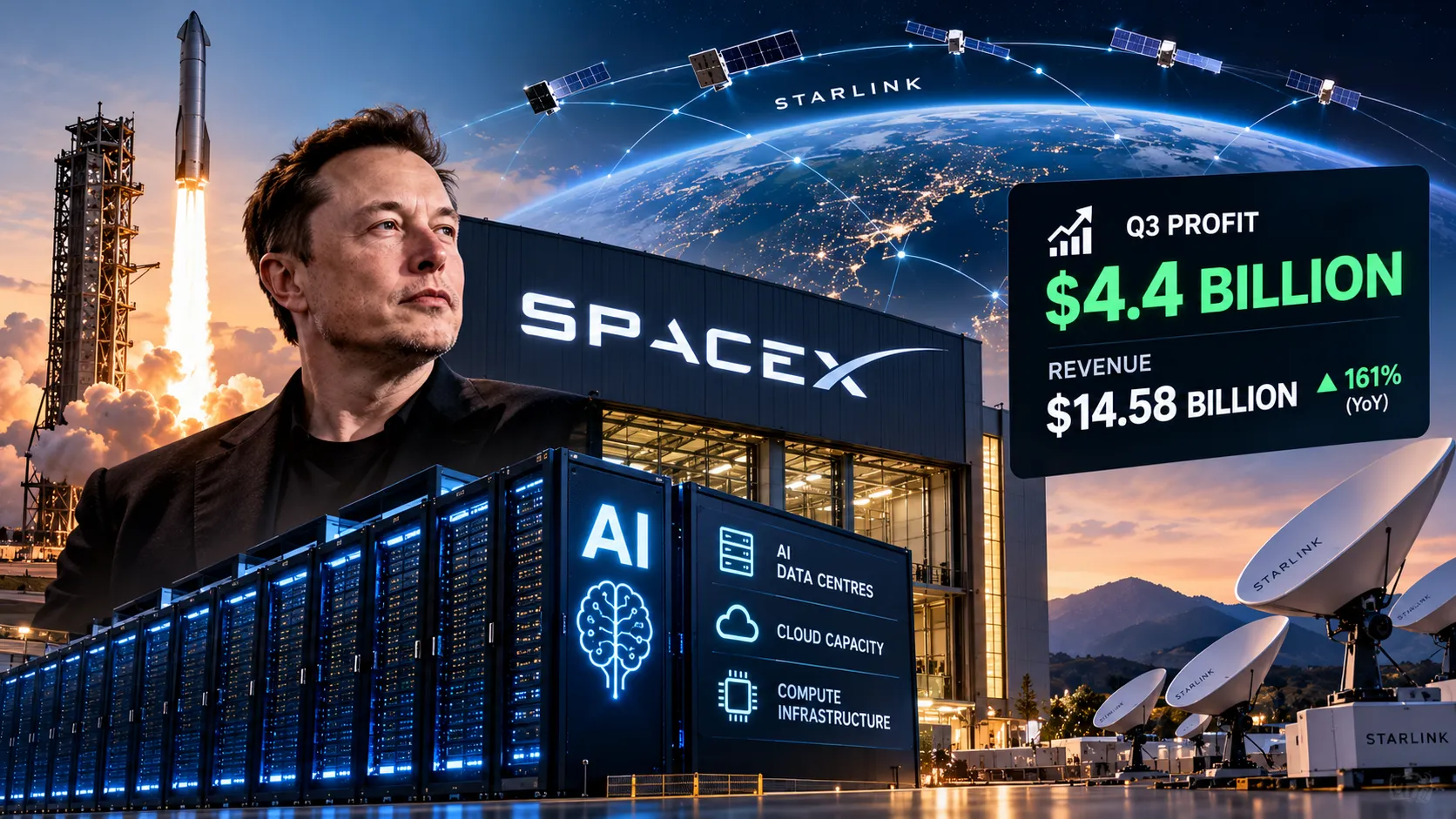
SpaceX reported third-quarter net income of $4.4 billion on revenue of $14.58 billion, up 161%, its first profit as a listed company, driven by a nearly tenfold jump in AI revenue from renting data centre capacity to customers including Anthropic and Google. Elon Musk said a merger with Tesla "would be a good idea," confirming formal talks.

By Aravind Kumar · Author21 October 2026New
SpaceX Posts Its First Profit as a Public Company on AI Data Centre Boom as Musk Calls a Tesla Merger 'a Good Idea'

SpaceX has delivered its first profit as a publicly traded company, powered not by rockets but by the artificial intelligence boom. The space and satellite company reported net income of $4.4 billion for the third quarter ended September 30, compared with a net loss of $1.1 billion a year earlier, Reuters reported on October 20.

Revenue jumped 161% year on year to $14.58 billion, well ahead of a FactSet consensus estimate of $12.9 billion. Adjusted earnings came to 45 cents per share, compared with an average analyst estimate of 13 cents. Analysts had expected net income of about $1.57 billion.

The results were accompanied by a striking statement from Elon Musk, SpaceX's chief executive, who said a merger between SpaceX and Tesla "would be a good idea," confirming for the first time that the two companies are in formal talks.

AI drives the turnaround

The biggest driver of SpaceX's growth was its AI business, which generated revenue of $7.56 billion, up nearly tenfold from a year earlier. Most of that came from renting data centre capacity to customers including Anthropic, Google and Reflection AI, according to Reuters. AI revenue now accounts for more than half of SpaceX's total.

The AI business is still loss-making at the operating level, however, and requires enormous investment. SpaceX's capital expenditure in the third quarter reached $19.6 billion, of which $16.4 billion was spent on AI. Total capex nearly tripled from a year earlier, and the company guided for fourth-quarter capex of $35 billion to $40 billion.

Chief financial officer Bret Johnsen reiterated a target of about $100 billion in annual recurring revenue by the end of 2026. Musk went further, saying run-rate revenue could reach up to $1 trillion and projecting $500 billion to $1 trillion in annual recurring revenue by the end of 2027, ambitious figures that will be scrutinised by investors.
2aee8625-7cb5-4f03-821b-a3a9a3a8d5ef.png

Starlink keeps growing

SpaceX's Starlink satellite internet service continued to expand, reaching 13.6 million subscribers in the third quarter, ahead of expectations of 12.19 million. However, average monthly revenue per subscriber fell to $69 from $99 in 2023, as Starlink expands into lower-priced markets and offers cheaper plans.

That pricing trend reflects Starlink's push into emerging markets, where affordability is critical. India is one of the markets Starlink hopes to enter, although its commercial launch remains pending security clearances and spectrum assignment. The Indian government is also considering a hardware security layer for satellite internet providers, according to reports this week.

The Tesla merger question

Musk's comments on a potential merger with Tesla were among the most closely watched remarks on the earnings call. He said a combination "would be a good idea" but stressed that the decision rests with special committees formed by each company's board. He described himself as a "conflicted party" who cannot take part in committee discussions, given his leadership of and large stakes in both companies.

Any merger would require shareholder approval. Barclays suggested that a deal could be announced before Tesla's annual meeting in December, according to Reuters. Tesla shareholders are due to vote on Musk's re-election and a pay package worth up to $158 billion at the meeting on December 3.


“SpaceX has turned from a rocket company with a satellite business into an AI infrastructure company that also launches rockets.”
— TIGI Tech Desk

A combination of SpaceX and Tesla would create one of the world's largest companies, spanning electric vehicles, energy storage, rockets, satellites, AI infrastructure and robotics. Supporters argue the businesses share technology, talent and a vision of AI-driven automation. Critics are likely to raise concerns about governance, conflicts of interest and the concentration of power in Musk's hands.

Market reaction

SpaceX shares closed at $147.79, down 0.11% in regular trading, before rising about 4.9% in extended trading after the results, according to Reuters. Tesla shares rose 1.54% to $373.71. The stock has been volatile since its initial public offering, amid investor concerns about the costs of AI infrastructure.

The results come at a delicate moment for AI-related stocks. Investors have grown anxious about whether the vast sums being spent on data centres will generate sufficient returns. A South Korean AI cloud company, Elice, plunged 33% on its market debut on the same day, and several AI infrastructure listings have been delayed or shelved. SpaceX's ability to generate profit from AI capacity may reassure some investors, although its rising capex will keep scrutiny high.

Starship setback

Not all the news was positive. Starship's first orbital test flight ended hours early after an engine issue, although several Starlink satellites were deployed, according to Reuters. Starship is central to SpaceX's plans to deploy larger satellites, reduce launch costs and eventually travel to the Moon and Mars.

The AI infrastructure business

SpaceX's growing AI revenue reflects a broader trend in which companies with access to capital, energy and engineering expertise are seeking to profit from demand for computing power. Building and operating AI data centres requires vast investment in chips, power and cooling, and customers are willing to pay premium prices for capacity amid shortages.

That opportunity has attracted a wide range of players, from traditional cloud providers to newer specialist companies and energy businesses. The risk is that if demand for AI computing slows or supply catches up, prices could fall and returns on the massive investments being made could disappoint. Investors have become more focused on whether AI infrastructure businesses have long-term customer contracts that secure their revenue.

Governance questions

The prospect of combining SpaceX and Tesla raises questions about corporate governance. Both companies are led by Musk, and shareholders would need to be satisfied that any merger terms are fair to both sides. Independent directors and regulators would scrutinise any deal closely.

What it means

SpaceX's transformation into an AI infrastructure provider is one of the most remarkable corporate pivots of the AI era. Its combination of launch capability, satellite networks and data centre capacity gives it a unique position, and its first public profit shows the business can generate earnings at scale.

The coming months will test whether that profitability can be sustained as investment soars, and whether a merger with Tesla moves from Musk's endorsement to a formal proposal. Either way, SpaceX has made clear that its future will be shaped as much by AI as by rockets.

TagsSpaceXElon MuskTeslaTesla SpaceX mergerStarlinkAI data centresAnthropicGoogleearningsQ3 2026capital expenditureStarshipsatellite internetspace economyAI infrastructureBarclaysshareholdersIndia Starlinktechnology stockscorporate governance

Reader reviews

Sign in to rate and review this article.
Loading reviews…
