TechFuture Tech5 MIN READ

SpaceX's Starship Reaches Orbit for the First Time and Deploys Its First Paying Payload, Despite an Engine Failure

On its 14th test flight, SpaceX's Starship reached Earth orbit for the first time and deployed 26 next-generation Starlink satellites, before the company cut the mission short after losing one of the ship's six engines.

By Aravind Kumar · Author29 September 2026New
SpaceX's Starship Reaches Orbit for the First Time and Deploys Its First Paying Payload, Despite an Engine Failure

SpaceX's Starship, the largest and most powerful rocket ever built, reached Earth orbit for the first time on Monday, 28 September 2026, ending a three-and-a-half-year wait for a milestone that underpins the company's plans for Moon landings, Mars missions and a new generation of satellite internet.

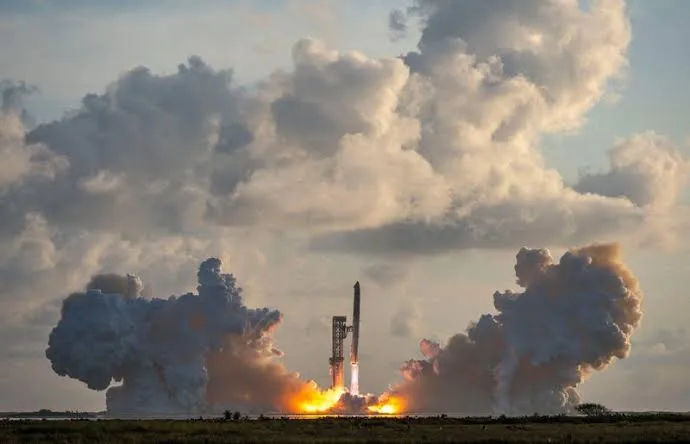
The uncrewed rocket lifted off from SpaceX's Starbase facility in South Texas on its 14th integrated test flight. "Starship performs its orbital insertion burn and enters orbit of Earth for the first time," SpaceX announced on X at 9:15 a.m. The journey from launch pad to a circular orbit roughly 170 miles (about 275 kilometres) above Earth took 25 minutes and 17 seconds, according to TIME.

The flight also marked another first. Starship deployed 26 of SpaceX's third-generation Starlink satellites, the first time those larger, more capable satellites have reached orbit and the first time a Starship mission has carried a revenue-generating payload.

Drama on the way up

The flight did not go entirely to plan. Shortly after the upper stage, known as Ship, separated from the Super Heavy booster, it lost one of its six Raptor engines. SpaceX initially called off the orbit attempt, then reversed that decision within minutes after determining that the vehicle could still reach orbit safely with the remaining engines.

That call proved correct, but the company took a cautious approach once in orbit. SpaceX had planned for Ship to circle Earth six times over about nine hours while deploying its satellites and testing systems. Instead, roughly an hour and a half into the flight, it decided to bring the spacecraft home early.

"Flight teams will deorbit Starship safely to our pre-cleared area of the Pacific Ocean after 3 hours in orbit," the company wrote on X. The mission ended about seven hours earlier than planned, with Ship returning to Earth in a water landing.

SpaceX nonetheless declared the flight a success because it achieved its two primary objectives: reaching orbit and adding satellites to its Starlink constellation.

The booster's clean return

The Super Heavy booster also performed well. After separating from Ship, it returned towards the Gulf coast and performed a simulated landing over water. TechCrunch described it as the cleanest simulated landing SpaceX has yet performed with the Version 3 design of the vehicle, which began testing in May 2026.

Booster recovery is central to SpaceX's economics. The company's Falcon 9 rocket transformed the launch market by landing and reusing its first stage, dramatically cutting costs. Starship is designed to take that further, with both stages eventually reusable, which SpaceX argues could lower the cost of reaching orbit by an order of magnitude or more.

Why orbit matters

Starship's previous 13 flights all followed deliberately suborbital trajectories. The vehicle reached space but did not complete a full orbit, which limited the length of tests and the kinds of missions it could perform. The first integrated launch took place on 20 April 2023.

Reaching orbit unlocks the next stages of the programme. It allows longer tests of the spacecraft in the space environment, including its heat shield, engines, power and communications. It enables regular commercial missions, starting with Starlink deployments. And it is a prerequisite for the in-orbit refuelling demonstrations that SpaceX must complete before Starship can carry astronauts to the Moon.

NASA has contracted a version of Starship to serve as the lunar lander for its Artemis programme, which aims to return astronauts to the Moon's surface. NASA Administrator Jared Isaacman welcomed the flight.
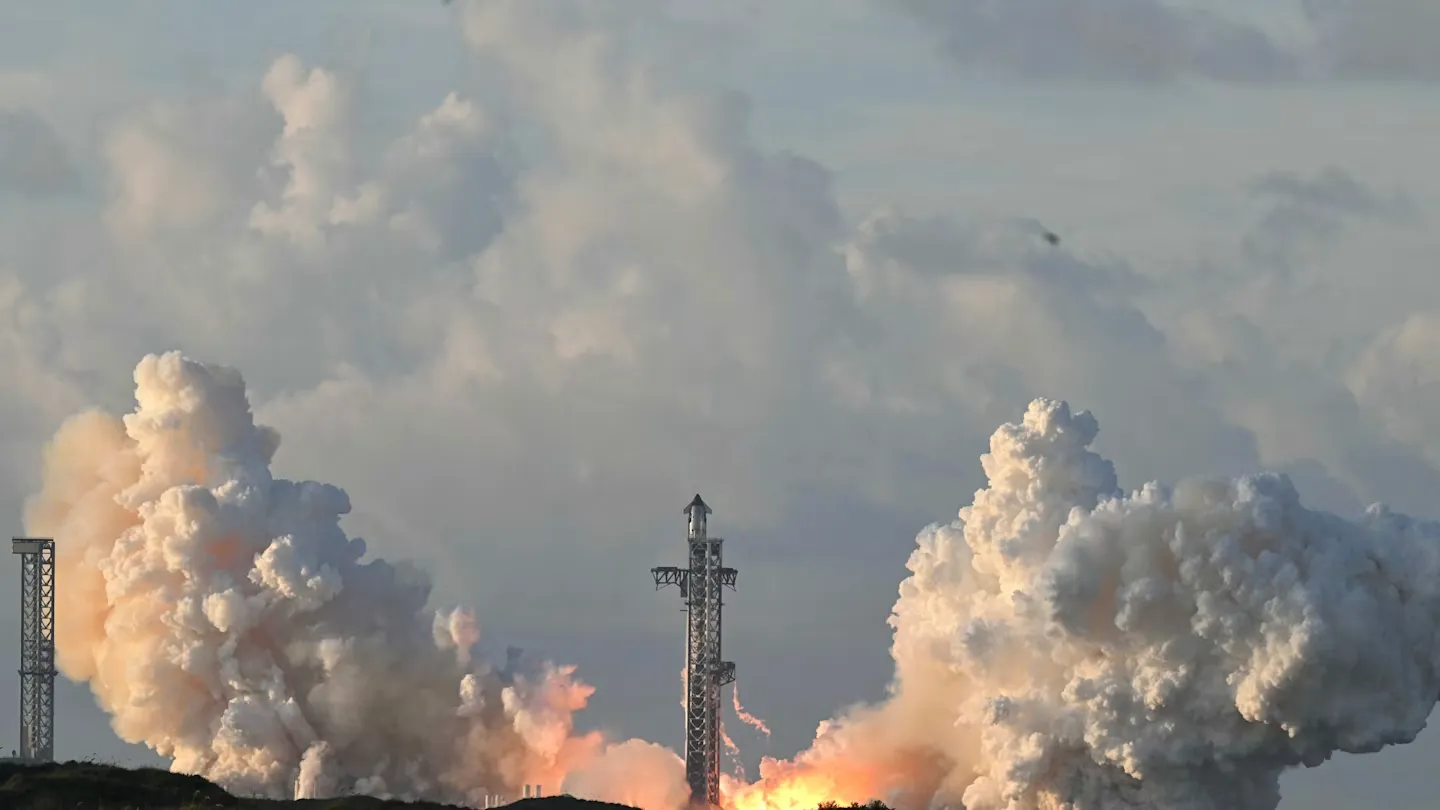

“Flight teams will deorbit Starship safely to our pre-cleared area of the Pacific Ocean after 3 hours in orbit.”
— SpaceX, in a post on X

"Gorgeous launch, getting Ship to orbit and managing every step in a safe, responsible, and especially inspirational way," Isaacman wrote on X. "NASA, along with the rest of the interested public, is excited to help where we can and for Starship missions to become routine!"

image.png

Starlink's next generation

The deployment of Starlink V3 satellites is commercially significant. Starlink is SpaceX's main source of revenue, providing satellite internet to consumers, businesses, airlines, ships and governments around the world. The older satellites in the constellation, more than 11,000 of which are already in orbit, are launched on Falcon 9 rockets.

The V3 satellites are too large to be launched efficiently on Falcon 9. They are designed to deliver far greater capacity per satellite, allowing Starlink to serve more users at higher speeds. Starship's ability to carry dozens of them at once is central to Starlink's growth plans and its competition with rivals such as Amazon's satellite internet network.

Markets and the public company

The flight was only the second Starship launch since SpaceX became a public company following its initial public offering in June, which was the largest IPO ever. The company's shares rose more than 1 per cent in early trading on Monday as the rocket reached orbit, but fell into negative territory after SpaceX decided to end the mission early, according to TechCrunch.

That reaction illustrates a new reality for SpaceX. As a private company, it could frame test-flight setbacks as part of an iterative development process. As a listed company, every flight now carries market consequences, and investors will be watching the pace at which Starship moves from testing to reliable commercial service.

The bigger ambitions

Elon Musk originally developed Starship to carry people and cargo to Mars. The company has also discussed more recent ideas, including launching large satellites that could host AI data centres in orbit, powered by continuous solar energy. Those concepts depend on Starship becoming fully reusable and flying frequently.

Several major steps remain. SpaceX must demonstrate that it can catch and reuse Ship, not just the booster. It must complete in-orbit propellant transfer between two Starships, a complex manoeuvre never before performed at this scale. And it must certify the vehicle for crewed flight, a process that will require a long record of successful missions.

What it means for the global space economy

For the wider space industry, including India's rapidly growing private space sector, Starship's progress matters. A fully reusable heavy-lift rocket could sharply reduce the cost of putting large payloads into orbit, reshaping the economics of satellite constellations, space stations and exploration missions.

Indian space start-ups and the Indian Space Research Organisation have been developing their own reusable launch technologies and small-satellite businesses. Starship's success raises the competitive bar, but it could also create opportunities for companies building satellites, components and services that make use of cheaper access to space.

What to watch

The next milestones will be longer orbital missions, further Starlink V3 deployments and the first attempts at in-orbit refuelling. SpaceX will also need to explain what caused the Raptor engine failure and how it will prevent a recurrence.

On Monday, however, the headline was clear. After years of explosions, partial successes and incremental progress, Starship has reached orbit, and the most ambitious rocket programme of the century has entered its next phase.

TagsSpaceXStarshipElon MuskStarlinkSpace TechnologyRocketsNASAJared IsaacmanReusable RocketsSatellitesSpace EconomyAerospaceArtemisStarbase

Reader reviews

Sign in to rate and review this article.
Loading reviews…

