FundingAnalysis5 MIN READ

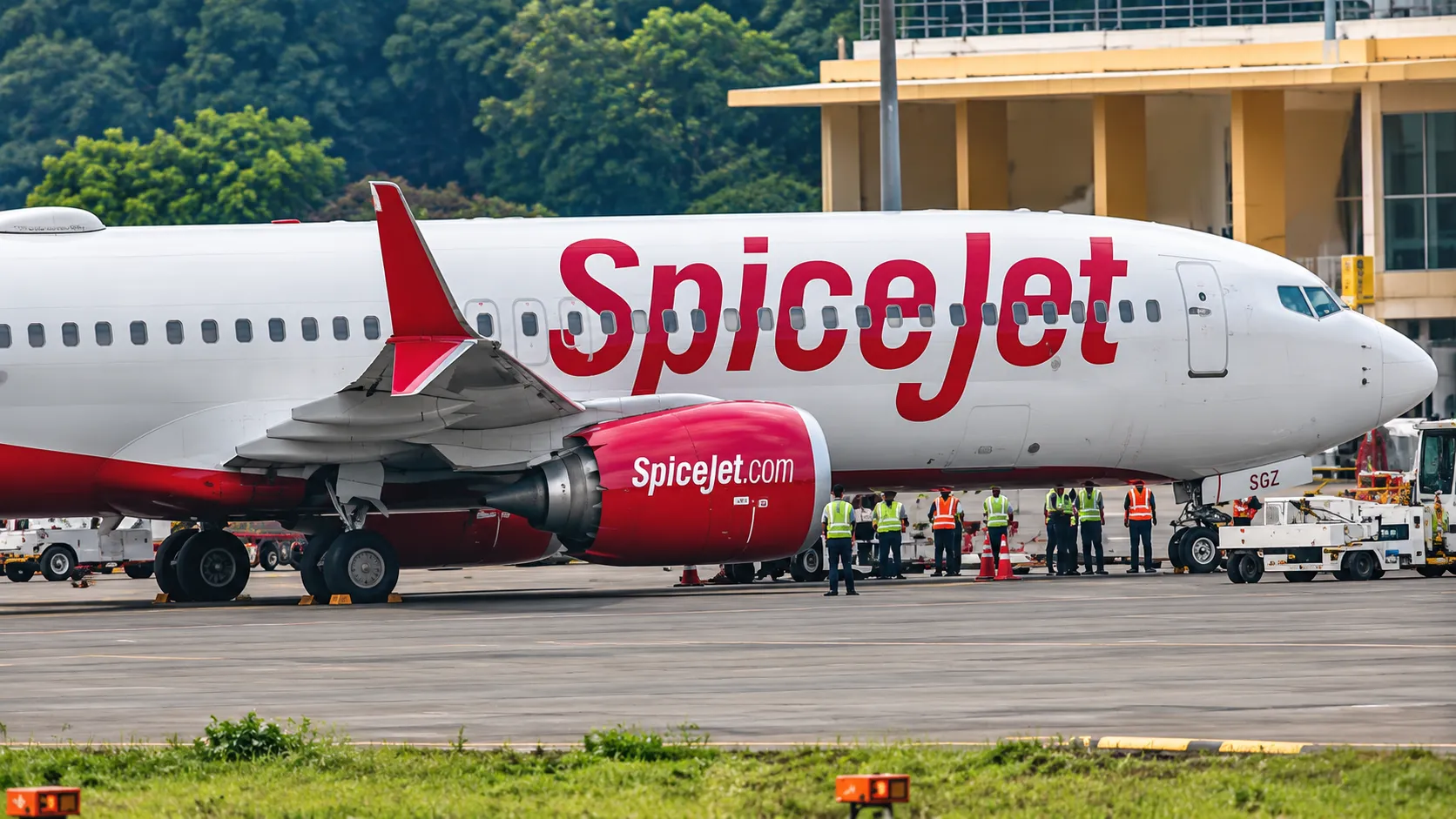
SpiceJet Board Approves ₹5,500 Crore Fundraise in a Last-Ditch Bid to Revive an Airline Whose Market Share Has Collapsed to 0.6%

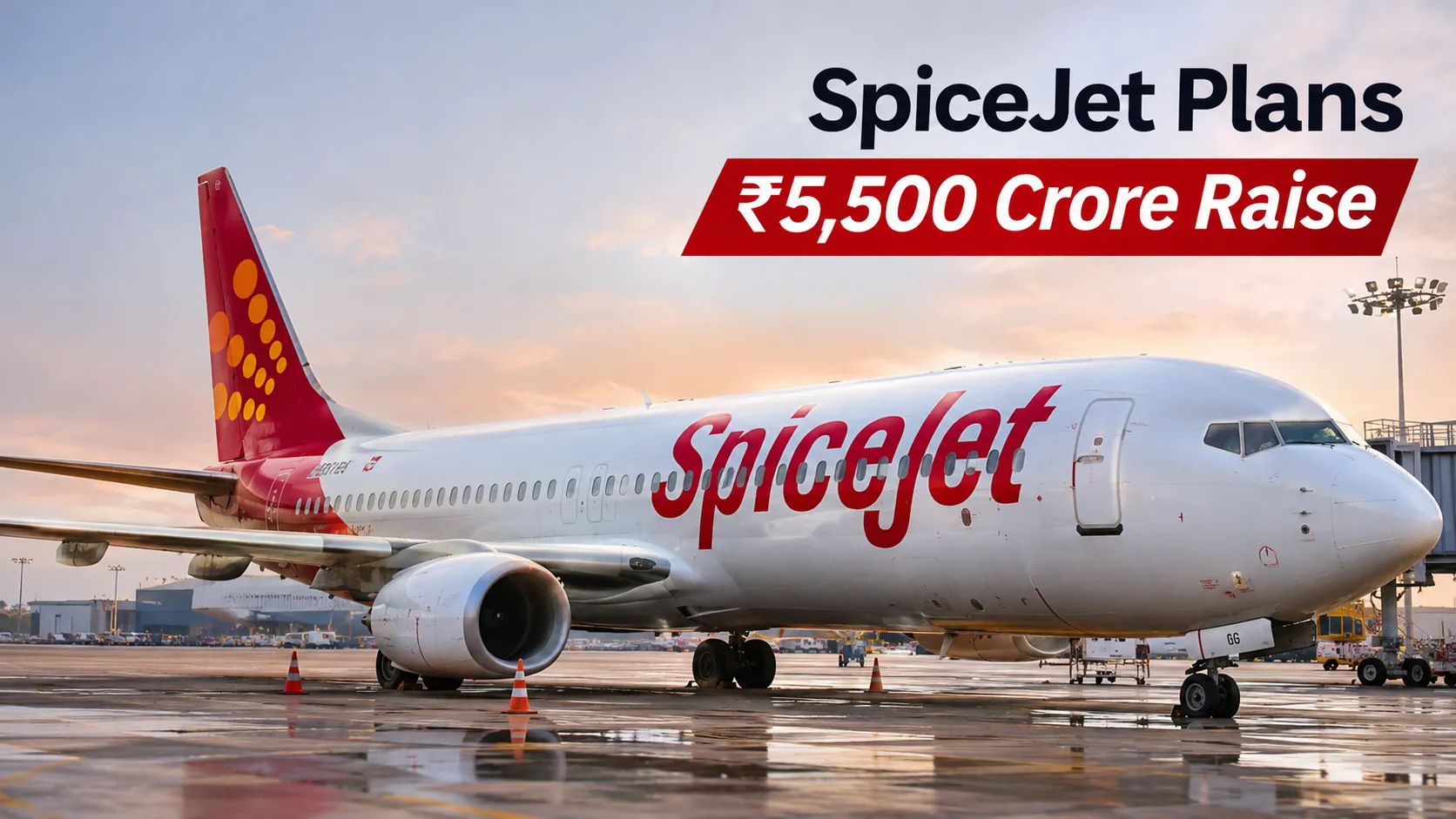
SpiceJet's board on November 18 approved raising up to ₹5,500 crore through qualified institutional placements, rights issues, preferential allotments and other instruments, and raised its authorised capital to ₹7,500 crore. The airline's domestic market share has fallen to 0.6% from nearly 15% in 2019, and its shares hit the 5% upper circuit.

By Shaym Kumar · Author19 November 2026New
SpiceJet Board Approves ₹5,500 Crore Fundraise in a Last-Ditch Bid to Revive an Airline Whose Market Share Has Collapsed to 0.6%

Once India's second-largest airline by domestic market share, SpiceJet is asking investors for one more chance.

The board of the Gurugram-based low-cost carrier on Wednesday, November 18, approved raising up to ₹5,500 crore in one or more tranches, according to IANS, as reported by IBTimes India. The money is intended to rebuild the airline's fleet capacity, restore its network and stabilise its finances after what the company described as its toughest year.

The board authorised a broad menu of options, including qualified institutional placements (QIPs), rights issues, preferential allotments and private placements. The securities could take the form of equity shares, preference shares, debt securities or convertible instruments, subject to shareholder and regulatory approvals. The board also raised the company's authorised share capital to ₹7,500 crore from ₹2,000 crore and directed management to speed up talks with prospective investors.

A dramatic decline

The scale of the challenge is stark. SpiceJet's share of the domestic aviation market has fallen to just 0.6%, from nearly 15% in 2019, according to the report. For the first time, it has dropped below the market share of regional carrier Star Air.

The airline has been squeezed by unpaid dues to lessors and suppliers, a shrinking fleet and rising costs. Aviation turbine fuel prices have reportedly more than doubled in recent months, linked to conflict in the Middle East, adding pressure on an airline already short of cash. Geopolitical disturbances and airspace restrictions have also disrupted flights.

On the day before the board meeting, operations at Mumbai airport were severely disrupted, stranding hundreds of SpiceJet passengers, according to the report.

The chairman's pitch

Chairman and managing director Ajay Singh said the fundraising offers a chance to "rebuild the airline, strengthen its operations and restore its brand," according to IANS. He said the priority is to "execute its revival plan with discipline."

Singh, a co-founder of SpiceJet who returned to take control of the airline in 2015 when it was on the brink of collapse, has repeatedly staged rescues. Under his leadership, SpiceJet recovered strongly in the years before the pandemic, before running into renewed trouble.

Investors cheer, cautiously

The stock hit its 5% upper circuit at ₹9.97 on the BSE on Wednesday, according to IBTimes India and Business Standard, and had gained about 30% over six consecutive sessions in anticipation of the board meeting.

The rally reflects hopes that fresh capital could stabilise the airline. But at under ₹10 a share, the stock trades far below its levels of earlier years, and raising ₹5,500 crore would require significant new share issuance, diluting existing shareholders.

A history of fundraising

This is not SpiceJet's first attempt to raise capital. In recent years the airline has raised money through QIPs, equity warrants and investments from its promoter. It raised about ₹3,000 crore through a QIP in 2024, which helped it settle some dues and bring grounded aircraft back into service. But those funds proved insufficient to reverse its decline.

Repeated fundraising has helped SpiceJet survive but has not solved its core problems: a small and ageing fleet, high costs, disputes with lessors and intense competition.

India's aviation duopoly

SpiceJet's decline has coincided with the consolidation of India's aviation market. IndiGo has become the dominant carrier with well over half of domestic traffic, while the Tata Group's Air India, which merged Vistara and integrated Air India Express, holds most of the rest. Akasa Air, launched in 2022, has grown quickly.

“The fundraising offers a chance to rebuild the airline, strengthen its operations and restore its brand.”
— Ajay Singh, Chairman and Managing Director, SpiceJet

The collapse of Jet Airways in 2019 and Go First in 2023 showed how difficult it is for smaller carriers to survive in a market with thin margins, high fuel taxes and fierce price competition. A two-player market raises concerns among consumers and regulators about fares and choice, which is one reason some in the industry hope SpiceJet can recover.

Why fuel matters

Fuel is typically the largest single cost for airlines, and India's aviation turbine fuel is among the most expensive in the world because of high taxes. A doubling of fuel prices can wipe out margins, especially for an airline without the scale or financial strength to absorb the shock. Larger airlines can often hedge fuel costs or negotiate better terms with suppliers, advantages that a struggling carrier lacks.

What revival would require

Analysts say a credible revival would require more than capital. SpiceJet would need to settle disputes with lessors, bring aircraft back into service, rebuild its network on profitable routes, restore reliability and regain customer trust. It would also need to manage costs tightly in a market where fares are under pressure.

The airline's brand still has recognition among Indian travellers, and its cargo business and regional operations offer potential sources of revenue. But each month of disruption makes the task harder, as passengers shift to competitors.

17c93794-287b-44e6-99b1-c2f8c862cd7f.png

What investors should watch

Investors will watch several issues: the identity of the investors SpiceJet attracts, the pricing of any share issue, the terms of any debt and how quickly the airline can deploy capital to bring aircraft back. Shareholder approval will also be required for parts of the plan.

Regulators, including the Directorate General of Civil Aviation, will monitor safety and operational standards as the airline attempts to rebuild.

What it means for travellers

For passengers, a stronger SpiceJet would mean more choice and potentially lower fares on some routes. Continued decline, however, could further concentrate the market. Travellers holding bookings will look for evidence that the airline can operate reliably in the coming months.

The broader lesson

SpiceJet's struggles highlight the fragility of the airline business in India, despite strong growth in passenger demand. India is one of the world's fastest-growing aviation markets, and airlines have ordered hundreds of new aircraft. Yet high costs and intense competition mean that growth does not guarantee profits.

Lessors and the leasing question

Like most Indian airlines, SpiceJet leases most of its aircraft rather than owning them. Disputes with lessors over unpaid rentals have led to legal battles and the repossession or grounding of aircraft in recent years. Resolving these disputes, and convincing lessors to provide aircraft again, will be essential for any revival, since an airline without a reliable fleet cannot rebuild its network.

What comes next

SpiceJet will seek shareholder approval for the fundraising plan and accelerate talks with investors. The success of the capital raise, and how quickly the money can be put to work, will determine whether the airline can stage another comeback or continue to shrink in a market increasingly dominated by two large groups.

TagsSpiceJetAjay Singhaviationairline revivalfundraisingQIPrights issuepreferential allotmentIndian aviationIndiGoAir IndiaAkasa AirStar Airaviation turbine fuelmarket shareDGCAlow-cost carrierairline financeIndian stocksinvestors

Reader reviews

Sign in to rate and review this article.
Loading reviews…

