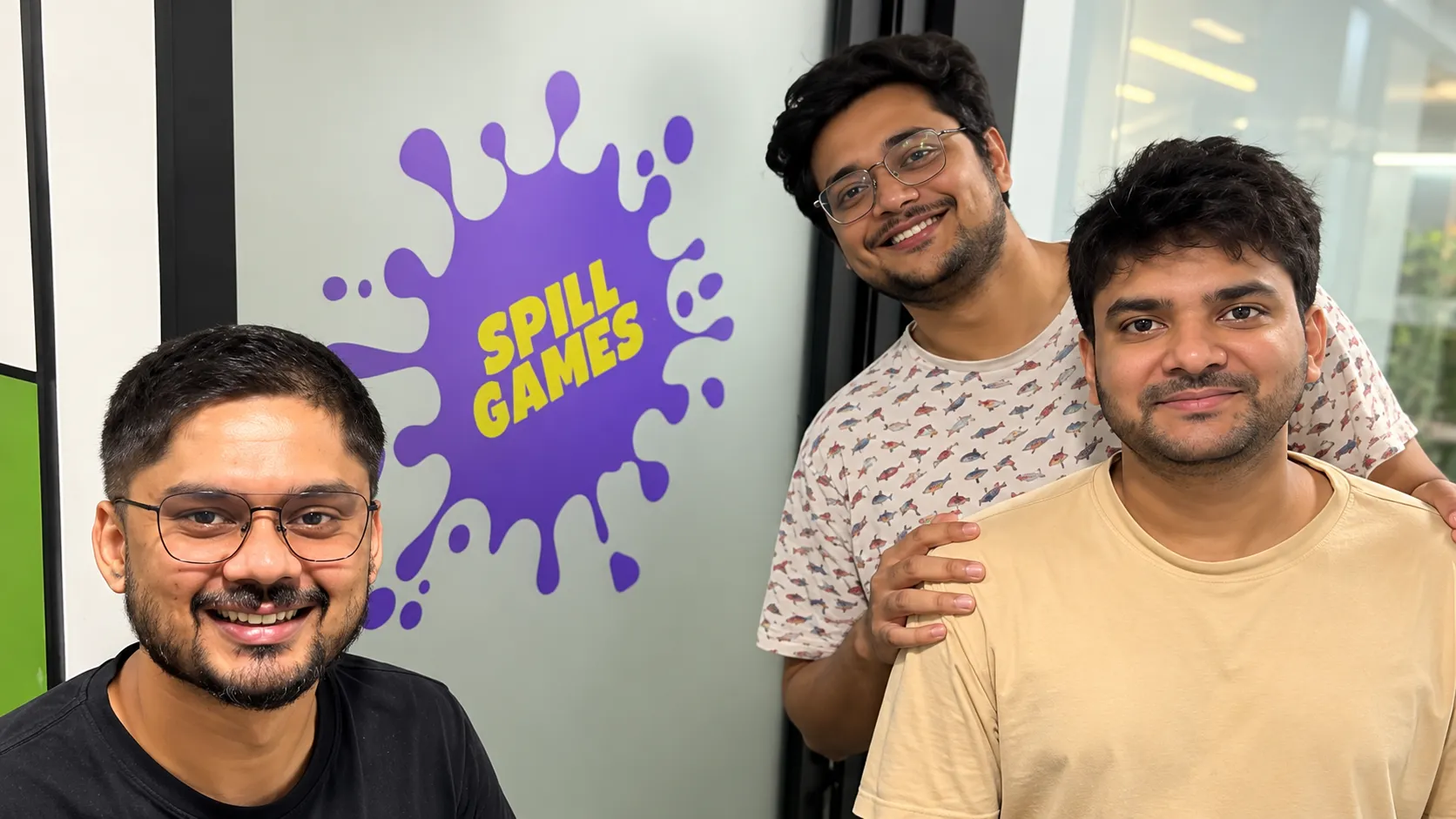
Spill Games, a Bengaluru-based mobile gaming studio that builds casual and puzzle titles for a largely global audience, has raised $10.5 million in a Series A round led by Elevation Capital, just months after closing its seed funding.
Existing investors Centre Court Capital and PeerCapital also took part in the round. The studio said it will use the money to scale its hit games, launch new titles, acquire users and strengthen its artificial intelligence tools.
The raise marks a rapid step up for a company founded only in 2024. In April 2026, Spill closed a $3.1 million seed round co-led by Centre Court Capital and PeerCapital, with participation from All In Capital, according to Inc42. The Series A is more than three times that size.
A Team That Learned Its Trade at PlaySimple
Spill Games was founded by Om Misra, Tapan Ranjan and Harsh Garg, all former members of the team at PlaySimple, the Bengaluru-based word and puzzle game developer that became one of India's most commercially successful gaming exports before its acquisition by Sweden's MTG.
That pedigree matters in casual gaming, a genre where success depends less on blockbuster creative bets and more on disciplined execution: building games quickly, testing them with real players, measuring retention and monetisation, and scaling only the titles that work. PlaySimple's founders and alumni have become something of a talent pipeline for India's gaming ecosystem precisely because they learned that playbook at scale.
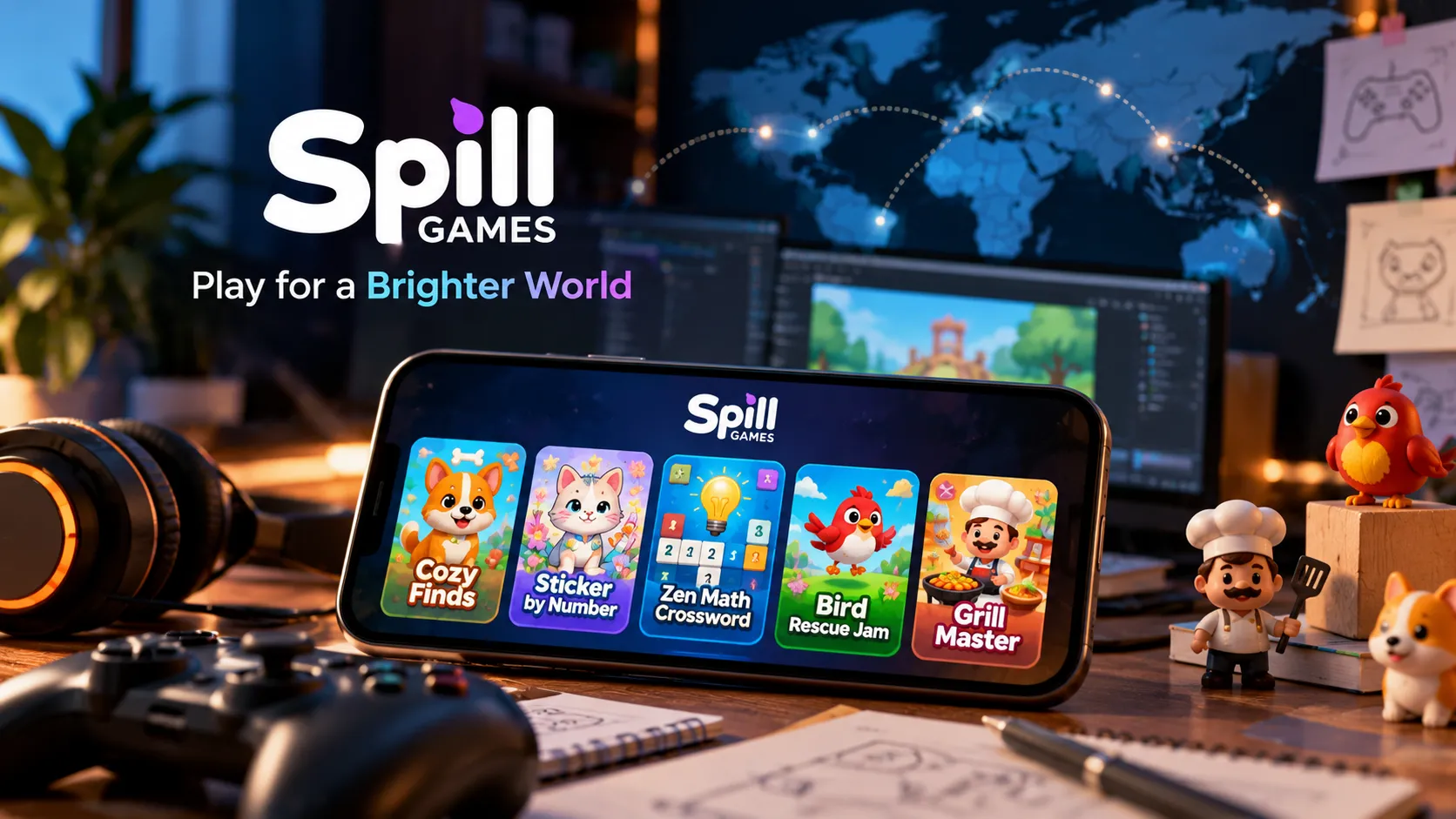
Spill's portfolio includes titles such as Cozy Finds, Sticker by Number, Zen Math Crossword, Bird Rescue Jam and Grill Master. The studio says six of its games now show profitable, scalable numbers.
Compass: Building Games Four Times Faster
At the heart of Spill's approach is Compass, an in-house engine that the company says lets it build and test games about four times faster than conventional development.
Speed is a competitive weapon in mobile gaming. The economics of the casual genre are brutal: most prototypes fail, user acquisition costs are high, and the window to capture players' attention for a new mechanic or theme can be short. Studios that can test more ideas, more cheaply, have a better chance of finding the occasional hit that pays for everything else.
Misra has described the studio's philosophy in simple terms. Spill builds games on strong initial hypotheses, launches them quickly and then refines them using player feedback and in-game data. "If you take too long to ship, you lose valuable time to learn," he told Inc42 at the time of the seed round.
Part of the new funding will go towards strengthening the AI tools that support this process. Generative AI is increasingly being used across game development, from producing art assets and level designs to analysing player behaviour and tuning difficulty. For a small studio, those tools can compress timelines and reduce the cost of each experiment.
Built for a Global Player Base
Like many successful Indian gaming studios, Spill builds primarily for international players. At the time of its seed round, about half of its users were in the United States, with Brazil accounting for 15 per cent and Japan for 10 per cent. The studio makes money through in-game advertising and in-app purchases.
That global orientation reflects the economics of mobile games. Players in the US, Japan and Western Europe typically generate far more revenue per user than those in India, through both higher advertising rates and greater willingness to pay for in-game items. Indian studios have found that they can build games with lower development costs at home while monetising in higher-value markets abroad.
Spill reported annual recurring revenue of $1.5 million in February, according to Inc42, and set a goal of testing more than 20 prototypes over 18 months and launching five to 10 profitable new titles.
Elevation's Bet on Indian Gaming
For Elevation Capital, one of India's most established early-stage venture firms, the deal signals continued interest in gaming studios with strong product discipline. While India's real-money gaming sector has faced severe regulatory headwinds, casual and free-to-play games that monetise through ads and in-app purchases have remained a more stable area for investment.
The Series A also highlights a broader trend in venture funding: investors are increasingly rewarding companies that can show capital efficiency and measurable unit economics early in their life. A studio that can point to multiple profitable titles within two years of founding presents a very different risk profile from one still searching for its first hit.
The distinction between casual and real-money gaming has become sharper since 2025, when India's Promotion and Regulation of Online Gaming Act banned online games played for money. The law upended the business models of several of the country's best-funded gaming companies, forcing layoffs and pivots, and pushed both investors and talent towards free-to-play, casual and esports segments that operate outside the ban. Studios such as Spill, which earn revenue from advertising and optional in-app purchases from players largely outside India, have emerged from that upheaval relatively unscathed. For experienced game developers leaving larger companies, they also offer a more stable home, which could help studios like Spill recruit as they grow.
The Challenges Ahead
Scaling a casual games studio is not straightforward. User acquisition costs on major ad platforms remain high and volatile, and privacy changes by mobile operating systems have made targeting and measuring campaigns harder. The casual genre is also crowded, with large global publishers and countless smaller studios competing for the same players.
Spill will need to show that its development engine can keep producing winners and that its existing titles can retain players and grow revenue over time. Expanding the team without losing the speed that defines its approach will be another test.
India's Growing Place in Global Gaming
Spill's raise adds to evidence that India is becoming a meaningful centre for global casual game development. Studios founded by alumni of successful Indian gaming companies are building games for players around the world, drawing on a deep pool of engineering talent, lower development costs and a growing body of experience in live operations.
With $10.5 million of fresh capital, an experienced founding team and a development engine designed for rapid experimentation, Spill Games is now positioned to test whether its approach can scale from a promising portfolio to a studio with multiple sustained global hits. For its investors, the bet is that disciplined iteration, powered by AI, can turn one of the most hit-driven industries into something more predictable.