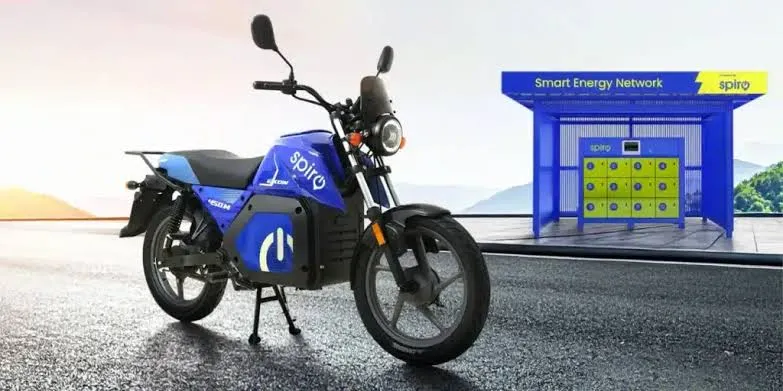
African electric-mobility company Spiro has secured an additional $18 million in debt financing from the Africa Go Green Fund, managed by Cygnum Capital, doubling the fund's total commitment to the company to $36 million, according to a disclosure reported on September 21, 2026. The fresh facility builds on an earlier December 2025 arrangement in which the Africa Go Green Fund committed an initial $18 million, alongside a separate $7 million contribution from Nithio.
The new debt will fund continued deployment of electric motorcycles and battery-swapping infrastructure specifically in Uganda and Rwanda, extending Spiro's operational footprint across what the company describes as seven African markets. Spiro reports that it now operates more than 135,000 electric motorcycles and over 2,500 battery-swap stations, with more than 50 million completed battery swaps recorded across its network to date — figures the company has disclosed as part of its own operational reporting.
Battery-swapping infrastructure addresses a specific economic constraint facing commercial motorcycle operators across much of Africa: unlike conventional charging, which can require hours of downtime, swapping a depleted battery for a fully charged one takes only minutes, allowing commercial riders — who depend on their vehicles for daily income through delivery, ride-hailing or courier work — to maintain utilisation rates comparable to petrol-powered motorcycles. The approach also restructures the underlying cost of vehicle ownership, shifting a significant portion of the total cost away from the vehicle itself and into infrastructure that Spiro owns and operates directly.
The decision to fund this expansion through debt rather than additional equity reflects a broader financing pattern that has become increasingly common among infrastructure-heavy mobility companies as they mature. Once motorcycles, batteries and swap stations generate measurable, predictable utilisation and recurring cash flows, financing that physical infrastructure through equity becomes an increasingly expensive proposition for existing shareholders relative to structured debt, which lenders are willing to underwrite once operational data demonstrates sufficiently stable and predictable returns.
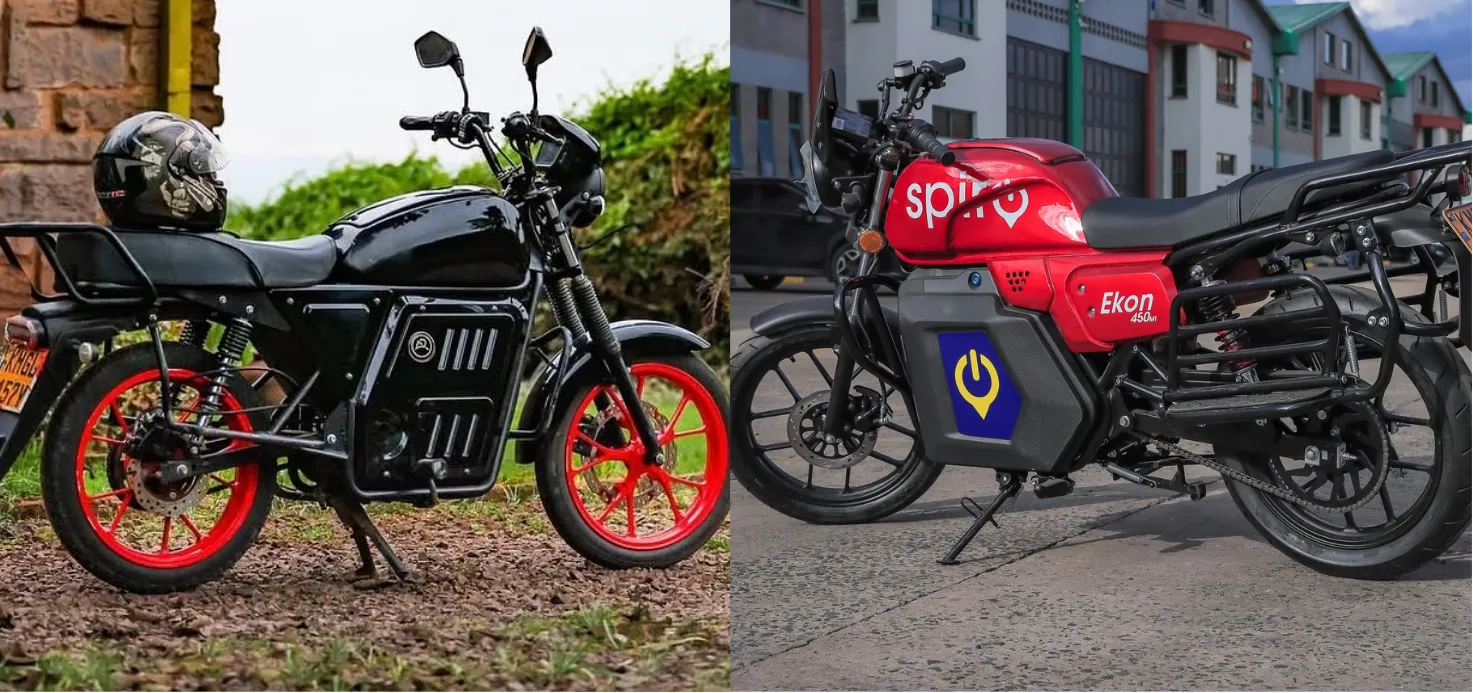
Spiro's expansion strategy also reflects broader lessons drawn from earlier waves of electric-motorcycle deployment across Africa, where several earlier-stage operators struggled specifically with battery degradation and charging-infrastructure reliability in markets with inconsistent grid electricity supply. By building and directly operating its own battery-swapping network rather than relying on riders to charge vehicles through the conventional grid, Spiro has sought to insulate its service quality from exactly the kind of grid-reliability challenges that have historically constrained electric-vehicle adoption across much of the continent.
The Africa Go Green Fund's decision to double its commitment to Spiro signals growing lender confidence in the underlying economics of battery-swapping infrastructure specifically — a vote of confidence that carries broader implications for the electric-mobility sector across the African continent, where access to affordable, structured project-level financing has historically lagged behind the pace of technological and operational innovation in electric two- and three-wheeler transport.
Spiro's continued expansion into Uganda and Rwanda also reflects a broader strategic pattern among Africa's leading electric-mobility operators: building out infrastructure across a cluster of East African markets with broadly similar regulatory environments, commercial-motorcycle usage patterns and urban density characteristics, rather than attempting to scale across the full diversity of African markets simultaneously.
The company's continued expansion into new markets also depends heavily on securing land and regulatory approvals for swap-station networks at a pace that keeps up with vehicle deployment — a logistical and regulatory challenge that has proven a meaningful constraint for competitors expanding more slowly across the region, and one that Spiro's now-doubled debt facility is specifically intended to help address in Uganda and Rwanda.
With its debt facility now doubled to $36 million and operations expanding into two additional markets, Spiro's continued scale-up offers a closely watched case study for whether Africa's electric-motorcycle and battery-swapping sector can transition from early-stage, equity-heavy financing toward the kind of predictable, infrastructure-grade debt financing that has historically underpinned mature transportation and utility businesses globally.