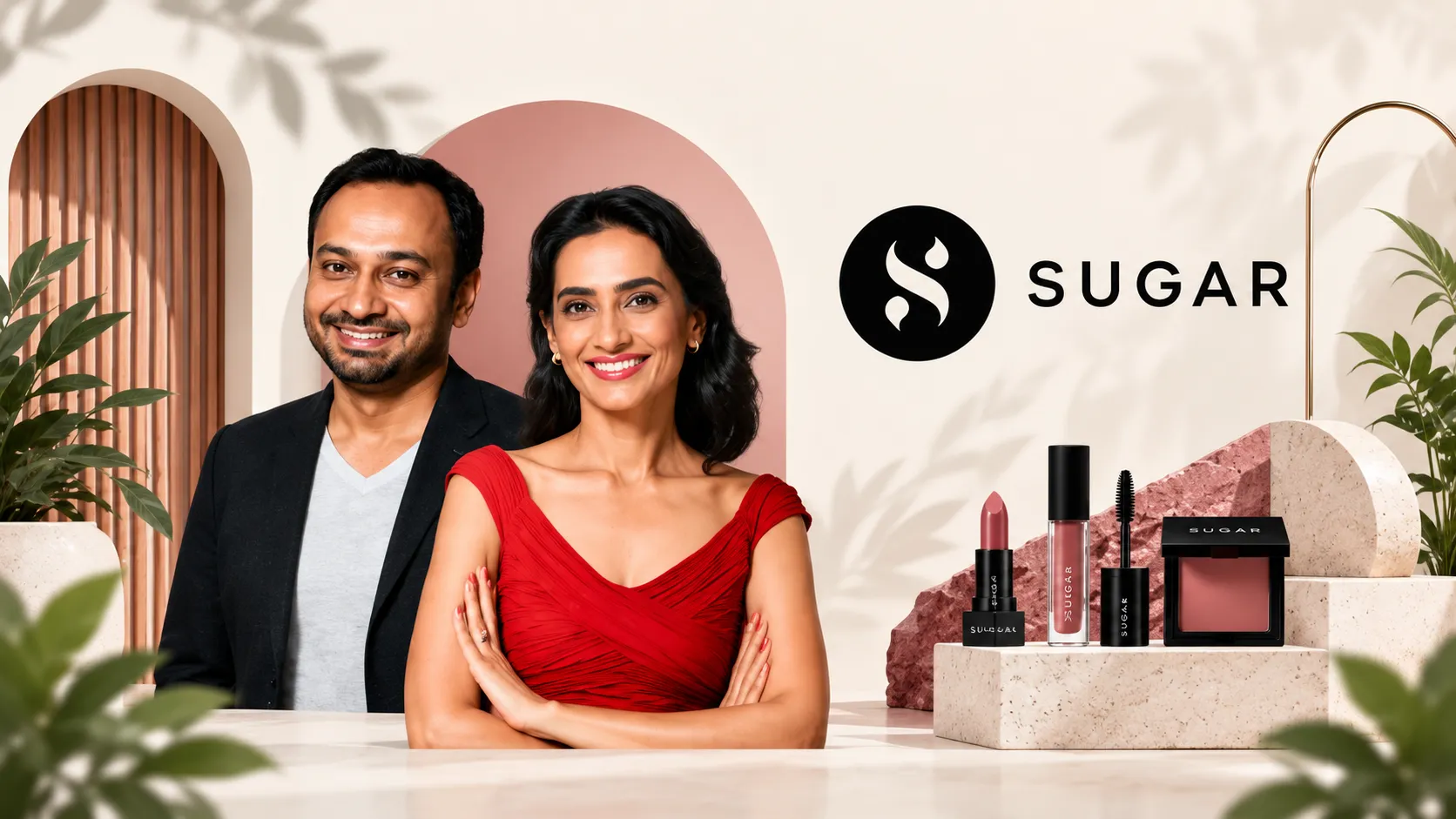
Sugar Cosmetics, once among the most closely watched names in India's direct-to-consumer beauty wave, has raised ₹144.5 crore from existing investor A91 Partners, according to regulatory filings, in a round that values the Mumbai-based company at roughly ₹755 crore — a decline of about 75 percent from its 2022 peak valuation of nearly ₹3,000 crore.
The company's board approved the allotment of 1,12,248 Series D7 compulsorily convertible preference shares to A91 Emerging Fund III at an issue price of ₹12,871 per share on September 1, 2026, according to filings with India's Ministry of Corporate Affairs. A91 Partners subscribed to the entire issue and will hold approximately 19.97 percent of the company following the round, up from its existing stake.
The fresh capital arrives at a difficult moment for Sugar, which has faced sustained pressure on both revenue and profitability. The company's operating revenue fell 20 percent to ₹404.4 crore in FY25, down from ₹505.1 crore in FY24, while its net loss nearly doubled to ₹135 crore from ₹68.4 crore over the same period. EBITDA losses more than doubled as well, rising to roughly ₹116 crore from ₹48.5 crore.
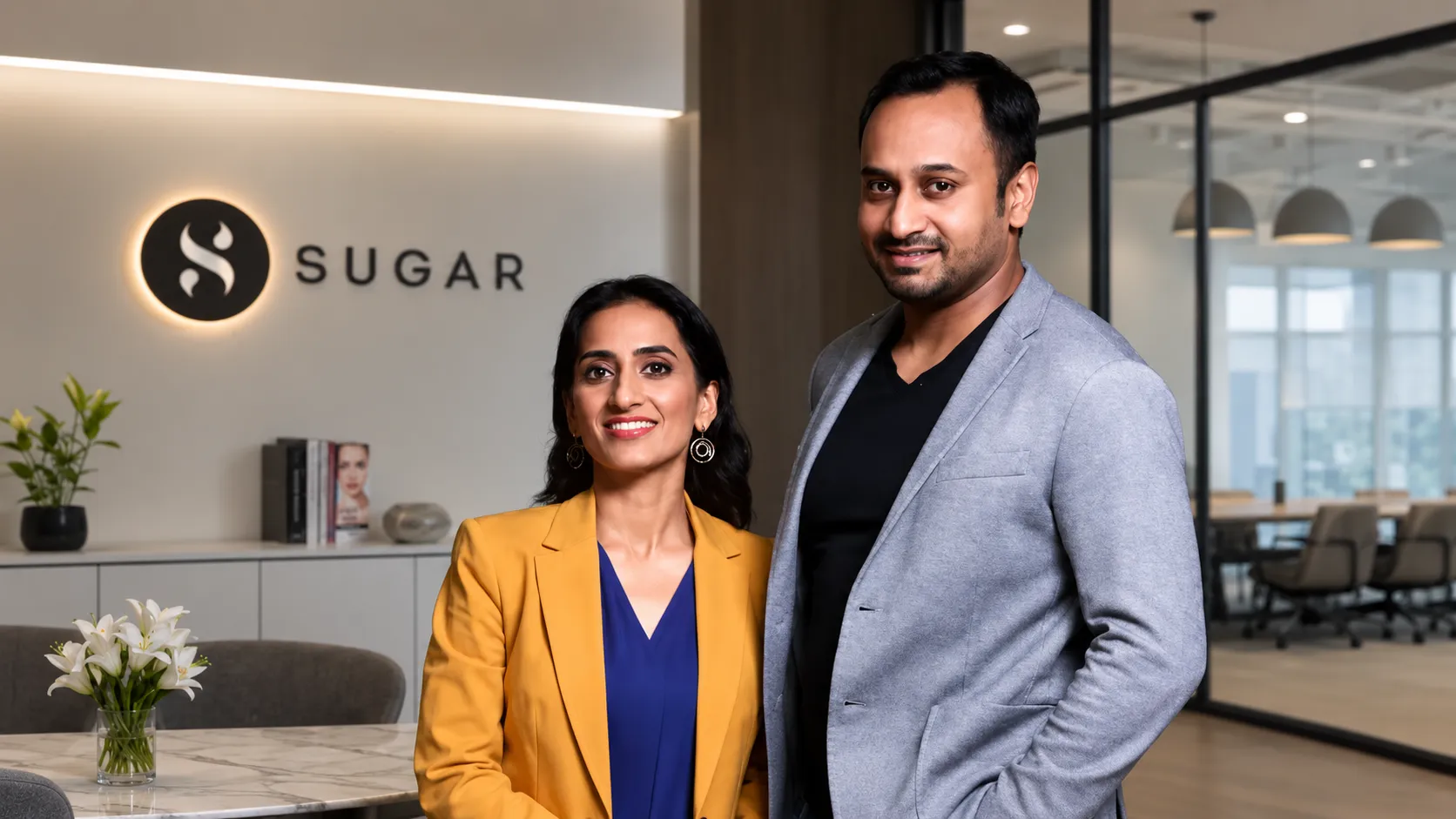
Founded in 2015 by Vineeta Singh and Kaushik Mukherjee, Sugar began as an online-first beauty brand before building a substantial offline retail presence, eventually operating four brands — SUGAR, POP, ENN and Quench Botanics — and competing directly with Nykaa, Mamaearth and Renee Cosmetics in India's crowded beauty and personal care market. The company had raised around $90 million to date from investors including Elevation Capital, A91 Partners, Anicut Capital and IndiaQuotient, and reached its peak valuation of roughly $400 million, or ₹3,000 crore, in 2022 when it raised $50 million in a Series D round led by L Catterton — a period during which the company was aggressively expanding its physical retail footprint.
That offline expansion has since become a significant source of strain. Reports indicate Sugar was forced to shut between 30 and 40 percent of the physical stores it had opened, after losses at the store level accumulated faster than anticipated. The latest funding round also comes alongside separate efforts by some early investors to sell their holdings at steep discounts to Sugar's peak valuation, with a consulting firm reportedly pitching Sugar shares to potential buyers at a minimum transaction size of around ₹25 crore — a signal of how sharply investor sentiment toward the company has shifted since 2022.
"The company has demonstrated a sustained and worsening pattern of financial deterioration over the past two financial years," wrote registered valuer Sayali Deshkar in a June 30, 2026 valuation report attached to the company's regulatory filings, a characterization that underscores the scale of the reset reflected in the new A91 Partners investment. Media reports have attributed much of the pressure to the company's aggressive and ultimately costly offline expansion strategy.
Sugar's steep valuation cut mirrors a broader recalibration across India's D2C beauty and consumer sector, where several once high-flying brands built on rapid store expansion and heavy marketing spend during the 2021–2022 funding boom have since had to confront the underlying unit economics of physical retail. Investors that once rewarded growth at nearly any cost are now applying considerably more scrutiny to profitability and cash discipline.
For A91 Partners, continuing to back Sugar despite the steep valuation reset suggests continued confidence in the underlying brand and its path back toward sustainable growth, even as the fresh capital arrives primarily to shore up the balance sheet rather than fund further aggressive expansion.
The company has not disclosed its FY26 financial results, which will offer the clearest indication yet of whether the store closures and other corrective measures taken over the past year have begun to stabilize its revenue and loss trajectory ahead of what is likely to be a closely watched next fundraising cycle.