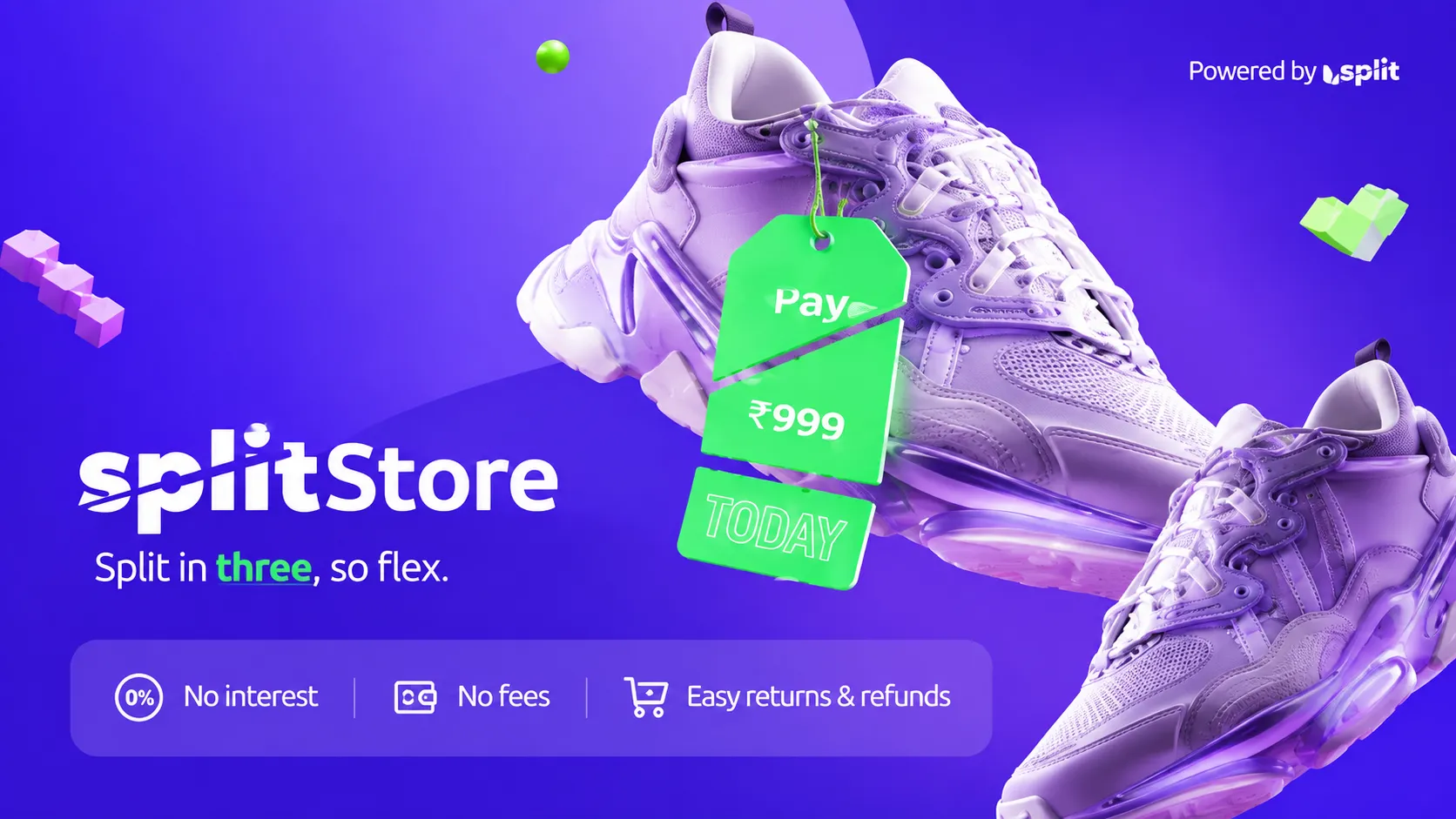
Flipkart-backed fintech platform super.money has expanded beyond payments into e-commerce with the launch of splitStore, an in-app marketplace that lets eligible users shop across a wide range of brands and pay in zero-interest instalments, without needing a credit card and without paying processing fees or late-payment penalties. The move marks the company's most significant push yet to turn its payments user base into a broader commerce and credit ecosystem.
According to the company, splitStore brings more than 60 lakh products onto the platform across categories including smartphones, electronics, fashion, appliances, beauty, fitness, home and furniture, with participating brands including Apple, Nothing, Nike, Adidas, Marshall, Mokobara and Snitch. Fulfilment and delivery for the marketplace will run through Flipkart's existing logistics network, giving super.money access to established last-mile infrastructure as it enters commerce for the first time. Users can access the instalment facility after completing a know-your-customer verification process, with credit extended through regulated lending partners rather than by super.money directly.
Chief executive Prakash Sikaria said the company expects roughly 10% of its user base to shop through splitStore, and that the model — targeted at "new-to-credit" consumers who typically lack a formal credit history or access to traditional credit cards — carries lower expected default rates than similarly sized personal loans, given that purchases are for aspirational and lifestyle products rather than cash. Sikaria said splitStore could account for as much as 20% of super.money's overall revenue by December, a significant shift for a company that currently derives 80-90% of its income from credit products such as personal loans and credit cards.
Unlike traditional checkout financing offered by individual online stores, super.money is positioning splitStore as a dedicated affordability-led shopping destination in its own right, comparing the model to a shopping aggregator that brings products from multiple merchants together on a single interface. The company said it does not intend to become a direct retailer, instead operating as an affiliate marketplace where product listings come from Flipkart and participating brands while fulfilment remains with the seller. It also plans to expand its direct-to-consumer brand mix, with such brands expected to make up around 30% of the platform's inventory by the end of the year, and to extend instalment-based payments into travel bookings, an area where the company already offers flight ticketing.
The launch also coincided with India's Parliament passing an amendment to the Payment and Settlement Systems Act on August 6, opening the door to possible merchant fees on UPI transactions for the first time since the payment rail's zero-fee mandate was introduced in 2020 — a legislative shift that could reshape the economics underpinning much of India's consumer fintech sector, including super.money's own payments business, in the months ahead.


