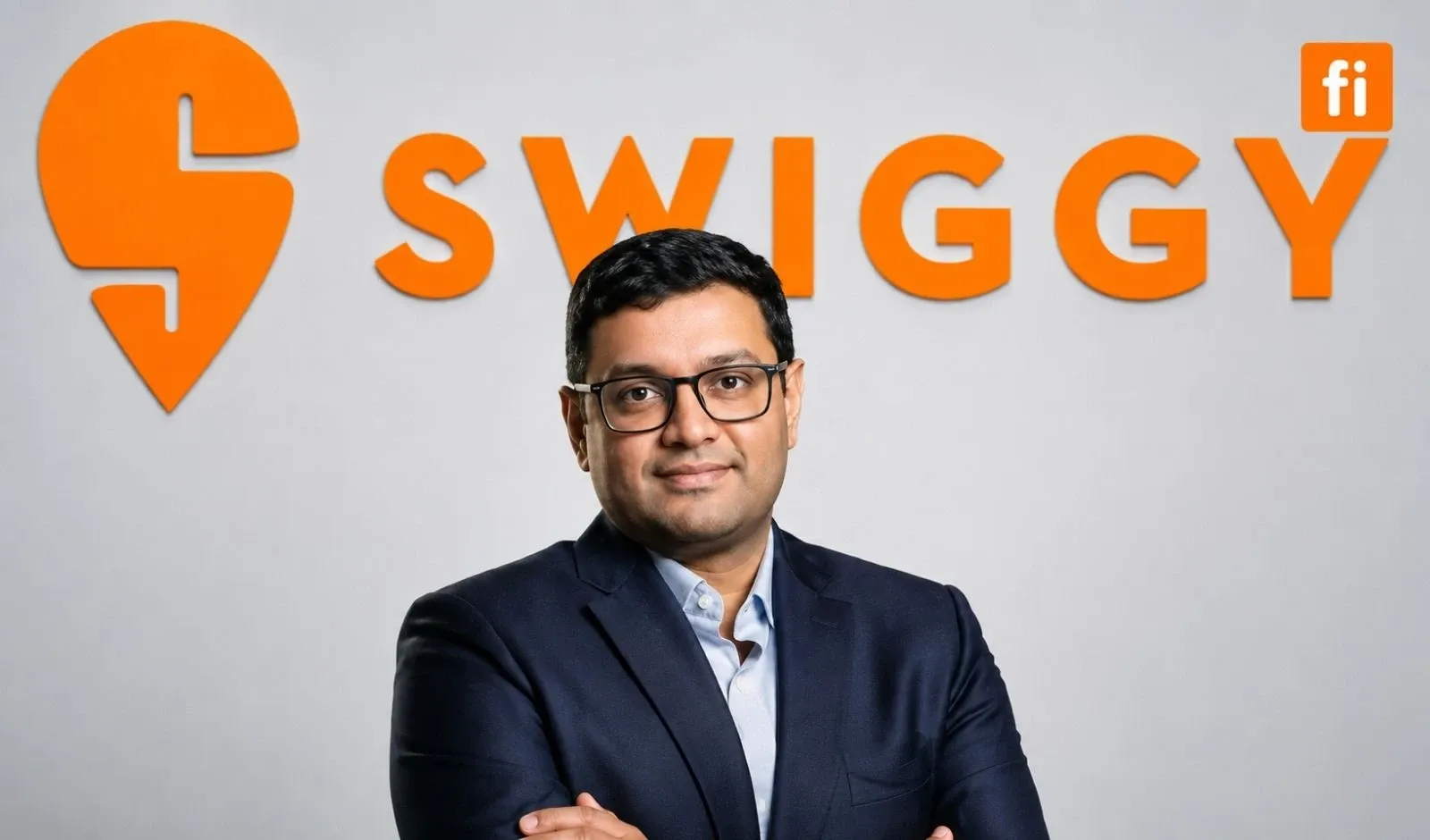
Shareholders of Swiggy, India's listed food-delivery and quick-commerce major, have approved a resolution capping foreign ownership of the company at 49.5%, according to a disclosure dated 18 August 2026. The approval formalises a ceiling on the proportion of Swiggy's equity that can be held by non-resident investors — a structural safeguard that has become increasingly common among Indian companies operating in sectors sensitive to foreign investment scrutiny.
The move comes as Swiggy continues to navigate life as a publicly listed company in one of India's most capital-intensive and competitive sectors, where it competes directly against Zomato-owned Blinkit, Zepto and a growing field of well-funded quick-commerce entrants. Foreign institutional investors have historically made up a substantial share of trading volume and ownership in India's new-age listed technology companies, given the relative scarcity of comparable growth assets in Indian public markets.
Foreign ownership caps of this nature typically serve several purposes simultaneously: they can pre-empt regulatory intervention in sectors where India applies sectoral caps on foreign direct investment, they provide the board with a clearer picture of headroom for future fundraising or share issuances involving overseas investors, and, in some cases, they are designed to preserve a degree of domestic control over strategically significant consumer platforms that handle sensitive data on Indian consumer behaviour, payments and logistics.

While food delivery and quick commerce do not carry the same explicit foreign investment restrictions as sectors such as defence or multi-brand retail, India's regulatory environment around foreign ownership of digital platforms handling consumer data has tightened generally in recent years. Companies operating large-scale consumer platforms have increasingly opted to build in self-imposed ownership ceilings as a matter of prudent governance, rather than waiting for the government to impose sector-specific caps reactively.
For Swiggy specifically, the approval also has practical implications for its capital markets strategy going forward. With a defined foreign ownership ceiling in place, the board and management gain clarity on how much additional foreign capital — whether through follow-on public offerings, qualified institutional placements, or strategic block deals — the company can absorb before triggering restrictions on further non-resident participation. This is particularly relevant for a company that, like most of its quick-commerce peers, continues to require significant capital to fund dark-store expansion, delivery fleet investment and competitive pricing in a sector where unit economics remain under close investor scrutiny.
The resolution's passage also offers a window into the evolving relationship between India's new-age listed companies and their shareholder base. Unlike many legacy Indian conglomerates where promoter families retain concentrated control, companies like Swiggy operate with a more dispersed, institutionally weighted ownership structure, making shareholder resolutions of this kind a meaningful test of alignment between management's strategic priorities and the preferences of a shareholder base spanning domestic mutual funds and global institutional investors.
Swiggy's decision to set the threshold at 49.5% — just under the symbolically significant 50% mark — suggests a board seeking to preserve majority domestic ownership optics while still leaving substantial room for continued foreign institutional participation. It remains to be seen whether peers in the quick-commerce and food-delivery space will adopt similar ownership ceilings in the coming quarters.


