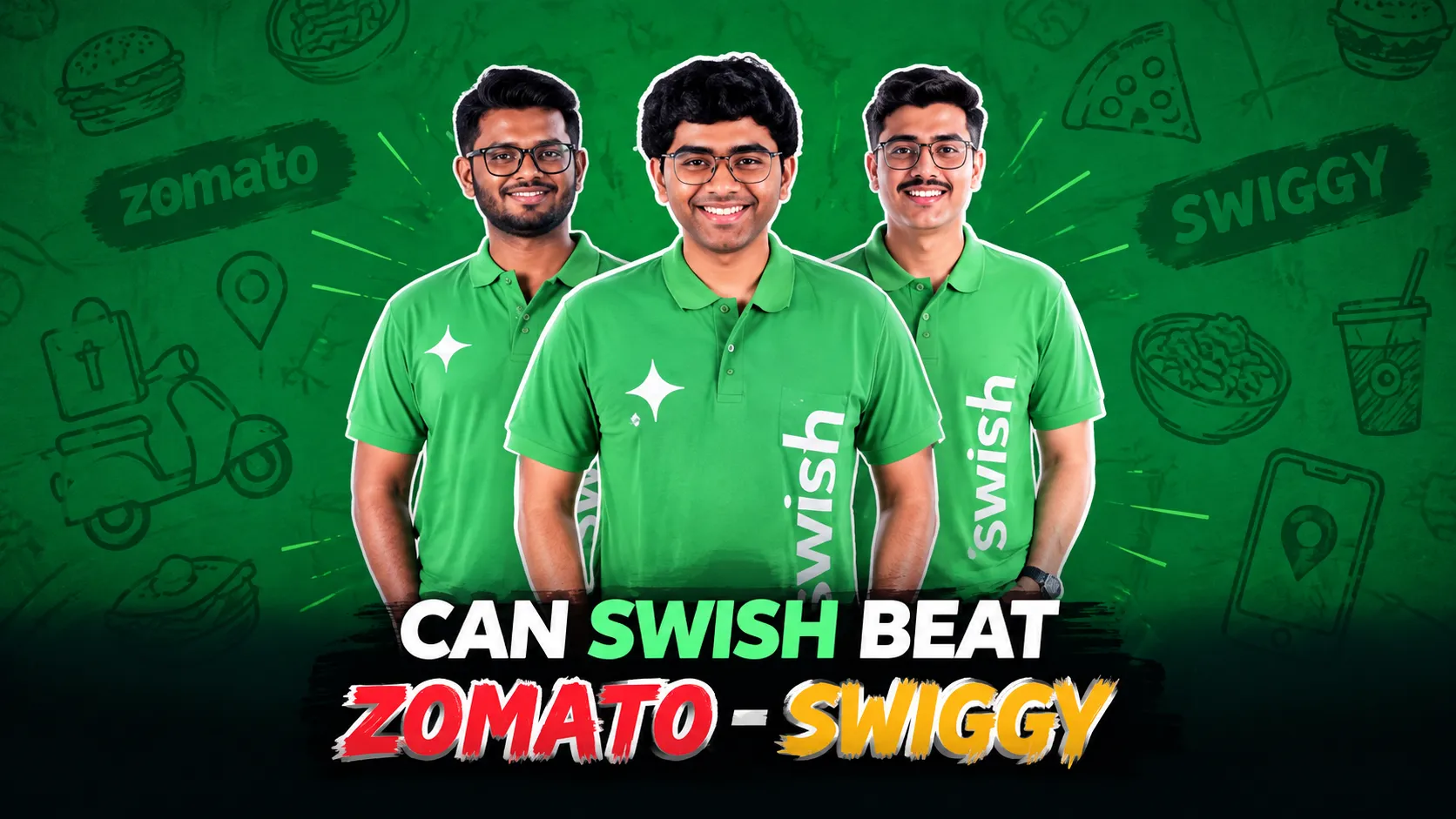
Swish, the Bengaluru-based quick food delivery startup, has started piloting Swish Go, a service that lets customers order from third-party restaurants and cloud kitchens, putting the two-year-old company in direct competition with India's food delivery leaders, Swiggy and Zomato.
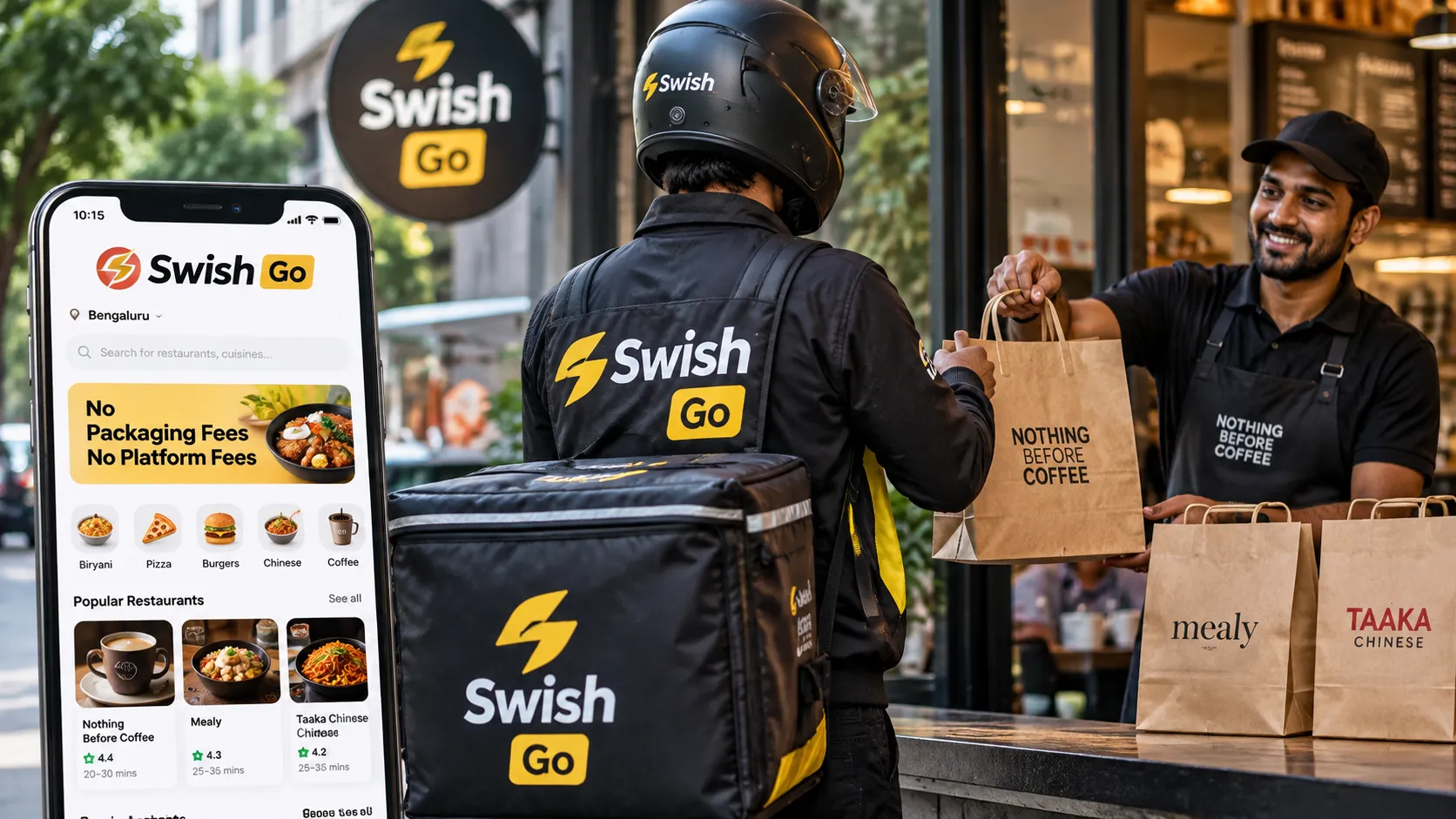
The service, reported by Inc42 on 7 October, is live in select pincodes of Bengaluru. It is being advertised with no packaging fees and no platform fees, the add-on charges that have become a regular source of friction between delivery apps and their users.
Swish Go marks a departure from the model that Swish was built on. Until now, customers could order only from kitchens the company owns and runs itself, with food delivered in about 10 to 15 minutes. Orders on Swish Go will not carry that speed promise and are expected to take longer.
From own kitchens to a marketplace
Swish was founded in 2024 by Aniket Shah, Ujjwal Sukheja and Saran S. The company built what it calls a vertically integrated model, owning the kitchens, the ordering platform and the delivery fleet. Its cloud kitchens serve customers within roughly a 1 km radius, which allows it to deliver food in minutes rather than the half-hour or more typical of conventional delivery.
Shah has argued that controlling every step was the only way to guarantee quality. “Owning every part of the decision in the food supply chain is the only way to serve high-quality, fresh food,” he told Inc42 in March. The company currently operates in nearly 50 pincodes across Bengaluru, Gurugram, Noida, Delhi and Ghaziabad.
Swish Go adds a different layer. For the pilot, the company has brought on quick-service brands including Nothing Before Coffee, Mealy and Taaka Chinese, among others, according to Inc42. That gives users a broader menu than Swish's own kitchens can offer, a common limitation of the own-kitchen approach, where every new cuisine requires new recipes, staff and equipment.
Inc42 said it had sent questions to Swish about the service. The company had not publicly detailed how it charges restaurants, what delivery fees apply, or when Swish Go might extend beyond the Bengaluru pilot.
For readers unfamiliar with the Indian market, the model Swish Go adopts is the one Swiggy and Zomato use: the app takes orders for independent restaurants, sends a rider to collect the food and earns a commission from the restaurant, often alongside fees charged to the customer. Swish's own-kitchen model avoided those commissions entirely because it cooked everything itself.
The timing reflects the limits of a pure quick-food model. Swish's existing business depends on dense neighbourhoods where enough orders can be served from a single kitchen. Adding outside restaurants could lift order volumes and help keep its delivery riders busy outside peak meal times, though the company has not described its reasoning publicly.
Investors have backed the bet
Swish has raised $78 million in external funding to date, Inc42 reported. Its investors include Hara Global, Bain Capital Ventures, Accel, Alteria Capital and Stride Ventures. In March 2026 it raised a $38 million Series B, about ₹356 crore, co-led by Hara Global and Bain Capital Ventures, to expand its 10-minute delivery across cities, automate kitchens and build out its supply chain.


